MESSAGE
If you have any questions, please contact us and we will contact you as soon as possible.
‹
›
‹
›
◉ PRODUCT SPECIFICATION
Product Description
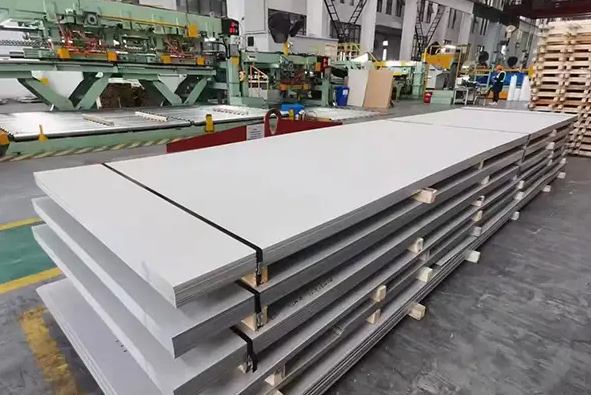
Nitronic 50 stainless steel, also known as UNS S20910 and XM-19, is an austenitic stainless steel with a blend of strength and corrosion resistance that is better than Stainless Steels 316, 316/316L, 317, and 317/317L. In fact, XM-19 has twice the yield strength at room temperature compared to Stainless Steels 316/316L and 317/317L. Additionally, it has good mechanical properties at elevated and sub-zero temperatures. Other characteristics that set XM-19 apart from other grades of stainless steel are that it does not become magnetic when severely cold worked and it has outstanding corrosion resistance in harsh environments such as marine applications.
XM-19 is composed of between 20% and 23% chromium, 11% to 13% nickel, 4% to 6% manganese, and 1.5% to 3% molybdenum, with the balance being iron. Also found in XM-19 are trace amounts of carbon, silicon, sulfur, phosphorus, nitrogen, columbium (or niobium) and vanadium. As noted previously, it is much stronger than Stainless Steels 316/316L and 317/317L; however, the same fabrication equipment and procedures used for the Stainless Steel 300 grades can be utilized for XM-19. In addition, the same cooling techniques used for Stainless Steels 316/316L and 317/317L can be utilized for XM-19.
XM-19 can be a confusing alloy to work with, as there are three different types of conditions used for numerous applications. The three conditions are annealed, as-rolled and high strength. As-rolled is a term used by the mill to state the fact that it is a “rolled” material. All conditions of XM-19 are first rolled. Both the annealed condition and the as-rolled condition are rolled at the same temperature. To acquire XM-19 annealed, the material would first be rolled, followed by either a mill or local annealing process which lowers the tensile and yield properties resulting in a more workable material. On the other hand, transforming XM-19 into the high strength condition can only be done at the mill after the original rolling process, which is done at a lower temperature than annealed and as-rolled material to further help increase the properties. Then high strength material is rolled a second time and later cold worked, which again increases the physical properties of the material even more.
Common Trade Names:
Specifications:
Nitronic 50 Chemical Composition
Nitronic 50 Physical Properties
Nitronic 50 Mechanical Properties
Fabrication and Heat Treatment
Machinability
Stainless steel grade Nitronic 50 has machinability characteristics that are similar to other austenitic stainless steels; however it requires slower speeds, more power, and higher rigidity due to its high work hardening rate. It is recommended that coated carbide tooling be used.
Stainless steel grade Nitronic 50 can be formed using the same methods applied for other austenitic stainless steels. More power for forming and forging is needed for this alloy. Forging can be done at 1177-1204°C (2150-2200°F).
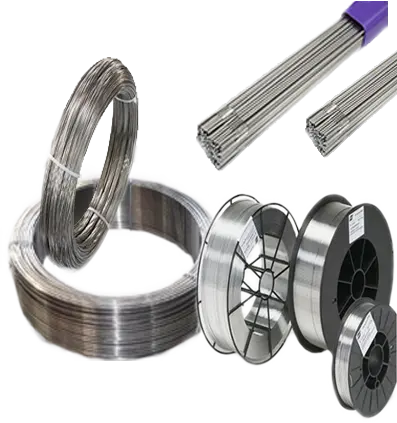
Welding of stainless steel grade Nitronic 50 can be performed using traditional joining processes. Recommended filler metal should be Nitronic 50W (AWS E/ER209).
Caution should be taken while using autogenous, high power density joining processes such as EB or laser welding, due to low FN potential and severe outgassing possibility.
Final annealing process performed for several of the applications, is done at 1065°C (1950°F), which is followed by water quenching. In case this material is used in a strongly corrosive environment, annealing should be done at 1121°C (2050°F). This alloy cannot be hardened by heat treatment.
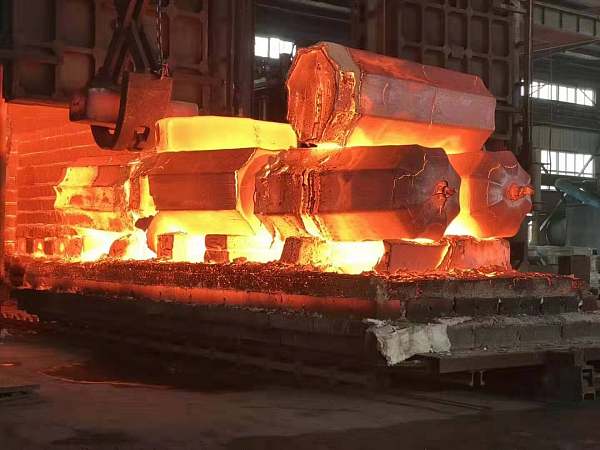
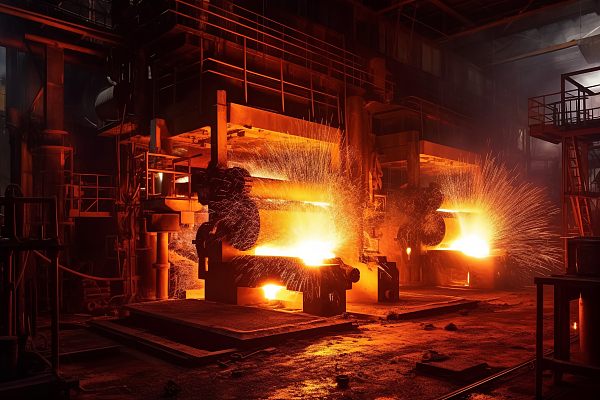
◉ Factory Show
◉ MESSAGE
◉ SIMILAR RECOMMENDED
 ERNiCrMo-3/UNS N06625/W. Nr. 2.4806 AWS A5.14 Wire
 Super Invar 32-5 Sheet Plate 4J32/K93500/Super Invar Sheet Plate
 NILO 4J36 Tube Pipe UNS K93600 & K93601/W. Nr.1.3912 Ultra-low expansion iron-nickel alloy Tube Pipe
 Hastelloy Alloy B-3/UNS N10675/W. Nr. 2.4600
 Monel Alloy 400/UNS N04400/W.Nr. 2.4360
 Incoloy 800/Alloy 800/UNS N08800/W.Nr. 1.4876
 Inconel 625 Alloy | Nickel Alloy 625 Supplier and Manufacturer
 Inconel 718 Alloy | UNS N07718 Nickel Superalloy Supplier
 17-4PH UNS Strip Ring S17400/W.Nr:1.4542 stainless steel Strip Ring
 AL-6XN Stainless Steel / N08367 /
 PH13-8 / S13800 / W.Nr 1.4534 /Alloy 13-8 stainless / PH13-8 Mo
 F55 Duplex Stainless Steel
") F44 (254 SMO )
F44 (254 SMO ) 17-7PH / 1.4568 Stainless Steel /631 Precipitation Hardening Stainless Steel
 Nitronic 60 / UNS S21800 / Alloy 218 stainless steel
 Nitronic 50
 904L Stainless Steel
 CuNi1 Wire 210 MPA 0.03mm Soft Copper Aluminium Nickel Alloy
 Bright 420 MPA 50mm Soft CuNi44 Heating Nickel Copper Rod
 0.5mmx180mm Soft MPA CuNi34 Nickel Copper Alloy 400
 CuNi10/CuNi30 Copper Nickel Alloy Strip High Conductivity Corrosion Resistant for Marine & Industrial Use
Thank you very much for writing to us. Please leave your message and contact information, we will reply to you within 24 hours.