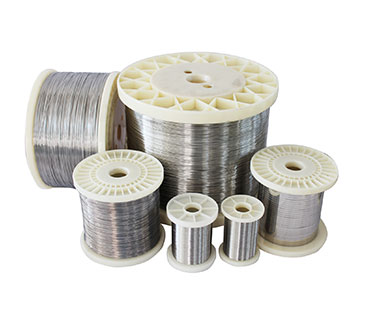
Nickel alloy welding wire is used to join nickel-based alloys, dissimilar metals, and selected nickel-alloy-to-steel combinations in demanding industrial applications. Choosing the correct filler metal is essential because weld performance depends on more than tensile strength.
The filler metal must be compatible with the base materials, welding process, service environment, dilution level, joint design, and required mechanical and corrosion properties.
Three commonly encountered nickel alloy welding wire designations are ERNiCrMo-3, ERNiFeCr-2, and ERNiCrFe-7A. They are associated with different base-metal combinations and welding applications, so they should not be treated as interchangeable products.
Quick answer: Nickel alloy welding wire should be selected by matching the filler metal to the base alloy, welding process, service environment, and applicable consumable specification. ERNiCrMo-3 is commonly associated with Alloy 625-type filler applications, ERNiFeCr-2 with Alloy 718-type filler applications, and ERNiCrFe-7A with selected nickel-chromium alloy welding applications. The exact designation and qualification requirements must be verified against the applicable standard.
1. Why Filler Metal Selection Matters
A welded joint contains more than the original base metal. Its final properties may be influenced by:
- Filler metal chemistry
- Base-metal chemistry
- Dilution
- Welding heat input
- Interpass temperature
- Shielding gas
- Joint geometry
- Welding position
- Cooling rate
- Post-weld heat treatment
- Surface preparation
- Welding procedure qualification
The weld metal and heat-affected zone may experience different metallurgical conditions from the parent material.
A filler metal that appears suitable based only on its alloy family may still be inappropriate if it produces undesirable corrosion behavior, cracking susceptibility, insufficient strength, or incompatibility with subsequent heat treatment.
2. What the ERNi Designation Means
Nickel and nickel-alloy welding consumables are commonly identified through AWS classification systems. The designation provides information about the filler metal's composition and classification.
For example:
- ER generally identifies a consumable usable as an electrode or rod, depending on the product and welding process.
- Ni indicates a nickel-based classification.
- The remaining letters and numbers identify the alloy family and specific classification.
The complete applicable specification should always be checked because product designation, chemical composition, dimensions, and approved welding processes may vary by standard.
Important distinction
A welding wire classification is not automatically a guarantee of suitability for every application. It identifies a standardized consumable category, while the welding procedure must still be qualified for the intended joint and service conditions.
3. ERNiCrMo-3: Commonly Associated with Alloy 625-Type Filler Applications
ERNiCrMo-3 is widely recognized as a nickel-chromium-molybdenum filler metal associated with Alloy 625-type chemistry. It is commonly used in applications involving nickel alloys, stainless steels, carbon steels, and selected dissimilar-metal joints.
Typical application areas
Depending on the qualified welding procedure, ERNiCrMo-3 may be considered for:
- Welding Alloy 625-type materials
- Joining selected nickel-chromium-molybdenum alloys
- Dissimilar-metal joints
- Cladding and overlay applications
- Repair welding
- Chemical-processing equipment
- Marine and offshore components
- High-performance industrial fabrication
Why its chemistry matters
Chromium and molybdenum contribute to corrosion resistance, while other alloying elements influence weld-metal strength and metallurgical behavior.
However, corrosion resistance in the final joint depends on:
- Base-metal chemistry
- Filler-metal chemistry
- Dilution
- Weld profile
- Heat input
- Surface condition
- Service environment
It is therefore inaccurate to assume that a filler metal's nominal alloy designation alone guarantees corrosion performance in every welded joint.
4. ERNiFeCr-2: Commonly Associated with Alloy 718-Type Filler Applications
ERNiFeCr-2 is associated with nickel-iron-chromium filler metal used in selected welding applications involving Alloy 718-type materials and related nickel-based alloys.
Typical considerations
ERNiFeCr-2 may be evaluated for:
- Welding Alloy 718-type base metals
- Selected nickel-based superalloy joints
- Repair and fabrication applications
- Components requiring compatibility with a precipitation-hardening alloy system
Why the base metal matters
Alloy 718 is a precipitation-hardening nickel-based superalloy. Its final properties depend strongly on heat treatment and metallurgical condition.
When welding an age-hardenable alloy, engineers should consider:
- Base-metal delivery condition
- Welding heat input
- Heat-affected-zone behavior
- Post-weld heat treatment
- Joint strength requirements
- Distortion and residual stress
- Service temperature
- Applicable welding procedure qualification
A filler metal suitable for a 718-type alloy should not automatically be assumed suitable for every nickel alloy or every service temperature.
5. ERNiCrFe-7A: Filler Metal for Selected Nickel-Chromium Alloy Applications
ERNiCrFe-7A is a nickel-chromium-iron welding filler classification associated with selected nickel-chromium alloy welding applications, including certain Alloy 690-type systems.
It is important to distinguish this classification from other nickel alloy filler metals because the chemistry and intended applications are not identical.
Selection considerations
When evaluating ERNiCrFe-7A, engineers should review:
- Base-metal grade
- Joint configuration
- Welding process
- Service temperature
- Corrosion environment
- Required weld-metal chemistry
- Applicable qualification standard
- Post-weld inspection requirements
For nuclear, power-generation, chemical, or other critical applications, the relevant project code and approved welding procedure may impose additional requirements.
6. Comparison of Three Welding Wire Classifications
This comparison is a starting point, not a substitute for reviewing the relevant AWS classification, product standard, and welding procedure.
7. How to Match Filler Metal to the Base Metal
Step 1: Identify the exact base-metal grade
Do not rely only on a commercial name. Confirm:
- Alloy designation
- UNS number
- Material standard
- Product condition
- Heat treatment
- Thickness
- Whether the joint is homogeneous or dissimilar
For example, “Inconel” is a family name, not a complete material specification.
Step 2: Identify the welding process
The wire or rod must be suitable for the intended process, such as:
- Gas tungsten arc welding (GTAW/TIG)
- Gas metal arc welding (GMAW/MIG)
- Plasma arc welding
- Other qualified processes
Wire diameter, feeding characteristics, shielding requirements, and deposition behavior may differ by process.
Step 3: Define the service environment
Consider:
- Temperature
- Pressure
- Corrosive medium
- Chlorides
- Acids or alkalis
- Oxidizing or reducing atmosphere
- Fatigue and thermal cycling
- Exposure duration
The filler metal must support the required joint performance in the actual service environment.
Step 4: Review the welding procedure
The correct filler metal must be integrated into a qualified procedure that addresses:
- Joint preparation
- Pre-cleaning
- Shielding
- Heat input
- Interpass temperature
- Number of passes
- Interpass cleaning
- Post-weld treatment
- Inspection and testing
8. Dissimilar-Metal Welding: Why Dilution Is Important
Dissimilar-metal welding joins materials with different chemical compositions and physical properties. Examples may include:
- Nickel alloy to carbon steel
- Nickel alloy to stainless steel
- Nickel alloy to low-alloy steel
- Different nickel alloy grades
During welding, the filler metal mixes with melted base metal. This is known as dilution.
Excessive or uncontrolled dilution can change the final weld-metal chemistry and affect:
- Corrosion resistance
- Cracking susceptibility
- Mechanical properties
- Phase stability
- Weld-metal microstructure
Therefore, filler-metal selection and welding procedure design should be considered together.
9. Common Nickel Alloy Welding Problems
Hot cracking
Some nickel alloy weld metals may be sensitive to cracking under unsuitable chemistry, restraint, heat input, or welding conditions.
Porosity
Porosity can result from contamination, moisture, inadequate shielding, poor gas flow, or improper surface preparation.
Lack of fusion
Insufficient heat input, incorrect torch or wire positioning, poor joint preparation, or unsuitable technique can lead to incomplete fusion.
Distortion
Nickel alloys and dissimilar-metal joints may experience distortion because of thermal expansion differences and welding heat.
Corrosion performance loss
The weld metal, heat-affected zone, or surface contamination may reduce corrosion performance if the procedure is not properly controlled.
10. What to Verify When Purchasing Nickel Alloy Welding Wire
A professional RFQ should include:
- Filler metal classification
- Applicable AWS or other standard
- Product form: wire or rod
- Diameter
- Spool or package size
- Welding process
- Base-metal grades
- Required chemical composition
- Mechanical requirements
- Surface condition
- Certificate requirements
- Lot traceability
- Packaging and storage requirements
Certificate and quality documentation
For critical applications, buyers may request:
- Chemical composition certificate
- Batch or lot identification
- Product inspection documentation
- Applicable conformity certificate
- Welding consumable compliance documentation
The required documentation depends on the project, standard, and end-use industry.
11. Frequently Asked Questions
What is ERNiCrMo-3 welding wire used for?
ERNiCrMo-3 is commonly associated with Alloy 625-type nickel-chromium-molybdenum filler applications, including selected nickel alloy and dissimilar-metal welding work.
What is ERNiFeCr-2 used for?
ERNiFeCr-2 is associated with Alloy 718-type filler metal applications and selected nickel-based superalloy welding procedures.
What is ERNiCrFe-7A used for?
ERNiCrFe-7A is a nickel-chromium-iron filler classification used in selected nickel-chromium alloy welding applications, including certain Alloy 690-type systems.
Can one nickel alloy welding wire replace another?
Not automatically. Filler metals differ in chemistry, intended applications, mechanical properties, and compatibility with base metals and service conditions.
What is the most important factor when selecting nickel alloy welding wire?
The most important factor is compatibility with the base metal and qualified welding procedure under the intended service conditions. Classification alone is not sufficient.
Conclusion
Nickel alloy welding wire selection requires a combination of metallurgical knowledge, welding engineering, and application analysis. ERNiCrMo-3, ERNiFeCr-2, and ERNiCrFe-7A belong to different filler-metal classifications and should be selected according to the base alloy, welding process, service environment, and applicable standards.
A reliable welding consumable supplier should be able to provide clear product identification, technical documentation, and support for the required specification.
Need nickel alloy welding wire for a fabrication or repair project? Contact Alloysfactory to discuss filler-metal classifications, wire dimensions, and application requirements.
Contact Alloysfactory
Company: Danyang Jiaxin New Materials Technology Co., Ltd.
Website: https://www.alloysfactory.com/
Email: sales@alloysfactory.com
Phone / WhatsApp: +86 180 5277 8977
Address: Building 10, Fuqian Xingzuo, Development Zone, Danyang City, Jiangsu Province, Jiangsu Province, China
Thank you very much for writing to us. Please leave your message and contact information, we will reply to you within 24 hours.