
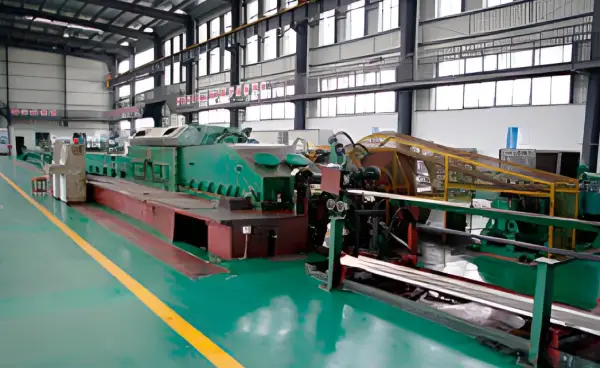
Nickel alloy tubes are used in equipment where ordinary carbon steel or conventional stainless steel may not provide sufficient resistance to heat, corrosion, pressure, or long-term degradation. However, selecting the correct nickel alloy tube requires more than choosing a familiar grade.
The right material depends on the interaction between temperature, pressure, chemical composition, flow conditions, fabrication method, and inspection requirements. A tube that performs well in a dry high-temperature furnace may not be suitable for an acidic chemical-processing system. Similarly, an alloy with excellent corrosion resistance may not be the most economical choice for a high-strength pressure application.
This guide explains the engineering factors that should be reviewed before purchasing nickel alloy tubes.
Quick answer: Nickel alloy tube selection should begin with the service environment, then narrow down the alloy family, grade, product form, dimensions, manufacturing condition, applicable standard, and inspection requirements. Corrosion resistance, high-temperature strength, weldability, and tube integrity must be evaluated together.
1. Why Nickel Alloy Tubes Are Used in Demanding Equipment
Nickel-based alloys offer a combination of properties that can be difficult to obtain in conventional materials.
Depending on the grade, nickel alloy tubes may provide:
- Resistance to oxidation at elevated temperatures
- Resistance to reducing or oxidizing chemical environments
- Good resistance to pitting and crevice corrosion
- Resistance to chloride-containing environments
- High mechanical strength
- Good fatigue and thermal-cycle performance
- Resistance to creep and stress rupture in selected grades
- Compatibility with demanding welding and fabrication processes
Common applications include:
- Chemical-processing equipment
- Heat exchangers
- Condensers
- Oil and gas production systems
- Power-generation equipment
- Furnace and heat-treatment systems
- Marine and offshore equipment
- Aerospace and high-temperature components
- Specialized instrumentation and capillary systems
The exact suitability depends on the alloy grade and operating conditions.
2. Start with the Service Environment, Not the Alloy Name
The most important selection step is to define the actual operating environment.
Temperature
Record both:
- Normal operating temperature
- Maximum design or upset temperature
Also consider whether the tube will experience:
- Continuous exposure
- Thermal cycling
- Rapid heating and cooling
- Local hot spots
- Temperature gradients
Temperature affects oxidation, corrosion kinetics, creep, strength, phase stability, and dimensional behavior.
Pressure
Pressure determines the required tube wall thickness and mechanical design. The selection process should consider:
- Internal pressure
- External pressure
- Vacuum conditions
- Pressure cycling
- Design temperature
- Tube diameter
- Wall thickness
- Support spacing
Material selection alone does not replace pressure-vessel or piping design calculations.
Chemical medium
The chemical environment should be described as specifically as possible. Important variables include:
- Chemical species
- Concentration
- pH
- Water content
- Chloride content
- Dissolved oxygen
- Sulfur compounds
- Flow velocity
- Contaminants
- Operating temperature
“Acid-resistant” or “corrosion-resistant” is not sufficiently precise for engineering selection. Different acids and mixtures can produce very different corrosion behavior.
3. Understanding the Main Nickel Alloy Families
Different nickel alloy families are designed around different performance priorities.
Nickel-chromium alloys
These alloys are commonly selected for high-temperature oxidation resistance, mechanical performance, or general corrosion resistance, depending on composition.
Representative grades include:
- Inconel 600
- Inconel 601
- Inconel 625
- Inconel 690
- Inconel 718
Their applications vary considerably. Inconel 601, for example, is associated with high-temperature oxidation resistance, while Inconel 625 is widely used where corrosion resistance and solid-solution strength are important.
Nickel-iron-chromium alloys
Incoloy alloys are frequently considered for heat-resistant and corrosion-resistant applications.
Representative grades include:
- Incoloy 800
- Incoloy 800H
- Incoloy 800HT
- Incoloy 825
- Incoloy 925
The 800-series grades are associated with high-temperature applications, while Incoloy 825 is widely recognized for corrosion-resistant service involving challenging chemical environments.
Nickel-chromium-molybdenum alloys
Hastelloy grades are often selected for aggressive chemical-processing environments.
Representative grades include:
- Hastelloy B-3
- Hastelloy C-22
- Hastelloy C-276
- Hastelloy C-2000
Molybdenum and chromium content, together with other alloying elements, influence resistance to different corrosive conditions. The specific medium must always be evaluated before selecting a grade.
Pure nickel
Commercially pure nickel grades such as Nickel 200 and Nickel 201 may be appropriate for selected chemical, electrical, thermal, and fabrication applications. Their suitability depends on the chemical environment and temperature limitations.
4. Seamless vs Welded Nickel Alloy Tubes
The manufacturing method is an important part of tube selection.
Seamless tubes
Seamless tubes are manufactured without a longitudinal welded seam. They may be preferred for certain high-pressure, high-temperature, or critical-service applications, depending on the relevant specification and design requirements.
Potential advantages include:
- No longitudinal weld seam
- Suitability for specific pressure and temperature applications
- Availability in specialized dimensions
- Potential benefits for demanding forming or service conditions
However, seamless does not automatically mean superior in every application. Quality depends on alloy, manufacturing process, heat treatment, dimensional control, and inspection.
Welded tubes
Welded tubes are formed from strip or plate and joined along a seam. They may be suitable for many industrial applications and can offer advantages in dimensions, availability, and manufacturing economics.
When purchasing welded nickel alloy tubes, buyers should clarify:
- Welding process
- Weld filler metal, if applicable
- Weld quality requirements
- Heat treatment
- Nondestructive examination
- Weld-zone testing
- Dimensional tolerances
The correct choice depends on the design code, application, and required quality level.
5. Tube Dimensions and Mechanical Design
A technically suitable alloy can still fail to meet project requirements if the dimensions or tolerances are incorrect.
Specify:
- Outside diameter or inside diameter
- Wall thickness
- Tube length
- Straightness
- Ovality
- End condition
- Surface finish
- Dimensional tolerance
- Required bending radius, if applicable
For heat exchangers and condensers, dimensional consistency is especially important because tube fit-up, heat transfer, support, and sealing depend on accurate geometry.
For capillary tubes, even small variations in outside diameter, inside diameter, wall thickness, or cleanliness may affect the performance of the final assembly.
6. Corrosion Mechanisms That Should Be Considered
Nickel alloy tube selection should consider the actual corrosion mechanism rather than relying only on a general corrosion-resistance statement.
Uniform corrosion
This involves relatively even material loss across the exposed surface. Alloy composition and environmental chemistry influence the corrosion rate.
Pitting corrosion
Pitting produces localized cavities and can be difficult to detect during early stages. Chloride-containing environments are a common concern for susceptible materials.
Crevice corrosion
Crevices near tube supports, joints, deposits, or poorly flushed regions may create localized chemical conditions that accelerate corrosion.
Stress corrosion cracking
Certain combinations of tensile stress, temperature, and chemical environment can cause cracking even when general corrosion appears limited.
Intergranular corrosion
Thermal history, sensitization, grain-boundary precipitation, and alloy condition can influence susceptibility in some materials.
Erosion-corrosion
High flow velocity, suspended solids, turbulence, or two-phase flow may increase local material loss.
A proper material review should consider both the alloy and the geometry of the system.
7. High-Temperature Tube Selection: Strength Is Not the Only Requirement
For elevated-temperature service, purchasers should examine more than room-temperature tensile strength.
Important properties may include:
- Yield strength at operating temperature
- Tensile strength at operating temperature
- Creep resistance
- Stress-rupture performance
- Oxidation resistance
- Thermal fatigue resistance
- Grain-size requirements
- Long-term phase stability
Creep and stress rupture
Creep is time-dependent deformation under sustained stress at elevated temperature. Stress rupture refers to failure after prolonged exposure to stress and temperature.
For long-service high-temperature equipment, these properties may be more relevant than a single room-temperature tensile result.
Grain structure
Grain size can influence creep performance, fatigue behavior, ductility, and forming characteristics. Some high-temperature applications require a specific grain structure or product condition.
8. What to Include in a Tube RFQ
A complete request for quotation should include:
- Alloy grade and UNS number
- Seamless or welded requirement
- Applicable ASTM, ASME, EN, or project specification
- Outside diameter and wall thickness
- Length and quantity
- Heat-treatment condition
- Surface finish
- Testing and inspection requirements
- Certificate requirements
- Application and service conditions
- Packaging and delivery requirements
Providing this information early reduces the risk of receiving a technically unsuitable quotation.
9. Frequently Asked Questions
What are nickel alloy tubes used for?
Nickel alloy tubes are used in heat exchangers, chemical-processing systems, oil and gas equipment, power-generation systems, furnace equipment, marine applications, and specialized precision assemblies.
Are seamless nickel alloy tubes always better than welded tubes?
Not necessarily. Seamless and welded tubes serve different requirements. The appropriate choice depends on pressure, temperature, design codes, dimensions, inspection requirements, and project economics.
Which nickel alloy is best for high-temperature tubes?
There is no universal best grade. Candidate materials may include selected Inconel and Incoloy grades, but the correct choice depends on temperature, stress, atmosphere, oxidation conditions, and required service life.
What information is needed to order nickel alloy tubing?
At minimum, specify the grade, UNS number, tube type, dimensions, quantity, applicable standard, delivery condition, inspection requirements, and intended application.
Can nickel alloy tubes be customized?
Depending on the supplier's capabilities, tubes may be available in different dimensions, lengths, surface conditions, and product forms. Custom requirements should be confirmed before ordering.
Conclusion
Selecting nickel alloy tubes is an engineering decision that connects material chemistry, manufacturing quality, mechanical design, and service conditions. The most reliable selection process begins with the operating environment and ends with a clearly defined product specification.
By evaluating corrosion mechanisms, high-temperature behavior, tube construction, dimensions, heat treatment, and inspection requirements together, buyers can reduce material-selection risk and improve long-term equipment reliability.
Looking for nickel alloy tubes for a specialized industrial application? Contact Alloysfactory to discuss alloy grades, tube dimensions, delivery conditions, and technical requirements.
Contact Alloysfactory
Company: Danyang Jiaxin New Materials Technology Co., Ltd.
Website: https://www.alloysfactory.com/
Email: sales@alloysfactory.com
Phone / WhatsApp: +86 180 5277 8977
Address: Building 10, Fuqian Xingzuo, Development Zone, Danyang City, Jiangsu Province, China
Thank you very much for writing to us. Please leave your message and contact information, we will reply to you within 24 hours.