
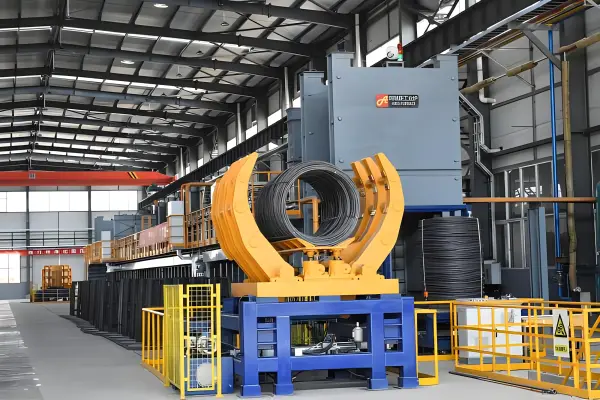
Nickel alloy heat treatment is not simply a heating and cooling operation. It is a metallurgical process used to control phase stability, grain structure, precipitate distribution, residual stress, mechanical strength, and corrosion performance.
Different nickel alloys require different thermal processing strategies. A solid-solution-strengthened alloy such as Inconel 625 is treated differently from a precipitation-hardening alloy such as Inconel 718. Likewise, commercially pure nickel, corrosion-resistant Hastelloy grades, and high-temperature Incoloy alloys may require different solution treatment or stabilization practices.
For engineers and purchasers, the correct heat-treatment condition is essential because two products made from the same nominal alloy can have significantly different properties depending on their thermal history.
Quick answer: Nickel alloy heat treatment is selected according to the alloy's strengthening mechanism, product form, required mechanical properties, corrosion environment, and applicable material specification. Solution annealing is primarily used to obtain a controlled, homogeneous microstructure, while aging is used in precipitation-hardening grades to increase strength through controlled precipitate formation.
1. Why Heat Treatment Matters in Nickel Alloys
Nickel-based alloys are designed to operate in demanding environments involving high temperature, pressure, corrosive chemicals, cyclic loading, or combinations of these conditions. Their performance depends not only on chemical composition but also on microstructure.
Heat treatment can influence:
- Yield strength and tensile strength
- Ductility and elongation
- Creep and stress-rupture performance
- Grain size and grain-boundary condition
- Precipitation of strengthening phases
- Resistance to sensitization and intergranular corrosion
- Residual stress after forming or machining
- Dimensional stability during service
An inappropriate heat-treatment cycle may produce undesirable phases, excessive grain growth, insufficient precipitation hardening, or reduced corrosion resistance.
Consequently, material selection should always consider the required delivery condition, not just the alloy designation.
2. Solution Annealing: The Foundation of Microstructural Control
Solution annealing, also called solution heat treatment, involves heating an alloy to a temperature at which selected alloying elements and phases are dissolved or redistributed into a relatively homogeneous solid solution. The material is then cooled under controlled conditions to retain the desired microstructure.
The exact temperature and holding time depend on:
- Alloy chemistry
- Product thickness
- Manufacturing route
- Previous cold work or hot work
- Required grain structure
- Applicable specification
- Subsequent welding or forming operations
Main objectives of solution annealing
1. Homogenization of the microstructure
Solution treatment can reduce compositional segregation and improve consistency between different regions of the product.
2. Restoration of ductility
Cold rolling, drawing, bending, or other forming operations can increase hardness and reduce elongation. Annealing may restore formability.
3. Control of unwanted phases
Some nickel alloys are sensitive to the formation of intermetallic phases or carbide-related structures during thermal exposure. Proper solution treatment helps maintain the intended metallurgical condition.
4. Improvement of corrosion performance
For certain corrosion-resistant alloys, an appropriate solution-annealed condition helps maintain resistance to localized or intergranular corrosion. However, the effect depends strongly on the alloy and environment.
Important engineering note
“Solution annealed” does not mean every nickel alloy has received the same treatment. The phrase identifies a general metallurgical condition, but the actual acceptance requirements must be verified against the relevant specification and material certificate.
3. Precipitation Hardening: How Aging Increases Strength
Some nickel alloys obtain high strength through precipitation hardening. In this process, alloying elements form finely distributed precipitates within the nickel-based matrix. These precipitates hinder dislocation movement and increase resistance to plastic deformation.
A typical precipitation-hardening sequence may involve:
- Solution treatment
- Controlled cooling
- One or more aging treatments
- Cooling to the specified final condition
The resulting strength depends on precipitate type, size, volume fraction, distribution, and stability.
Inconel 718 as an example
Inconel 718 is a precipitation-hardening nickel-based superalloy. Its strengthening system is associated primarily with nickel-based precipitates involving niobium, together with other alloying elements and phases.
The aging process must be controlled carefully because:
- Under-aging may not achieve the specified strength.
- Over-aging can reduce strength by coarsening precipitates.
- Excessive thermal exposure may promote undesirable phases.
- Product thickness and section geometry can affect thermal uniformity.
For this reason, “Inconel 718” alone is not enough information when ordering material for a critical application. The purchaser should specify the required product standard and heat-treatment condition.
4. Solid-Solution Strengthening vs Precipitation Hardening
A useful way to understand nickel alloy heat treatment is to distinguish between two major strengthening mechanisms.
Inconel 625 and Inconel 718 are not treated identically
Inconel 625 is widely recognized for corrosion resistance and solid-solution strengthening associated with elements such as molybdenum and niobium. Inconel 718, by contrast, is designed to obtain substantial strength through precipitation hardening.
This difference affects the manufacturing process, delivery condition, mechanical-property expectations, and suitability for high-load applications.
A purchaser should not assume that a heat-treatment schedule suitable for one nickel alloy can be transferred directly to another grade.
5. Heat Treatment and Corrosion Resistance
High strength is not always the only objective. In chemical processing, marine, oil and gas, and power-generation equipment, corrosion performance may be equally important.
Thermal exposure can affect corrosion resistance through:
- Carbide precipitation
- Intermetallic phase formation
- Element depletion near grain boundaries
- Changes in grain size
- Residual stress
- Weld heat-affected zones
- Surface oxidation or contamination
For example, some nickel-chromium-molybdenum alloys are selected for resistance to aggressive chemical environments. Their performance depends on maintaining the intended metallurgical condition and avoiding harmful thermal histories during fabrication.
Welding considerations
A material may leave the mill in a suitable condition but experience additional thermal cycles during:
- Welding
- Post-weld heat treatment
- Hot forming
- Stress relieving
- Repair welding
- Localized machining or thermal cutting
Therefore, the heat-treatment requirements for the base material and the fabrication procedure should be reviewed together.
6. What Purchasers Should Verify Before Ordering
A technically complete nickel alloy inquiry should include more than the grade name.
Recommended purchasing checklist
- Alloy designation: For example, Inconel 718, Inconel 625, Incoloy 800H, or Hastelloy C-276
- UNS number: To reduce ambiguity between similar commercial names
- Product form: Sheet, plate, bar, tube, pipe, wire, strip, or other form
- Applicable standard: ASTM, ASME, EN, AMS, or customer-specific specification
- Delivery condition: Annealed, solution treated, aged, cold worked, or another specified condition
- Mechanical requirements: Tensile strength, yield strength, elongation, hardness, or creep properties
- Dimensional requirements: Thickness, outside diameter, wall thickness, length, and tolerances
- Inspection requirements: Chemical analysis, mechanical testing, hardness, ultrasonic testing, or other inspection
- Material traceability: Heat number, test certificate, and product identification
- Application conditions: Temperature, pressure, corrosive medium, and loading type
Why the certificate matters
A material test certificate should be reviewed to confirm that the supplied product meets the specified grade and condition. For critical applications, the purchaser should verify whether the certificate includes the required heat-treatment information, mechanical results, and applicable standard.
7. Common Heat-Treatment Mistakes
Mistake 1: Choosing the alloy without specifying the condition
The same alloy can be supplied in different conditions with different mechanical properties.
Mistake 2: Assuming stronger is always better
Higher hardness or tensile strength may reduce ductility, formability, or weldability. The correct condition must match the application.
Mistake 3: Ignoring post-processing
Welding, forming, and machining can change the material's thermal and mechanical history.
Mistake 4: Using generic temperature recommendations
Heat-treatment temperatures should be based on the applicable specification, alloy, product form, and qualified process—not an unverified online table.
Mistake 5: Neglecting service temperature
A condition that provides excellent room-temperature strength may not provide the required long-term stability at elevated temperature.
8. Frequently Asked Questions
What is the purpose of solution annealing in nickel alloys?
Solution annealing is used to establish a controlled microstructure, improve homogeneity, restore ductility, and help maintain the intended combination of mechanical and corrosion properties.
Does every nickel alloy require aging?
No. Aging is particularly important for precipitation-hardening alloys such as Inconel 718. Many solid-solution-strengthened nickel alloys do not require precipitation aging to achieve their primary performance.
Is heat treatment the same for Inconel 625 and Inconel 718?
No. Their strengthening mechanisms differ, so their heat-treatment requirements and typical delivery conditions also differ.
Can heat treatment improve corrosion resistance?
It can help maintain or restore the desired corrosion-resistant microstructure in certain alloys, but the result depends on alloy chemistry, thermal history, surface condition, and service environment.
What information should be included in a heat-treatment inquiry?
Include the alloy grade, UNS number, product form, applicable standard, required delivery condition, mechanical requirements, dimensions, inspection needs, and service conditions.
Conclusion
Nickel alloy heat treatment is a critical part of material engineering rather than a secondary manufacturing detail. Solution annealing, aging, and controlled cooling must be selected according to the alloy's strengthening mechanism and intended service environment.
For reliable procurement, buyers should specify both the alloy and the required metallurgical condition, then verify the supplied material through the applicable standard and test documentation.
Need nickel alloy materials for a demanding engineering application? Contact Danyang Jiaxin New Materials Technology Co., Ltd. for alloy selection, product-form guidance, and material supply consultation.
Contact Alloysfactory
Company: Danyang Jiaxin New Materials Technology Co., Ltd.
Website: https://www.alloysfactory.com/
Email: sales@alloysfactory.com
Phone / WhatsApp: +86 180 5277 8977
Address: Building 10, Fuqian Xingzuo, Development Zone, Danyang City, Jiangsu Province, China
Thank you very much for writing to us. Please leave your message and contact information, we will reply to you within 24 hours.