
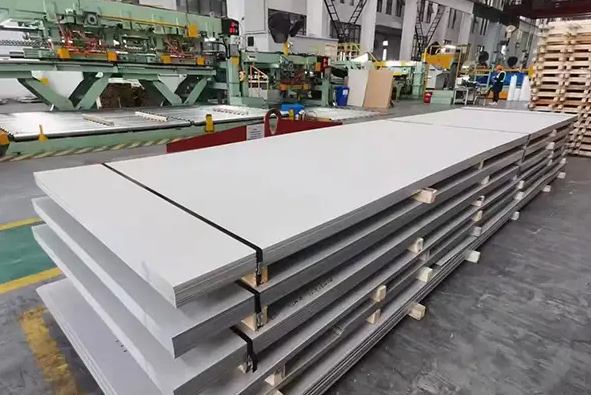
What Is Nimonic 90 Alloy?
Nimonic 90 is a nickel-based superalloy developed for high-temperature service where strength, oxidation resistance and resistance to creep are important.
It is strengthened primarily through a nickel-based matrix and precipitation-hardening mechanisms involving alloying additions such as titanium and aluminum.
Nimonic 90 is commonly considered for high-temperature components that must retain mechanical performance under sustained thermal loading.
1. Alloy Composition and Strengthening
Nimonic 90 contains nickel, chromium and cobalt, together with alloying elements that support precipitation hardening.
Its high-temperature performance is influenced by:
- Nickel-based matrix stability
- Chromium for oxidation resistance
- Titanium and aluminum for strengthening precipitates
- Controlled heat treatment
- Product form and grain structure
The final properties depend on the supplied condition and manufacturing process.
2. High-Temperature Performance
Nimonic 90 is valued for its resistance to creep and stress-related deformation at elevated temperatures. This makes it suitable for components exposed to prolonged thermal and mechanical loads.
In high-temperature design, engineers should consider:
- Continuous operating temperature
- Peak temperature and thermal cycling
- Applied stress
- Creep and stress-rupture requirements
- Oxidation environment
- Required service life
Generic temperature limits should not replace specification-based engineering evaluation.
3. Typical Applications
Nimonic 90 may be used in:
- Gas-turbine components
- Aerospace engine parts
- High-temperature fasteners
- Combustion and exhaust components
- Industrial heating equipment
- Specialized high-temperature mechanical parts
The final application determines whether bar, wire, sheet, plate, fastener or another product form is appropriate.
4. Manufacturing and Heat Treatment
Nimonic 90 requires controlled manufacturing and heat treatment to achieve its specified mechanical properties. Forming, machining and welding procedures should be selected according to the product condition and component design.
Buyers should confirm:
- Solution and aging treatment requirements
- Mechanical-property certification
- Dimensional tolerances
- Surface condition
- Non-destructive testing
- Applicable aerospace or industrial standard
5. Nimonic 90 vs General Stainless Steel
Stainless steel is suitable for many corrosion-resistant and moderate-temperature applications. Nimonic 90 is designed for more demanding high-temperature mechanical service.
The higher material cost of a superalloy may be justified when long-term strength retention, creep resistance and thermal reliability are essential to the component.
Conclusion
Nimonic 90 is a nickel-based precipitation-strengthened superalloy used for demanding high-temperature applications. Its performance depends on correct alloy selection, heat treatment and product certification.
For Nimonic 90 bars, wires, sheets, plates or custom high-temperature alloy components, contact AlloysFactory.
Contact AlloysFactory
Danyang Jiaxin New Materials Technology Co., Ltd.
Email: sales@alloysfactory.com
Phone: +86 180 5277 8977
Website: https://www.alloysfactory.com/
Thank you very much for writing to us. Please leave your message and contact information, we will reply to you within 24 hours.