
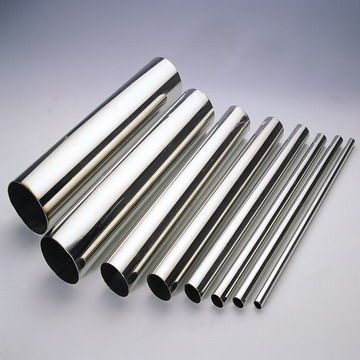
How to Select the Right Nickel Alloy Pipe or Tube?
Nickel alloy pipes and tubes are used in chemical processing, power generation, oil and gas, marine engineering, aerospace and high-temperature equipment. They are selected when conventional materials may not provide the required combination of corrosion resistance, temperature capability or mechanical performance.
The correct nickel alloy pipe or tube depends on the service environment, pressure, temperature, corrosion mechanism, dimensions and applicable material standard.
Selecting a grade first and checking the application later can lead to unnecessary cost or unsuitable performance. A better approach is to define the operating conditions before choosing the material.
1. Identify the Service Environment
The first step is to understand what the pipe or tube will be exposed to.
Important questions include:
- Is the medium acidic, alkaline, oxidizing or reducing?
- Are chlorides or seawater present?
- Is the system exposed to high temperature?
- Is carburization, nitridation or oxidation a concern?
- Will the material experience pressure, vibration or thermal cycling?
- Is the application subject to sour-service or other specialized requirements?
Different nickel alloys are designed for different corrosion and temperature challenges.
2. Common Nickel Alloy Families
Inconel Alloys
Inconel grades such as 600, 625 and 718 are used across high-temperature, corrosion-resistant and mechanically demanding applications. The specific grade must be matched to the required corrosion and strength performance.
Hastelloy Alloys
Hastelloy grades such as C-276, C-22 and B-3 are widely considered for severe chemical corrosion environments. Selection depends on the process chemistry and the dominant corrosion mechanism.
Incoloy Alloys
Incoloy grades such as 800, 800H, 800HT and 825 are used for high-temperature equipment and corrosion-resistant process systems. Some grades emphasize high-temperature strength, while others are selected for aqueous corrosion resistance.
Monel Alloys
Monel 400 and Monel K-500 are nickel-copper alloys used in marine, chemical and mechanical applications. Monel 400 is commonly selected for corrosion resistance, while K-500 is considered when higher strength is needed.
3. Pipe vs Tube: What Is the Difference?
In general, pipe is commonly specified by nominal size and schedule or wall thickness, while tube is often specified by outside diameter and wall thickness.
However, terminology and dimensional systems vary by industry and standard. Buyers should not rely on the words “pipe” and “tube” alone.
Specify:
- Outside diameter or nominal pipe size
- Wall thickness
- Length
- Seamless or welded construction
- Dimensional tolerance
- Surface finish
- End condition
- Required testing
4. Seamless vs Welded Nickel Alloy Products
Seamless pipe and tube are manufactured without a longitudinal weld seam and are often selected for applications with demanding pressure, temperature or corrosion requirements.
Welded pipe and tube can be suitable for many applications and may offer advantages in manufacturing efficiency, large dimensions or specific project requirements.
The correct choice depends on the applicable specification, design conditions and inspection requirements. Neither construction type should be selected solely on price.
5. Important Material Standards
Depending on the grade and product form, nickel alloy pipes and tubes may be supplied to standards such as ASTM or ASME specifications, as well as other national or project standards.
Before ordering, confirm:
- Alloy designation and UNS number
- Applicable ASTM/ASME or project standard
- Seamless or welded requirement
- Heat-treatment condition
- Hydrostatic or other pressure testing
- Chemical and mechanical test requirements
- Non-destructive examination requirements
- Material test report and traceability
The standard must match the intended application and regulatory requirements.
6. Procurement Checklist for Industrial Buyers
A clear inquiry should include:
- Alloy grade: for example, Inconel 625, Hastelloy C-276 or Incoloy 825
- Product type: pipe or tube
- Dimensions: OD, nominal size, wall thickness and length
- Quantity: total length, pieces or weight
- Standard: ASTM, ASME, EN or project specification
- Service conditions: medium, temperature and pressure
- Testing: chemical analysis, tensile test, hardness, NDT or pressure testing
- Delivery requirements: packaging, marking and documentation
A complete inquiry helps suppliers provide a technically accurate quotation and reduces clarification delays.
Conclusion
Nickel alloy pipe and tube selection requires more than choosing a corrosion-resistant material. The alloy, product construction, dimensions, manufacturing standard, heat treatment and inspection requirements must all match the application.
AlloysFactory supplies nickel-based special alloy products in multiple forms and can support inquiries involving pipes, tubes, bars, sheets, strips, wires and custom requirements.
Contact AlloysFactory
Danyang Jiaxin New Materials Technology Co., Ltd.
Email: sales@alloysfactory.com
Phone: +86 180 5277 8977
Website: https://www.alloysfactory.com/
Thank you very much for writing to us. Please leave your message and contact information, we will reply to you within 24 hours.