
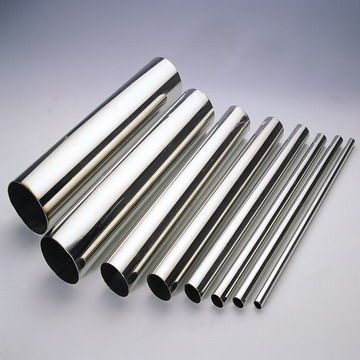
Nickel alloy pipes and tubes are widely used in applications where high corrosion resistance, elevated-temperature performance and long-term reliability are required.
Industries including chemical processing, oil and gas, power generation, marine engineering and aerospace rely on nickel-based alloy tubing and piping for demanding service conditions.
Why Use Nickel Alloy Pipes and Tubes?
Nickel alloys can provide a combination of properties that is difficult to achieve with conventional steel.
Important advantages include:
- Excellent corrosion resistance
- High-temperature strength
- Resistance to pitting and crevice corrosion
- Resistance to oxidation
- Good mechanical stability
- Long service life in demanding environments
Common Nickel Alloy Grades
Inconel 625
Inconel 625 is widely used where corrosion resistance, high strength and weldability are required.
It can be considered for chemical processing, offshore systems, seawater applications and high-temperature equipment.
Inconel 718
Inconel 718 is particularly attractive when high mechanical strength is required.
It is widely associated with aerospace, turbine and high-strength engineering applications.
Incoloy 800 / 800H / 800HT
These alloys are commonly considered for elevated-temperature equipment, heat exchangers and industrial furnace systems.
Hastelloy C-276
C-276 is frequently selected for highly corrosive chemical environments.
Monel 400
Monel 400 is widely known for resistance to seawater and selected chemical environments.
Pipe vs Tube: What Is the Difference?
Although the terms are sometimes used interchangeably, industrial specifications often distinguish pipe and tube based on dimensions, manufacturing standards and intended application.
Pipe is commonly specified according to nominal size and wall thickness.
Tube is often specified using outside diameter and wall thickness.
For procurement, buyers should always provide the applicable specification rather than relying only on the terms "pipe" or "tube."
Seamless vs Welded
Nickel alloy pipes and tubes may be manufactured as seamless or welded products depending on grade, dimensions and specification.
Seamless Pipe and Tube
Seamless products can be advantageous for certain high-pressure and critical applications.
Welded Pipe and Tube
Welded products can offer manufacturing and dimensional advantages for certain applications.
The appropriate choice depends on service requirements, dimensions and applicable standards.
What Information Should Buyers Provide?
A complete inquiry should include:
- Alloy grade
- Pipe or tube
- Seamless or welded
- Outside diameter
- Wall thickness
- Length
- Quantity
- Applicable ASTM / ASME specification
- Heat-treatment condition
- Inspection requirements
- End finish
- Surface condition
Providing these details helps suppliers quote accurately.
Applications
Nickel alloy pipes and tubes are used in:
Chemical processing: corrosive fluid transport and heat exchangers.
Oil and gas: high-pressure and corrosive service.
Power generation: high-temperature piping and heat-transfer equipment.
Marine engineering: seawater and offshore systems.
Aerospace: selected high-temperature and high-strength tubing applications.
New energy: hydrogen and advanced energy equipment.
How to Choose the Correct Grade
Start with the operating environment.
Ask:
- What is the operating temperature?
- What chemicals are present?
- What pressure will the pipe experience?
- Is chloride exposure expected?
- Is high mechanical strength required?
- Is welding necessary?
- What standard applies?
- What service life is expected?
These questions are more useful than selecting a grade based solely on price.
Custom Nickel Alloy Tubes and Pipes
Industrial projects frequently require non-standard dimensions.
A capable supplier should be able to evaluate requirements based on:
- Customer drawings
- Technical specifications
- Special dimensions
- Small trial orders
- Large-volume projects
- Customized product forms
AlloysFactory provides nickel alloy pipes and tubes together with bars, rods, sheets, plates, strips, wires and other specialty alloy products.
Conclusion
Nickel alloy pipes and tubes are important components in high-temperature and corrosion-resistant industrial systems.
Selecting the correct alloy requires consideration of temperature, pressure, chemical environment, dimensions, manufacturing method and applicable standards.
Danyang Jiaxin New Materials Technology Co., Ltd. has more than 15 years of experience in special alloy materials and supports customized nickel alloy products for industrial customers.
Company: Danyang Jiaxin New Materials Technology Co., Ltd.
Phone / WhatsApp: +86 18052778977
Email: sales@alloysfactory.com
Address: Room 412, Building 10, Fuqian Xingzuo Garden, Development Zone, Danyang City, Jiangsu Province, China
Website: alloysfactory.com
Thank you very much for writing to us. Please leave your message and contact information, we will reply to you within 24 hours.