
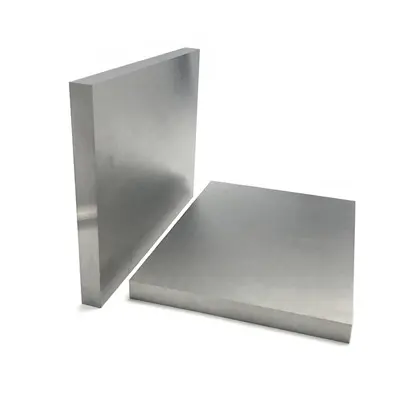
Monel 400 and Monel K-500 are nickel-copper alloys known for corrosion resistance in marine and chemical environments. Their key difference is mechanical performance.
Monel 400 is a corrosion-resistant, non-age-hardenable alloy, while Monel K-500 combines nickel-copper corrosion resistance with higher strength through precipitation hardening.
The appropriate grade depends on the required strength, corrosion environment, temperature and fabrication process.
1. Monel 400: Corrosion Resistance and Fabricability
Monel 400 contains primarily nickel and copper, with small amounts of other elements. It offers good resistance to seawater, hydrofluoric acid under suitable conditions and many chemical environments.
It is widely used for:
- Marine piping and seawater equipment
- Chemical processing components
- Heat exchangers
- Pumps and valves
- Fasteners and fabricated parts
Monel 400 is also valued for its ductility and suitability for many forming and fabrication operations.
2. Monel K-500: Higher Mechanical Strength
Monel K-500 is a nickel-copper alloy containing aluminum and titanium. These additions enable precipitation hardening after suitable processing.
Compared with Monel 400, K-500 can provide substantially higher tensile and yield strength in appropriate heat-treated conditions. This makes it useful where both corrosion resistance and mechanical loading are important.
Typical applications include:
- Marine and offshore components
- Pump and valve parts
- Oil and gas equipment
- High-strength fasteners
- Shafts, gears and mechanical components
3. Corrosion Resistance Considerations
Both alloys perform well in many marine and chemical environments. However, Monel K-500 should not automatically be assumed to have identical corrosion performance to Monel 400 in every condition.
For critical marine or sour-service applications, buyers should evaluate:
- Seawater velocity and temperature
- Galvanic coupling
- Hydrogen exposure
- Sulfide-containing environments
- Stress and fatigue conditions
- Required corrosion testing
4. Heat Treatment and Manufacturing
Monel 400 is generally supplied in conditions selected for the required balance of strength and ductility.
Monel K-500 requires appropriate solution treatment and aging treatment to develop its intended precipitation-hardened properties. The final mechanical performance depends on the exact heat-treatment condition and product form.
When ordering K-500, specify:
- Heat-treatment condition
- Required mechanical properties
- Product dimensions
- Applicable material standard
- Inspection and certification requirements
5. Selection Guide
Choose Monel 400 when corrosion resistance, ductility and general fabrication are the main priorities.
Choose Monel K-500 when higher strength, wear resistance and mechanical load-bearing capability are required alongside nickel-copper corrosion resistance.
Conclusion
Monel 400 and Monel K-500 are closely related alloys, but they are not direct substitutes in every application. Monel 400 is widely used for corrosion-resistant components, while K-500 is often selected for higher-strength marine, mechanical and energy-sector parts.
For Monel alloy bars, plates, tubes, wires, fasteners or custom components, contact AlloysFactory.
Contact AlloysFactory
Danyang Jiaxin New Materials Technology Co., Ltd.
Email: sales@alloysfactory.com
Phone: +86 180 5277 8977
Website: https://www.alloysfactory.com/
Thank you very much for writing to us. Please leave your message and contact information, we will reply to you within 24 hours.