
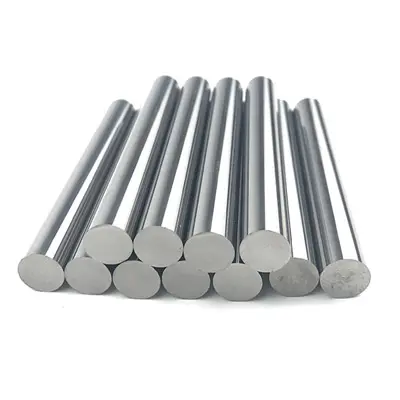
Monel 400 and Monel K-500 are two important nickel-copper alloys widely used in marine engineering, chemical processing, oil and gas, and other demanding industrial applications.
Although both alloys are based on the nickel-copper system, they are designed for different performance priorities.
Monel 400 is well known for its excellent corrosion resistance and toughness, while Monel K-500 combines the corrosion resistance of the nickel-copper system with substantially higher mechanical strength through precipitation hardening.
Understanding the differences between Monel 400 and Monel K-500 can help engineers and buyers select the appropriate material for each application.
What Is Monel 400?
Monel 400 is a nickel-copper alloy containing a high percentage of nickel and copper.
Its major advantages include:
- Excellent seawater resistance
- Good resistance to hydrofluoric acid
- Strong resistance to chloride environments
- Good toughness
- Good mechanical properties
- Good resistance to stress corrosion cracking
- Excellent performance in marine environments
Monel 400 is widely available in plate, sheet, bar, rod, pipe, tube, wire and other forms.
What Is Monel K-500?
Monel K-500 is a precipitation-hardening nickel-copper alloy.
It retains many of the corrosion-resistant characteristics of Monel 400 but offers significantly higher mechanical strength after suitable heat treatment.
The strengthening system is associated with additions such as aluminum and titanium.
As a result, Monel K-500 is particularly suitable for highly loaded components.
Common applications include:
- Pump shafts
- Valve components
- Fasteners
- Marine components
- Oil and gas equipment
- Springs
- High-strength structural components
Monel 400 vs K-500: Main Difference
The most important difference is the strengthening mechanism.
Monel 400 is primarily a solid-solution alloy.
Monel K-500 is precipitation hardenable.
This means K-500 can achieve substantially higher strength after appropriate aging treatment.
Which Has Better Corrosion Resistance?
Both alloys offer excellent corrosion resistance.
Monel 400 has a long history of use in marine and chemical environments.
Monel K-500 generally retains good corrosion resistance, but its heat-treated microstructure and service conditions must be considered when evaluating corrosion performance.
For applications where corrosion resistance is the only major requirement, Monel 400 can often provide an efficient solution.
For applications requiring both corrosion resistance and high mechanical strength, Monel K-500 becomes more attractive.
Monel 400 vs K-500 for Seawater
Marine engineering is one of the most important application areas for nickel-copper alloys.
Monel 400 performs particularly well in:
- Seawater
- Marine piping
- Heat exchangers
- Pumps
- Valves
- Marine fasteners
- Chemical marine systems
Monel K-500 can be selected where similar environmental resistance must be combined with higher strength.
For example, highly loaded shafts, fasteners and rotating components may benefit from K-500.
Mechanical Strength
This is where Monel K-500 has a major advantage.
After precipitation hardening, K-500 can provide significantly higher yield strength than Monel 400.
Therefore, if a component is exposed to:
- High mechanical loads
- High torque
- Cyclic stress
- Shaft loading
- Fastener loads
- Mechanical wear
K-500 should be considered.
Monel 400 may be preferable when toughness, corrosion resistance and easier fabrication are more important than maximum strength.
Machining and Fabrication
Monel alloys can be challenging to machine because of their strength and work-hardening characteristics.
Proper cutting tools, feed rates, speeds and coolant strategies are important.
Monel K-500 can be more demanding because of its higher strength.
Manufacturers should therefore consider the final geometry and machining requirements before selecting the alloy.
Monel 400 Applications
Typical applications include:
Marine Engineering
- Seawater equipment
- Marine valves
- Pumps
- Heat exchangers
- Marine piping
Chemical Processing
- Chemical pumps
- Process equipment
- Heat exchangers
- Acid-handling equipment
Oil and Gas
- Valves
- Pumps
- Downhole components
- Fasteners
- Instrumentation components
Monel K-500 Applications
Typical applications include:
- Pump shafts
- Impellers
- Valve components
- Oil and gas tools
- Marine fasteners
- Springs
- High-strength bolts
- High-load mechanical components
Which Alloy Should You Choose?
A simple decision framework is useful.
Choose Monel 400 when:
- Corrosion resistance is the primary concern
- High toughness is important
- The component does not require maximum strength
- Fabrication simplicity matters
- The application involves seawater or chemical environments
Choose Monel K-500 when:
- Very high mechanical strength is required
- The component is highly loaded
- Shaft or fastener strength is critical
- Precipitation hardening is acceptable
- Marine corrosion resistance must be combined with mechanical performance
Frequently Asked Questions
Is Monel K-500 stronger than Monel 400?
Yes. The precipitation-hardening mechanism of K-500 allows it to achieve significantly higher mechanical strength than Monel 400.
Is Monel 400 good for seawater?
Yes. Monel 400 has excellent resistance in many marine and seawater environments.
Is Monel K-500 corrosion resistant?
Yes. K-500 retains strong corrosion resistance while providing higher mechanical strength.
Which is better for shafts?
Monel K-500 is often preferred for highly loaded shafts because of its high strength.
Which is easier to fabricate?
Monel 400 is generally the simpler choice when extensive forming, machining or fabrication is required.
Final Recommendation
Monel 400 and Monel K-500 should not be viewed simply as competing grades.
They are better understood as two materials designed for different engineering priorities.
Monel 400 is an excellent choice for corrosion resistance, toughness and marine applications.
Monel K-500 is the preferred candidate when high strength must be combined with nickel-copper alloy corrosion resistance.
The final selection should consider the complete operating environment, mechanical loads, temperature, corrosion medium, manufacturing process and required standards.
Need Monel 400 or Monel K-500?
AlloysFactory supplies Monel 400 and Monel K-500 in multiple product forms for industrial applications.
Website: https://www.alloysfactory.com/
Email: sales@alloysfactory.com
Phone / WhatsApp: +86 18052778977
Company: Danyang Jiaxin New Materials Technology Co., Ltd.
Location: Danyang City, Jiangsu Province, China
Send your required alloy grade, dimensions, quantity and technical specification to the AlloysFactory team for material selection and quotation.
Thank you very much for writing to us. Please leave your message and contact information, we will reply to you within 24 hours.