
Modern electronic and electrical components often require materials that do much more than provide mechanical strength.
In hermetic packages, electronic assemblies, glass-to-metal seals, and precision components, the thermal expansion behavior of the material can be just as important as its strength or corrosion resistance.
Kovar Alloy 29, commonly identified as 4J29, UNS K94610, and W.Nr. 1.3981, is a precision iron-nickel-cobalt alloy designed for controlled thermal expansion and reliable glass-to-metal or ceramic-to-metal sealing applications.
What Is Kovar Alloy 29?
Kovar Alloy 29 is a controlled-expansion alloy used primarily where thermal expansion compatibility is required.
It is commonly known as:
- Kovar Alloy 29
- 4J29
- UNS K94610
- W.Nr. 1.3981
- ASTM F15 Kovar alloy
The defining characteristic of this material is its controlled coefficient of thermal expansion over a useful temperature range.
Why Is Controlled Thermal Expansion Important?
Different materials expand at different rates when heated.
Consider an electronic package containing:
- Metal
- Glass
- Ceramic
- Semiconductor components
If the metal expands significantly more or less than the glass or ceramic, thermal cycling can create mechanical stress.
Over time, this may cause:
- Seal failure
- Cracking
- Leakage
- Component deformation
- Reduced reliability
Kovar is designed to reduce these thermal-expansion mismatches.
Kovar Alloy 29 for Hermetic Sealing
One of the most important applications of Kovar is hermetic sealing.
Hermetic packages are designed to protect sensitive components from external environments.
Applications can include:
- Electronic packages
- Semiconductor packages
- Microwave components
- Sensors
- Electrical feedthroughs
- Glass-to-metal seals
- Ceramic-to-metal seals
- Specialized connectors
The material must maintain dimensional and mechanical stability while being compatible with the sealing process.
Thermal Expansion Characteristics
The key engineering advantage of Kovar is its controlled thermal expansion.
Its expansion behavior is compatible with certain glasses and ceramics used in electronic packaging.
This compatibility helps reduce thermal stress during:
- Heating
- Cooling
- Brazing
- Sealing
- Thermal cycling
- Service operation
For precision electronic assemblies, controlling thermal expansion can be critical to maintaining hermetic integrity.
Kovar Alloy 29 in Electronics
The electronics industry increasingly requires smaller packages, tighter dimensional tolerances, and greater long-term reliability.
Kovar remains useful where the package material must provide:
- Controlled thermal expansion
- Mechanical stability
- Reliable sealing behavior
- Suitable surface characteristics
- Consistent dimensional performance
The exact alloy condition and processing method should be selected according to the final application.
Kovar Sheet and Plate
Kovar sheet and plate can be used to manufacture:
- Electronic housings
- Package covers
- Frames
- Components
- Sealing structures
- Precision fabricated parts
When ordering Kovar sheet, buyers should specify:
- Thickness
- Width
- Length
- Surface condition
- Flatness
- Dimensional tolerance
- Applicable standard
- Required thermal expansion properties
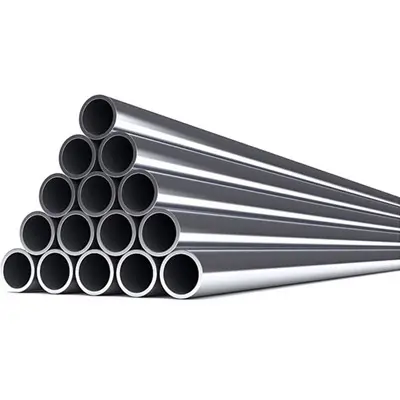
Kovar Tube and Pipe
Kovar tube and pipe products can be useful in specialized sealing and precision applications.
Potential applications include:
- Feedthrough structures
- Sensor assemblies
- Hermetic components
- Specialized electronic packaging
- Precision instrumentation
The dimensions and tolerances should be defined according to the final assembly design.
Kovar Alloy 29 vs Conventional Steel
Kovar should not be viewed simply as a stronger version of conventional steel.
Its value comes primarily from its controlled physical properties.
Conventional steels are generally selected for structural strength, manufacturability, cost, or general industrial use.
Kovar is selected when thermal expansion behavior and sealing compatibility are critical.
This distinction is important when evaluating material cost.
A higher material price may be justified if the alloy prevents thermal-expansion mismatch and improves package reliability.
Important Factors When Buying Kovar
1. Thermal Expansion Requirement
Specify the required coefficient of thermal expansion or the compatible glass/ceramic system.
2. Product Form
Determine whether the application requires:
- Sheet
- Plate
- Strip
- Tube
- Pipe
- Bar
- Rod
- Ring
- Custom components
3. Dimensional Tolerance
Precision electronic components often require tighter tolerances than conventional industrial components.
4. Surface Condition
Surface quality can influence subsequent fabrication, sealing, plating, or coating.
5. Fabrication Process
Specify whether the material will be:
- Stamped
- Formed
- Machined
- Brazed
- Welded
- Sealed
- Plated
The processing route should be considered when selecting the material condition.
Kovar for Glass-to-Metal Seals
A glass-to-metal seal requires compatibility between the glass and metal during heating and cooling.
The material pair must maintain an appropriate expansion relationship across the sealing temperature range.
Kovar is widely associated with this type of application because its controlled expansion characteristics can provide compatibility with selected sealing glasses.
This makes Kovar an important material in hermetic electronic packaging.
Kovar Alloy 29 FAQs
What is Kovar Alloy 29?
Kovar Alloy 29 is a controlled-expansion iron-nickel-cobalt alloy identified as 4J29, UNS K94610, and W.Nr. 1.3981.
What is Kovar used for?
Kovar is commonly used for hermetic electronic packages, glass-to-metal seals, ceramic-to-metal seals, electrical feedthroughs, sensors, and precision electronic components.
Why is Kovar used with glass?
Kovar has controlled thermal expansion that can be compatible with selected glasses, helping reduce thermal stress during heating and cooling.
Is Kovar the same as 4J29?
Kovar Alloy 29 and 4J29 are commonly used names for the same controlled-expansion alloy family.
What forms of Kovar are available?
Depending on requirements, Kovar can be supplied as sheet, plate, strip, tube, pipe, bar, rod, rings, and customized components.
Conclusion
Kovar Alloy 29 is a specialized precision alloy whose main advantage is controlled thermal expansion rather than simply high strength.
Its 4J29 and UNS K94610 designations make it an important material for electronic packaging, hermetic seals, glass-to-metal sealing, ceramic-to-metal sealing, sensors, feedthroughs, and other precision applications.
When selecting Kovar, engineers should evaluate thermal expansion requirements, sealing materials, product dimensions, surface condition, fabrication method, and applicable specifications.
About Alloysfactory
Danyang Jiaxin New Materials Technology Co., Ltd. supplies precision alloys and nickel-based special alloys for industrial and high-performance applications. The company's product range includes Kovar 29 (4J29), Invar-type alloys, Super Invar, Permalloy, Hiperco, nickel alloys, cobalt alloys, welding wires, and other specialty materials.
Website: https://www.alloysfactory.com/
Email: sales@alloysfactory.com
WhatsApp: +86 180 5277 8977
Address: Room 412, Building 10, Fuqian Xingzuo Garden, Development Zone, Danyang City, Jiangsu Province, China
For Kovar 4J29 sheets, plates, strips, tubes, pipes, bars, rings, or customized precision-alloy components, contact Alloysfactory with your drawings and technical specifications.
Thank you very much for writing to us. Please leave your message and contact information, we will reply to you within 24 hours.