
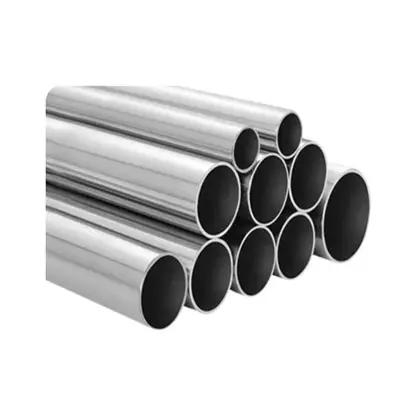
Inconel 690 is a nickel-chromium alloy developed for demanding environments where corrosion resistance, thermal stability, and long-term material reliability are essential. It is particularly recognized for its resistance to aqueous corrosion and stress corrosion cracking in specific nuclear and industrial service conditions.
For engineers and procurement teams, selecting Inconel 690 is not simply a matter of choosing a nickel alloy with a high operating temperature. The correct decision depends on the chemical environment, temperature, mechanical loading, fabrication process, product form, and applicable material specification.
This guide explains the composition, properties, applications, advantages, limitations, and purchasing considerations of Inconel Alloy 690, UNS N06690, and Werkstoff Number 2.4642.
What Is Inconel 690?
Inconel 690 is a nickel-based alloy with a high chromium content. Its chemistry is designed to provide strong resistance to oxidation and a range of corrosive aqueous environments.
Unlike precipitation-hardening grades such as Inconel 718, Inconel 690 is generally selected primarily for corrosion resistance and structural stability rather than for maximum precipitation-hardened strength.
Basic Material Identification
Material identification should always be confirmed against the applicable purchase specification and mill documentation.
Chemical Composition and Its Engineering Significance
The high nickel and chromium content of Inconel 690 is central to its performance.
- Nickel: Provides the alloy matrix and contributes to corrosion resistance and structural stability.
- Chromium: Supports the formation of a protective oxide film and improves resistance to oxidizing environments.
- Iron and other alloying elements: Contribute to the overall metallurgical balance and processing characteristics.
The exact composition limits depend on the governing standard. For critical applications, buyers should request a material test certificate showing the actual heat analysis rather than relying only on a commercial product description.
Key Properties of Inconel 690
1. Strong Corrosion Resistance
Inconel 690 is known for resistance to several corrosive environments, including many oxidizing aqueous conditions. Its high chromium content is especially important in environments where protective passivation contributes to service life.
However, corrosion resistance is always environment-specific. Concentration, temperature, flow velocity, impurities, dissolved oxygen, pH, and weld condition can all affect performance.
2. Resistance to Stress Corrosion Cracking in Relevant Service
One of the most important reasons Inconel 690 is used in nuclear-related applications is its resistance to certain forms of stress corrosion cracking compared with older material choices in relevant service environments.
This does not mean that the alloy is immune to every cracking mechanism. Design stress, fabrication quality, residual stress, water chemistry, irradiation conditions, and operating history must still be evaluated.
3. High-Temperature Stability
Inconel 690 maintains useful mechanical and corrosion-resistant characteristics at elevated temperatures. It can be considered for heat-transfer and high-temperature components when the design requires a nickel-based material.
The allowable operating temperature should not be selected from a generic alloy melting point or a marketing statement. Engineers should use temperature-dependent allowable stresses and the applicable design code.
4. Fabrication Compatibility
Inconel 690 can be supplied in multiple product forms and fabricated using established nickel-alloy processing methods. Nevertheless, forming, machining, welding, and heat treatment require appropriate procedures because nickel alloys can work-harden and may place high demands on tooling and process control.
Main Applications of Inconel 690
<AsyncImageGroup query={["Inconel 690 nuclear steam generator tubing industrial heat exchanger","nickel alloy heat exchanger tubes manufacturing","industrial nuclear power plant steam generator exterior"]} layout="carousel" aspectRatio="5/4"/>
Nuclear Power and Steam Generator Components
Inconel 690 is strongly associated with nuclear power applications, particularly steam generator tubing and related components where resistance to corrosion and stress corrosion cracking is a major design consideration.
The exact material qualification, heat treatment, inspection, and acceptance requirements depend on the nuclear code, project specification, and end-user requirements.
Heat Exchangers and Heat-Transfer Equipment
The alloy may be selected for heat-transfer components exposed to elevated temperatures and corrosive fluids. Tubes and pipes are common product forms when pressure containment and heat transfer are involved.
Chemical Processing Equipment
Inconel 690 can be considered for selected chemical-processing environments where oxidation resistance and corrosion performance are important. Compatibility must be verified against the actual process chemistry rather than assumed from the alloy name alone.
High-Temperature Industrial Components
The alloy may also be used in specialized industrial components exposed to heat, oxidation, and corrosive operating conditions. The most suitable product form depends on the component geometry and manufacturing route.
Inconel 690 vs Other Nickel Alloys
This table is a screening aid, not a substitute for a corrosion assessment or code-based material selection.
What Should Buyers Specify When Purchasing Inconel 690?
A technically complete inquiry should include:
- Material designation: Inconel 690 / UNS N06690.
- Product form: Tube, pipe, plate, sheet, bar, rod, wire, or another form.
- Applicable standard: ASTM, ASME, AMS, or the project-specific standard.
- Dimensions: Outside diameter, wall thickness, length, width, or other relevant tolerances.
- Delivery condition: Annealed, solution-treated, cold-worked, or another specified condition.
- Testing requirements: Chemical analysis, tensile testing, hardness, hydrostatic testing, eddy-current testing, ultrasonic testing, or other inspection requirements.
- Surface condition: Pickled, bright annealed, polished, machined, or as-rolled.
- Documentation: Material test certificate, inspection report, heat number traceability, and certificate of conformity.
- Quantity and delivery requirements: Trial quantity, production quantity, packaging, and destination.
For nuclear or safety-critical service, the purchase specification should be reviewed by the responsible engineering and quality teams before an order is placed.
Frequently Asked Questions
Is Inconel 690 suitable for high-temperature applications?
Yes, it is designed for demanding thermal and corrosive environments. However, suitability depends on the actual temperature, stress, atmosphere, and applicable design requirements.
Is Inconel 690 the same as Inconel 600?
No. Both are nickel-chromium alloys, but their compositions and typical engineering applications differ. Inconel 690 is especially recognized for its high chromium content and relevant nuclear-service corrosion performance.
Can Inconel 690 be supplied as tubing?
Yes. Tubes and pipes are among the product forms commonly associated with Inconel alloy supply. The required standard, dimensions, condition, and testing must be confirmed for each project.
What is the most important factor when selecting Inconel 690?
The most important factor is the combination of service environment, temperature, mechanical loading, and specification requirements. A grade should never be selected based only on its general reputation for corrosion resistance.
Conclusion
Inconel 690 is a specialized nickel-chromium alloy for applications requiring reliable corrosion resistance and performance in demanding thermal and aqueous environments. Its importance in nuclear steam generator service demonstrates how material selection must be based on long-term degradation mechanisms rather than simple strength comparisons.
For procurement, the best results come from clearly defining the alloy designation, product form, applicable standard, delivery condition, inspection requirements, and end-use environment.
Looking for Inconel 690 tubes, pipes, plates, bars, or custom nickel alloy products? Contact Alloysfactory to discuss your material requirements, dimensions, technical specifications, and supply needs.
Contact Alloysfactory
Danyang Jiaxin New Materials Technology Co., Ltd.
- Email: sales@alloysfactory.com
- Website: https://www.alloysfactory.com/
Visit the website to explore nickel-based alloys, cobalt-based alloys, precision alloys, and customized material solutions.
Thank you very much for writing to us. Please leave your message and contact information, we will reply to you within 24 hours.