
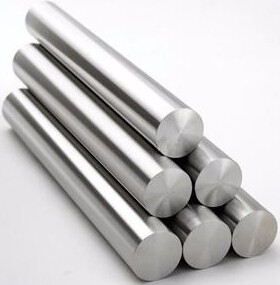
Inconel 600 and Inconel 625 are nickel-based alloys used in demanding thermal and corrosive environments. Although both provide excellent resistance to oxidation and corrosion, their alloying systems and engineering strengths are different. Inconel 600 is commonly selected for general high-temperature corrosion resistance, while Inconel 625 is often preferred when higher strength and resistance to localized corrosion are required.
The correct choice depends on the service temperature, chemical environment, mechanical loading, fabrication method and applicable material standard.
1. Chemical Composition and Strengthening Mechanisms
Inconel 600 is a nickel-chromium alloy with a relatively simple composition. Its nickel content provides resistance to many corrosive environments, while chromium contributes to oxidation and high-temperature corrosion resistance.
Inconel 625 contains nickel, chromium, molybdenum and niobium. Molybdenum improves resistance to pitting and crevice corrosion, while niobium contributes to solid-solution strengthening through its interaction with the nickel-chromium matrix.
A major difference is that Inconel 625 is primarily strengthened by solid-solution mechanisms rather than conventional precipitation hardening. This gives it a useful combination of strength, corrosion resistance and weldability.
2. Corrosion Resistance
Inconel 600 performs well in many organic and inorganic environments and is widely used where resistance to chloride-free or moderately corrosive service is required. It also offers strong resistance to oxidation at elevated temperatures.
Inconel 625 generally provides broader corrosion resistance, particularly in environments involving chlorides, seawater, acidic media and localized corrosion risks. Its molybdenum and niobium additions make it especially valuable in chemical processing, marine and offshore applications.
However, no alloy is universally resistant. Actual performance depends on concentration, temperature, flow conditions, contaminants and exposure time.
3. Mechanical and Temperature Performance
Inconel 600 is suitable for components exposed to heat, oxidation and moderate mechanical stress. It is commonly used in furnace equipment, heat-treatment components and chemical processing equipment.
Inconel 625 offers higher strength in many product forms and is frequently selected for pressure-containing components, marine hardware, aerospace parts and chemical processing equipment where corrosion resistance and mechanical loading occur together.
Material performance must always be confirmed against the required product form, heat treatment and specification. A bar, plate, tube or welded component may not have identical mechanical properties.
4. Weldability and Fabrication
Both alloys can be fabricated using established nickel-alloy processing methods. Inconel 625 is particularly valued for its weldability and is widely used in welded structures and corrosion-resistant overlays.
For either grade, buyers should confirm:
- Product form and dimensions
- Heat-treatment condition
- Applicable ASTM, ASME or other specification
- Welding procedure requirements
- Surface condition and inspection requirements
- Mechanical and corrosion test requirements
5. Typical Applications
Inconel 600 applications include:
- Heat exchangers and furnace components
- Chemical processing equipment
- Heat-treatment fixtures
- Electronic and thermal processing equipment
- Components exposed to oxidation and elevated temperatures
Inconel 625 applications include:
- Offshore and marine equipment
- Chemical processing systems
- Pressure vessels and piping
- Aerospace and gas-turbine components
- Corrosion-resistant fasteners and fabricated parts
6. How to Select Between Inconel 600 and 625
Choose Inconel 600 when the application mainly requires nickel-chromium corrosion resistance, oxidation resistance and reliable high-temperature service.
Choose Inconel 625 when the application requires a stronger combination of corrosion resistance, resistance to localized attack and mechanical performance.
The best selection should be based on actual service conditions rather than alloy name alone.
Conclusion
Inconel 600 and Inconel 625 are both established nickel-based materials, but they serve different engineering priorities. Inconel 600 is a practical choice for many high-temperature and corrosion-resistant applications, while Inconel 625 offers enhanced corrosion resistance and strength for more demanding environments.
For assistance selecting the appropriate grade, product form or specification, contact AlloysFactory.
Contact AlloysFactory
Danyang Jiaxin New Materials Technology Co., Ltd.
Email: sales@alloysfactory.com
Phone: +86 180 5277 8977
Website: https://www.alloysfactory.com/
Thank you very much for writing to us. Please leave your message and contact information, we will reply to you within 24 hours.