
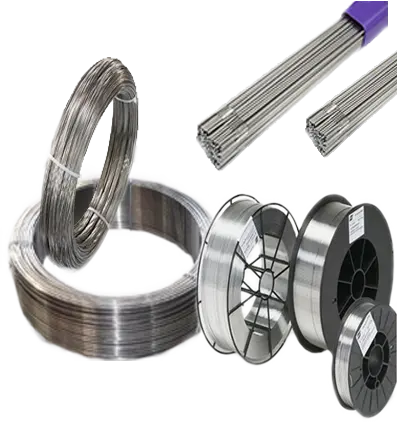
Inconel 600 vs Inconel 601: A Practical Material Selection Guide
Inconel 600 and Inconel 601 are nickel-chromium-iron alloys widely used in high-temperature and corrosive industrial environments. Both provide strong oxidation resistance and good mechanical performance, but they are designed for somewhat different operating conditions.
The most important distinction is simple:
Inconel 600 is a versatile nickel-chromium alloy with broad corrosion and heat resistance, while Inconel 601 is specifically optimized for superior oxidation resistance and high-temperature service.
The two alloys are available in multiple product forms, including sheet, plate, strip, bar, rod, pipe, tube and other forms depending on the supplier and specification. Danyang Jiaxin New Materials Technology Co., Ltd. lists both Inconel 600 and Inconel 601 within its nickel alloy product range.
What Is Inconel 600?
Inconel 600, also identified as UNS N06600, is a nickel-chromium alloy developed for applications requiring a combination of corrosion resistance, oxidation resistance and mechanical stability at elevated temperatures.
Its balanced composition makes it a versatile engineering material.
Typical characteristics include:
- High nickel content
- Good chromium-based oxidation resistance
- Good resistance to many corrosive environments
- Good mechanical properties over a wide temperature range
- Good resistance to chloride-ion stress corrosion cracking
- Good fabrication characteristics
- Good suitability for heat-treatment and chemical-processing equipment
Because of this combination, Inconel 600 is used across several industrial sectors rather than being limited to one specific application.
What Is Inconel 601?
Inconel 601, designated UNS N06601, is a nickel-chromium alloy with an alloy design particularly suited to high-temperature oxidation resistance.
Compared with Inconel 600, Inconel 601 contains aluminum as an important alloying addition.
This helps the material form a stable protective oxide layer under high-temperature oxidizing conditions.
Typical characteristics include:
- Excellent oxidation resistance
- Good high-temperature strength
- Good resistance to carburization
- Good resistance to thermal cycling
- Good corrosion resistance
- Good performance in industrial furnace environments
- Suitable fabrication and welding characteristics
This makes Inconel 601 especially attractive for furnace and heat-treatment applications.
Inconel 600 vs 601: Chemical Composition
The two alloys have a similar nickel-chromium foundation, but their alloying strategies differ.
Inconel 600 is primarily designed as a versatile corrosion- and heat-resistant alloy.
Inconel 601 adds aluminum to improve high-temperature oxidation resistance.
This difference becomes important when an engineer is evaluating:
- Furnace atmosphere
- Operating temperature
- Oxidizing conditions
- Thermal cycling
- Carburization
- Service life
For exact chemical limits, buyers should always specify the applicable ASTM, ASME, AMS or other governing material standard rather than relying on nominal composition alone.
Oxidation Resistance
Oxidation resistance is one of the most important reasons to consider Inconel 601.
At elevated temperatures, metallic materials can react with oxygen and form oxide layers. If the oxide layer is unstable or repeatedly breaks away, material degradation can accelerate.
Inconel 601 is engineered to develop a protective oxide film that provides strong resistance under severe high-temperature oxidizing conditions.
This makes it particularly useful for:
- Furnace components
- Heat-treatment equipment
- Combustion equipment
- Thermal-processing systems
- Industrial heating equipment
- Radiant tubes
- Furnace baskets
Inconel 600 also has good oxidation resistance, but when oxidation at elevated temperature is the dominant failure mechanism, Inconel 601 is often the more appropriate candidate.
Corrosion Resistance Comparison
Inconel 600 provides broad corrosion resistance and is widely used in chemical and thermal-processing environments.
It can be considered for applications involving:
- Chloride environments
- Alkaline solutions
- Organic acids
- Chemical processing
- Steam systems
- High-temperature water
Inconel 601 also provides good corrosion resistance, but its major engineering advantage is generally its high-temperature oxidation performance.
Therefore, the selection should depend on what is most likely to limit component life.
If general corrosion resistance is the main concern, Inconel 600 may be sufficient.
If high-temperature oxidation is the primary concern, Inconel 601 may provide a stronger engineering solution.
High-Temperature Performance
Both alloys can operate in demanding thermal environments, but application details matter.
Inconel 600 is often used where elevated temperature is combined with corrosion.
Inconel 601 is particularly attractive when the material is continuously exposed to hot oxidizing gases.
Examples include:
- Industrial furnaces
- Heat-treatment lines
- Petrochemical heaters
- Thermal processing equipment
- Furnace trays
- Combustion chambers
- Heat-resistant structural components
Actual temperature limits should always be evaluated according to material condition, load, atmosphere, geometry and design requirements.
Inconel 600 vs 601: Mechanical Properties
Neither alloy should be selected based solely on room-temperature tensile strength.
For high-temperature applications, engineers should also consider:
- Creep
- Stress rupture
- Thermal fatigue
- Oxidation
- Thermal expansion
- Cycling frequency
- Component geometry
Inconel 601 is often selected when long-term exposure to high-temperature oxidizing conditions is more important than achieving the highest room-temperature strength.
Fabrication and Welding
Both Inconel 600 and Inconel 601 can be fabricated using appropriate industrial processes.
Typical processes include:
- Welding
- Forming
- Cutting
- Machining
- Rolling
- Bending
However, nickel alloys generally require more careful process control than ordinary carbon steels.
During welding and fabrication, engineers should consider:
- Heat input
- Joint design
- Filler metal selection
- Surface cleanliness
- Distortion
- Post-weld requirements
The final welding procedure should follow the applicable project specification and qualified welding procedure.
Inconel 600 vs Inconel 601 Applications
When Should You Choose Inconel 600?
Inconel 600 is a practical option when the application requires a broad combination of:
- Corrosion resistance
- Heat resistance
- Mechanical stability
- Fabrication capability
- Resistance to chloride environments
Typical applications include chemical processing equipment, heat exchangers, furnace components and other high-temperature systems.
When Should You Choose Inconel 601?
Inconel 601 becomes particularly attractive when:
- Oxidation is a major concern
- The component operates at high temperature
- The atmosphere is strongly oxidizing
- Thermal cycling is frequent
- Furnace performance is critical
- Long service life is required
How to Select Between Inconel 600 and 601
A reliable selection process should answer five questions:
1. What Is the Operating Temperature?
Higher temperatures generally increase the importance of oxidation, creep and thermal fatigue.
2. What Is the Furnace or Process Atmosphere?
Identify whether the environment is:
- Oxidizing
- Reducing
- Carburizing
- Chloride-containing
- Sulfur-containing
3. What Mechanical Load Does the Component Carry?
Consider pressure, tensile stress, vibration and thermal cycling.
4. What Product Form Is Required?
The material may be required as:
- Sheet
- Plate
- Strip
- Bar
- Rod
- Pipe
- Tube
- Wire
5. Which Standard Is Required?
Confirm the applicable:
- ASTM specification
- ASME specification
- AMS specification
- UNS designation
- Heat-treatment condition
- Inspection requirements
Frequently Asked Questions
Is Inconel 601 better than Inconel 600?
Not universally. Inconel 601 has an advantage when high-temperature oxidation resistance is the dominant requirement, while Inconel 600 provides a broader balance of corrosion and heat resistance.
What is the UNS number of Inconel 600?
Inconel 600 is UNS N06600.
What is the UNS number of Inconel 601?
Inconel 601 is UNS N06601.
Is Inconel 601 suitable for furnace applications?
Yes. Its high-temperature oxidation resistance makes it a strong candidate for many furnace and heat-treatment components.
Can Inconel 600 be replaced by 601?
Only after engineering review. The alloys have different compositions, performance characteristics and application priorities.
Conclusion
Inconel 600 and Inconel 601 are both valuable nickel-chromium alloys, but they should not be treated as interchangeable materials.
Choose Inconel 600 when you need versatile corrosion and heat resistance across a broad range of industrial environments. Choose Inconel 601 when high-temperature oxidation resistance and thermal durability are major design priorities.
The best material is the one that matches the actual failure mechanism of the component.
Request Inconel 600 or Inconel 601
Danyang Jiaxin New Materials Technology Co., Ltd. supplies Inconel 600, Inconel 601 and other high-performance nickel-based alloys in different product forms. The company supports customized sizes and technical requirements for global industrial buyers.
Company: Danyang Jiaxin New Materials Technology Co., Ltd.
Website: https://www.alloysfactory.com/
Email: simon@alloysfactory.com
Phone: +86 177 6878 6989
WhatsApp: +86 177 6878 6989
Address: Room 412, Building 10, Fuqian Xingzuo Garden, Development Zone, Danyang City, Jiangsu Province, China
Contact us with your alloy grade, dimensions, quantity and required specification for technical support and a quotation.
Thank you very much for writing to us. Please leave your message and contact information, we will reply to you within 24 hours.