Buying nickel-based special alloys is very different from purchasing ordinary carbon steel or standard stainless steel.
Materials such as Inconel, Incoloy, Hastelloy, Monel, Nimonic, precision iron-nickel alloys, and cobalt-based alloys are generally selected for demanding applications where corrosion resistance, high-temperature performance, strength, thermal stability, or other specialized properties are required.
For international buyers, the challenge is not simply finding a supplier with a low price.
A successful procurement process requires the buyer to define the correct alloy, product form, dimensions, specification, heat treatment, inspection requirements, certification, packaging, and delivery conditions.
This guide explains how industrial buyers can prepare a professional RFQ and reduce the risk of purchasing the wrong special alloy.
Step 1: Identify the Exact Alloy Grade
The first step is to identify the exact material.
For example, "nickel alloy" is not specific enough.
A purchase specification should identify the actual grade, such as:
- Inconel 718
- Inconel 625
- Inconel 690
- Incoloy 800
- Incoloy 825
- Hastelloy C-276
- Monel 400
- Monel K-500
- Nimonic 90
- Kovar 29
- NILO 4J36
- Super Invar 4J32
Alloysfactory's current product range covers multiple nickel-based, cobalt-based, precision, and heating-resistance alloy families.
Step 2: Confirm the UNS Number
Using the UNS number can significantly reduce confusion between similar commercial alloy names.
For example:
Inconel 718 → UNS N07718
Inconel 625 → UNS N06625
Incoloy 800 → UNS N08800
NILO 4J36 → UNS K93600/K93601
Kovar 29 → UNS K94610
Including the UNS number in the RFQ gives both the buyer and supplier a clearer technical reference.
Step 3: Select the Correct Product Form
The same alloy may be available in multiple forms.
Depending on the supplier and grade, you may need:
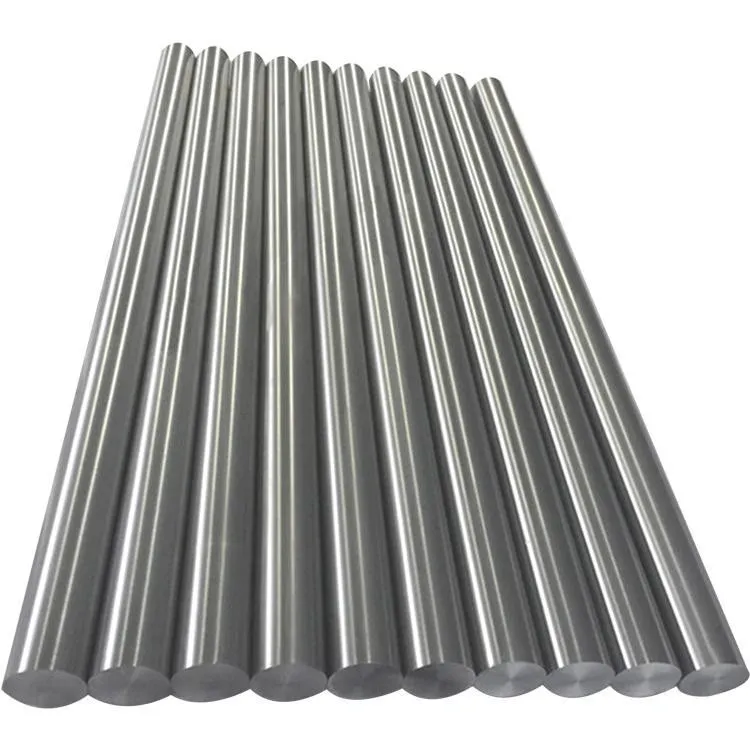
- Round bar
- Rod
- Wire
- Sheet
- Plate
- Strip
- Tube
- Pipe
- Ring
- Forging
- Fastener
- Custom-machined component
The product form should be based on the final manufacturing process.
For example, a machining project may require round bar, while a fabricated pressure component may require plate.
Step 4: Provide Exact Dimensions
A supplier cannot accurately quote a material without dimensions.
For bar:
- Diameter
- Length
- Quantity
For sheet:
- Thickness
- Width
- Length
- Quantity
For tube:
- Outside diameter
- Wall thickness
- Length
- Quantity
For pipe:
- Nominal size
- Schedule or wall thickness
- Length
- Quantity
For custom components:
- Engineering drawing
- Material specification
- Dimensional tolerances
- Surface requirements
Step 5: Specify the Applicable Standard
Special alloys are often supplied according to international standards.
Depending on the material, buyers may require:
- ASTM
- ASME
- AMS
- EN
- DIN
- ISO
- GB/T
- Other project-specific specifications
Do not assume that two products with the same commercial alloy name automatically meet the same specification.
The required standard should be included in the purchase inquiry.
Step 6: Specify Heat Treatment
Heat treatment can significantly affect the properties of special alloys.
Depending on the alloy, buyers may require:
- Solution annealing
- Aging
- Stabilizing treatment
- Stress relieving
- Controlled cooling
- Special heat-treatment conditions
The purchase specification should clearly identify the required condition.
Step 7: Define Inspection Requirements
Inspection requirements should be agreed before production.
Possible requirements include:
Chemical Analysis
Confirms that the material meets the specified composition.
Tensile Testing
Verifies mechanical performance.
Hardness Testing
Provides additional confirmation of material condition.
Ultrasonic Testing
Useful for detecting internal discontinuities in selected products.
Eddy-Current Testing
Frequently considered for tube and similar products.
PMI
Positive Material Identification can help verify alloy identity.
Dimensional Inspection
Confirms that the finished product meets specified tolerances.
Step 8: Request Material Certification
For industrial projects, material documentation can be just as important as the physical product.
Buyers may request:
- Mill Test Certificate
- Material Test Report
- Certificate of Conformity
- Heat-treatment records
- Inspection reports
- Traceability documentation
- Third-party inspection
The required certification level should be specified in the RFQ.
Step 9: Clarify Surface Requirements
Surface condition is often overlooked during procurement.
Depending on the product, the buyer may require:
- Bright annealed
- Pickled
- Ground
- Polished
- Machined
- Cold rolled
- Hot rolled
- As-forged
The correct surface condition depends on the next manufacturing process.
Step 10: Discuss Packaging
International transportation can expose special alloys to:
- Moisture
- Salt air
- Mechanical impact
- Contamination
- Surface damage
Packaging requirements should therefore be defined according to the product.
Typical requirements may include:
- Wooden cases
- Steel frames
- Bundling
- Waterproof wrapping
- Protective caps
- Anti-rust protection
Step 11: Ask About Custom Sizes
Standard sizes are not always the most economical solution.
A supplier with custom manufacturing capability may produce:
- Non-standard diameters
- Custom lengths
- Special wall thicknesses
- Precision strips
- Cut-to-length pieces
- Machined components
- Special rings
- Drawing-based parts
Alloysfactory states that it supports customized processing and non-standard sizes according to customer drawings and technical requirements.
Step 12: Evaluate the Supplier, Not Just the Price
When comparing suppliers, consider:
Manufacturing Experience
Does the supplier regularly manufacture the requested alloy?
Product Range
Can the supplier provide the required product form?
Quality Control
Does the supplier have a documented inspection process?
Traceability
Can the supplier trace the material to a production batch?
Technical Support
Can the supplier understand technical specifications and drawings?
Customization
Can the supplier manufacture non-standard dimensions?
Export Experience
Can the supplier handle international documentation and packaging?
A slightly higher material price may be justified if the supplier provides better quality assurance and technical support.
Example of a Professional RFQ
A good inquiry could look like this:
Material: Inconel 718
UNS: N07718
Product: Round Bar
Diameter: 80 mm
Length: 3000 mm
Quantity: 1,000 kg
Condition: Required heat-treatment condition
Standard: Customer specification / applicable ASTM or AMS standard
Testing: Chemical + tensile + hardness + ultrasonic
Certificate: EN 10204 3.1
Surface: Ground
Packing: Export seaworthy packing
Destination: Customer's designated port
This type of inquiry allows suppliers to provide much more accurate quotations.
Common Purchasing Mistakes
Mistake 1: Providing Only the Commercial Name
"Inconel bar" is not a complete specification.
Mistake 2: Ignoring Product Condition
The same alloy can have different properties depending on heat treatment and processing condition.
Mistake 3: Comparing Prices Without Comparing Standards
Two quotations may appear different because the specifications, testing, or certification requirements are different.
Mistake 4: Forgetting Tolerances
A low-cost product may require additional machining if dimensions are not controlled properly.
Mistake 5: Requesting Certification Too Late
Testing and documentation requirements should be agreed before production.
A Simple Special Alloy Purchasing Checklist
Before placing an order, confirm:
☐ Exact alloy grade
☐ UNS number
☐ Product form
☐ Dimensions
☐ Quantity
☐ Applicable standard
☐ Heat-treatment condition
☐ Mechanical requirements
☐ Chemical composition requirements
☐ Surface condition
☐ Testing requirements
☐ Certification
☐ Packaging
☐ Delivery terms
☐ Lead time
☐ Payment terms
This checklist can significantly reduce misunderstandings between international buyers and suppliers.
Frequently Asked Questions
What information should I send when requesting a nickel alloy quotation?
Provide the exact alloy, UNS number, product form, dimensions, quantity, applicable standard, heat-treatment condition, testing requirements, certification, and delivery destination.
Is the cheapest nickel alloy supplier always the best choice?
No. Quality control, material traceability, certification, technical capability, production experience, and delivery reliability should all be considered.
Can special alloy suppliers provide custom sizes?
Many manufacturers can provide customized sizes or processed components. The supplier should confirm feasibility based on alloy grade, dimensions, tolerances, and production method.
Why is the UNS number important?
Commercial alloy names can sometimes be interpreted differently. A UNS number provides a standardized material identification reference.
Should inspection requirements be included in the RFQ?
Yes. Inspection requirements should be defined before production to ensure that the quotation includes all required testing and documentation.
Conclusion
Purchasing nickel-based special alloys requires a more detailed approach than buying conventional industrial metals.
A professional RFQ should clearly identify the alloy grade, UNS number, product form, dimensions, quantity, standard, heat treatment, testing, certification, surface condition, packaging, and delivery requirements.
The better the technical specification, the easier it is for suppliers to provide accurate pricing, realistic lead times, and products that meet the final application requirements.
For international industrial buyers, choosing a supplier based on technical capability, quality control, traceability, customization, and communication can be just as important as comparing the material price.
Contact Alloysfactory
Danyang Jiaxin New Materials Technology Co., Ltd. is a manufacturer and supplier of high-performance nickel-based alloys, corrosion-resistant alloys, high-temperature alloys, precision alloys, cobalt-based alloys, and heating-resistance alloys. Its product range covers bars, rods, wires, sheets, plates, strips, pipes, tubes, rings, fasteners, welding materials, and customized products.
Website: https://www.alloysfactory.com/
Email: sales@alloysfactory.com
Phone / WhatsApp: +86 18052778977
Address: Room 412, Building 10, Fuqian Xingzuo Garden, Development Zone, Danyang City, Jiangsu Province, China
For nickel alloy, Inconel, Incoloy, Hastelloy, Monel, Nimonic, precision alloy, or cobalt-based alloy requirements, send Alloysfactory your material specification, dimensions, quantity, and technical requirements for a quotation.
Thank you very much for writing to us. Please leave your message and contact information, we will reply to you within 24 hours.