When industrial equipment is exposed to highly corrosive chemicals, material selection becomes one of the most important factors affecting equipment reliability and operating cost.
Hastelloy C-276, identified as UNS N10276 and W.Nr. 2.4819, is a nickel-molybdenum-chromium alloy with tungsten that is widely recognized for its broad resistance to severe corrosion environments.
It is particularly relevant to chemical processing, pollution control, petrochemical equipment, pharmaceutical manufacturing, and other applications where conventional stainless steels may not provide sufficient corrosion resistance.
What Is Hastelloy C-276?
Hastelloy C-276 is a nickel-based corrosion-resistant alloy.
Its alloying system combines nickel with significant amounts of molybdenum and chromium, together with tungsten and other elements.
The purpose of this composition is to provide strong resistance against several challenging corrosion mechanisms.
Hastelloy C-276 is commonly identified by:
- Alloy C-276
- Hastelloy C-276
- UNS N10276
- W.Nr. 2.4819
What Makes Hastelloy C-276 Different?
The main advantage of C-276 is its broad corrosion resistance.
Industrial corrosion is rarely caused by only one factor. Equipment may simultaneously experience:
- Acids
- Chlorides
- Oxidizing conditions
- Reducing conditions
- High temperature
- Contaminants
- Welded joints
- Flowing process fluids
An alloy with broad corrosion resistance can therefore be advantageous when process conditions are complex.
Resistance to Localized Corrosion
Pitting and crevice corrosion can be especially dangerous because localized attack may penetrate equipment even when the overall surface appears acceptable.
Molybdenum and chromium play important roles in improving resistance to these forms of corrosion.
For chloride-containing environments, localized corrosion resistance is often a key consideration when selecting nickel-based alloys.
Hastelloy C-276 and Stress-Corrosion Cracking
Stress-corrosion cracking can occur when tensile stress, a susceptible material, and a specific corrosive environment interact.
Material selection can therefore become an important part of preventing premature failure.
Hastelloy C-276 is frequently considered for applications where resistance to several corrosive environments is required.
However, engineers should always evaluate the actual chemical and mechanical conditions rather than relying only on alloy reputation.
Chemical Processing Applications
Chemical processing is one of the most important application areas for Hastelloy C-276.
Potential applications include:
- Reactors
- Process piping
- Heat exchangers
- Pumps
- Valves
- Tanks
- Scrubbers
- Process vessels
- Chemical transfer systems
Equipment may encounter aggressive acids, chlorides, wet chlorine, sulfur compounds, or other corrosive media.
The broad resistance of C-276 makes it an important candidate for these environments.
Hastelloy C-276 in Pollution Control Systems
Flue gas desulfurization and other industrial pollution-control processes can generate highly corrosive conditions.
Wet process environments may contain combinations of:
- Chlorides
- Sulfur compounds
- Acidic condensates
- Oxidizing species
- Elevated temperatures
These conditions can be challenging for conventional stainless steel.
Hastelloy C-276 can be considered for selected components where corrosion resistance is critical.
Hastelloy C-276 for Heat Exchangers
Heat exchangers must balance thermal performance with corrosion resistance.
Tube failure can lead to cross-contamination between process streams and unexpected downtime.
When heat-transfer equipment operates in an aggressive chemical environment, C-276 may be evaluated for:
- Tubes
- Tube sheets
- Plates
- Headers
- Process-side components
Material selection should consider both the process fluid and the temperature profile.
Hastelloy C-276 Product Forms
Depending on project requirements, Hastelloy C-276 may be available in:
- Seamless tubes
- Welded tubes
- Pipes
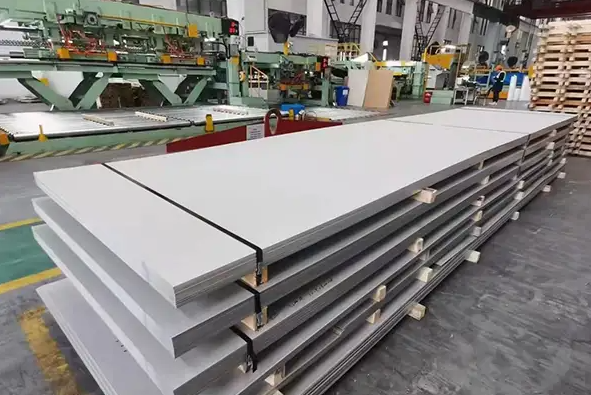
- Sheets
- Plates
- Bars
- Rods
- Wires
- Strips
- Rings
- Custom-machined components
Different product forms require different manufacturing and inspection considerations.
What Should Buyers Specify?
A professional inquiry should include as much technical information as possible.
For example:
Material: Hastelloy C-276
UNS: N10276
Product: Seamless tube
OD: Required dimension
Wall thickness: Required dimension
Length: Required length
Quantity: Required quantity
Standard: Applicable specification
Heat treatment: Required condition
Testing: Required inspection
Surface: Required finish
For custom components, drawings should include dimensional tolerances and machining requirements.
Hastelloy C-276 vs Standard Stainless Steel
The decision between Hastelloy C-276 and stainless steel depends primarily on the service environment.
For general industrial applications, stainless steel may provide an excellent balance of performance and cost.
For highly aggressive chemical environments, however, the corrosion resistance of a nickel-based alloy may justify the higher material cost.
The correct question is not simply:
"Which alloy is stronger?"
A better question is:
"Which alloy provides sufficient corrosion resistance and mechanical performance throughout the intended service life?"
Key Factors in C-276 Material Selection
Engineers should evaluate:
Chemical Composition of the Process
Identify all major chemicals and contaminants.
Temperature
Corrosion rates can change significantly with temperature.
Concentration
The same chemical can have very different effects at different concentrations.
Chloride Level
Chloride concentration can influence localized corrosion risk.
Mechanical Stress
Pressure, vibration, thermal cycling, and external loading should be considered.
Fabrication
Welding, forming, machining, and heat treatment can influence final component performance.
Frequently Asked Questions About Hastelloy C-276
What is Hastelloy C-276?
Hastelloy C-276 is a nickel-molybdenum-chromium corrosion-resistant alloy with tungsten, identified as UNS N10276 and W.Nr. 2.4819.
What is Hastelloy C-276 used for?
Typical applications include chemical processing equipment, pollution-control systems, heat exchangers, process piping, tanks, pumps, valves, and other components exposed to severe corrosion.
Is Hastelloy C-276 suitable for chemical processing?
Yes. Its broad corrosion resistance makes it an important candidate for many chemical-processing environments.
Can Hastelloy C-276 be welded?
Hastelloy C-276 can be fabricated and welded using appropriate procedures. Welding procedures should be selected according to the product condition, thickness, joint design, applicable standards, and service requirements.
Is C-276 more expensive than stainless steel?
Generally, nickel-based corrosion-resistant alloys have a higher material cost than common stainless steels. However, the total lifecycle cost can be lower when improved corrosion resistance reduces replacement and maintenance requirements.
Conclusion
Hastelloy C-276 is a high-performance nickel-based alloy designed for demanding corrosion environments.
Its combination of nickel, molybdenum, chromium, and tungsten provides a broad corrosion-resistant capability that makes it relevant to chemical processing, pollution control, heat exchangers, process piping, and other severe-service applications.
The best material choice should always be based on the actual process environment, operating temperature, chemical concentration, mechanical requirements, fabrication method, and applicable specifications.
About Alloysfactory
Danyang Jiaxin New Materials Technology Co., Ltd. provides nickel-based special alloys, Hastelloy alloys, Inconel alloys, Incoloy alloys, Monel alloys, Nimonic alloys, cobalt-based alloys, precision alloys, and welding materials.
Website: https://www.alloysfactory.com/
Email: sales@alloysfactory.com
WhatsApp: +86 180 5277 8977
Address: Room 412, Building 10, Fuqian Xingzuo Garden, Development Zone, Danyang City, Jiangsu Province, China
Contact Alloysfactory for Hastelloy C-276 pipes, tubes, plates, sheets, bars, wires, custom sizes, and technical material solutions.
Thank you very much for writing to us. Please leave your message and contact information, we will reply to you within 24 hours.