
MESSAGE
If you have any questions, please contact us and we will contact you as soon as possible.
‹
›
‹
›
◉ PRODUCT SPECIFICATION
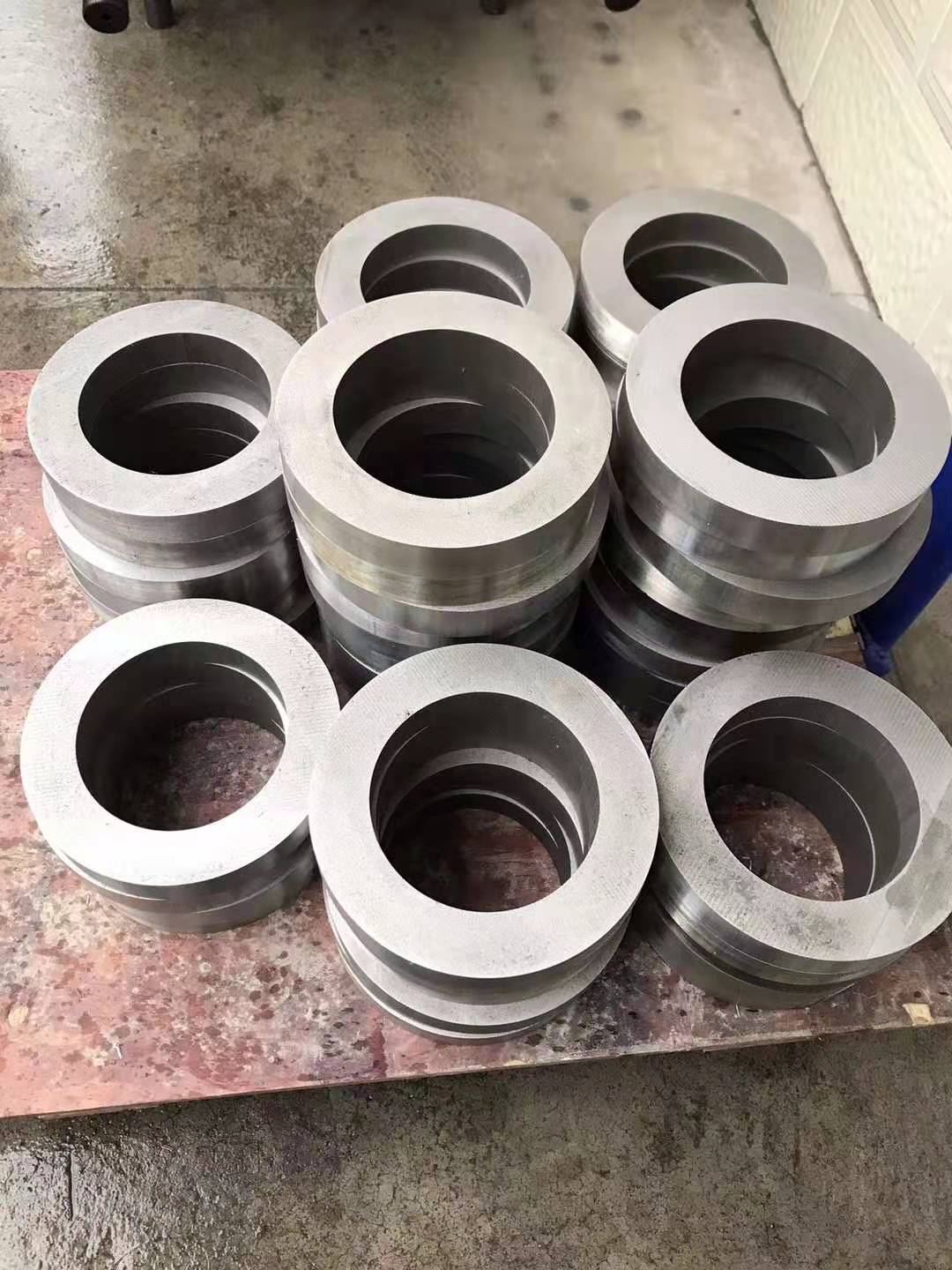
Nimonic Alloy 80A is a precipitation-hardenable nickel-chromium superalloy engineered for sustained high-temperature strength and oxidation resistance up to about 815°C (1500°F); it is widely used for gas-turbine parts, high-temperature fasteners and nuclear components where low cobalt and excellent creep resistance are required.
What is Nimonic 80A?
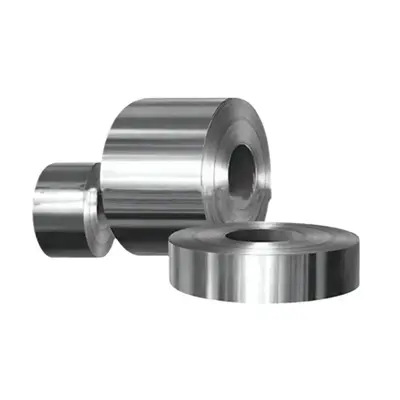
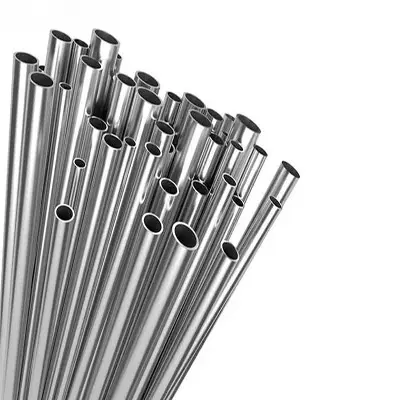
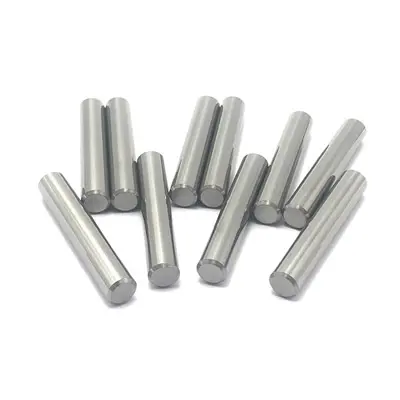
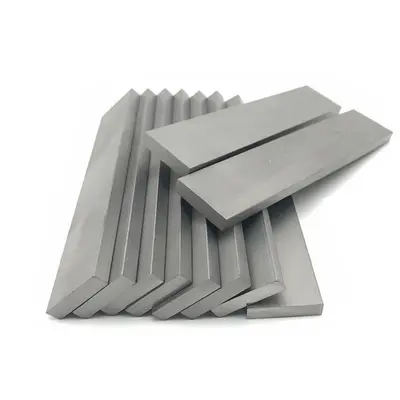
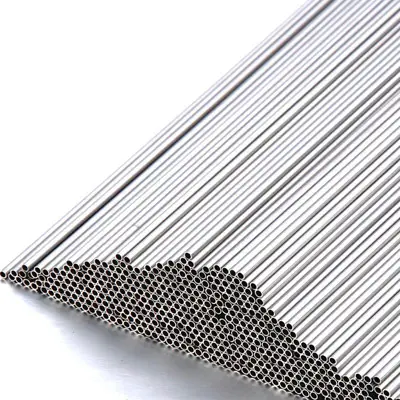
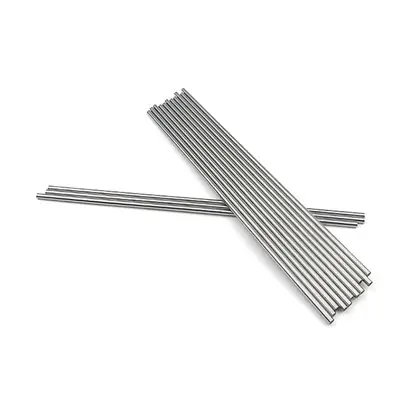
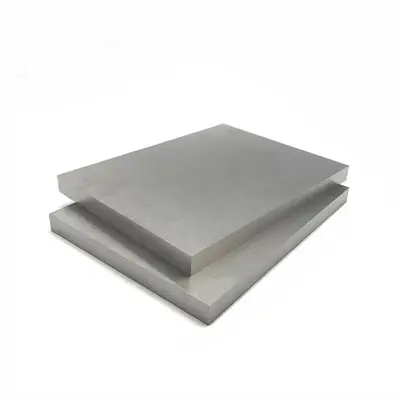
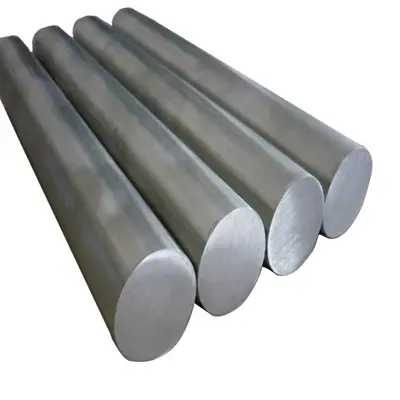
Nimonic 80A is a wrought, age-hardenable nickel-chromium alloy strengthened by additions of titanium and aluminium (and small controlled carbon). It was developed for components that operate under continuous stress at elevated temperatures, offering a balance of tensile strength, creep-rupture resistance and oxidation stability in the ~500–815°C service window. The material is produced in vacuum-refined and conventional melt forms and is supplied in bars, rods, plate, wire and forgings.
Key material properties
Below are widely reported engineering properties for condition-dependent temper (age-hardened). Numbers vary with heat treatment and product form — cite material supplier datasheets for procurement acceptance testing.
Note: property tables from manufacturers (Special Metals, Carpenter, Smiths, etc.) include detailed temperature-dependent creep and rupture charts. Always use the supplier’s certified test data for design calculations.
Chemical composition (typical / approximate — wt %)
The following table provides typical composition bounds used in product datasheets and standards. Always verify with mill certificates for the batch you buy.
(If your procurement requires EN/ASTM exact limits, request the standard mill specification / material test report for confirmation.)
Standards and specifications
Common designation cross-references you will see on documentation and purchase orders:
UNS N07080 (United States Numbering System).
W. Nr. 2.4952 / 2.4631 (European/Werkstoff numbers appear in supplier material sheets).
ASTM B637 is often referenced for forged/rolled products (check the exact product form and spec clause).
Typical applications and why engineers pick 80A
Practical fields of use:
Gas turbine components (blades, discs, rings for certain low-cobalt designs).
High-temperature fasteners and bolts that need low creep at elevated temperatures.
Nuclear steam-generator internal supports and tube-support components where low cobalt is favorable.
Exhaust valves and hot springs in automotive/aerospace niches requiring sustained springback.
Die casting inserts and cores due to combination of hot hardness and oxidation resistance.
Designers choose 80A when a precipitation-hardenable Ni-Cr alloy with good long-term creep resistance and relatively low cobalt is desirable.
Is NIMONIC 80A better than Inconel 625?
Short practical comparison:
Inconel 625 is a nickel-chromium-molybdenum-niobium alloy optimized for corrosion resistance (pitting, chloride) and high strength without precipitation-hardening; it is often the go-to when corrosion resistance in aggressive environments is the priority.
Nimonic 80A is precipitation-hardenable (Ti/Al) and tuned for high temperature tensile and creep performance at sustained temperatures up to ~815°C; it was developed for creep resistance and turbine service.
Rule of thumb: pick 80A for high-temperature structural parts and springs where creep resistance and low cobalt are required; pick 625 for severe corrosion environments or when welded, solid-solution strength without ageing is preferred. For direct substitution always check mechanical properties at operating temperature and the environmental exposure.
What is alloy 80A equivalent to?
Common cross-references / equivalents provided by suppliers and mills:
UNS N07080
W. Nr. 2.4952 / 2.4631 (depending on source/doc type).
Some manufacturers sell proprietary or closely equivalent grades (for example GH4080A in Chinese catalogs) — but equivalence must be confirmed by chemical limits and mechanical data.
Heat treatment and ageing
Nimonic 80A obtains its high-temperature properties via a solution treatment followed by controlled ageing to precipitate γ′ (Ni₃(Al,Ti)) particles.
Typical schedules reported in supplier datasheets (illustrative; use mill sheet for warranty conditions):
Solution treat: ~1080–1150°C, air cool (exact time depends on product form).
Ageing / precipitation: commonly 700–850°C for several hours (combinations such as 8 h at 1080°C then 16 h at 700°C appear in manufacturer examples).
Welded assemblies typically require solution treatment and post-weld ageing to restore creep performance; some thin sheet products use rapid interstage annealing cycles in production. For precise cycles and mechanical results consult the alloy technical bulletin from the mill.
Difference between Nimonic 80A and Nimonic 90
Briefly:
Nimonic 90 is a later development with different alloying balance (often higher strength and modified γ′ chemistry) and is sometimes preferred for newer turbine designs and higher-temperature creep performance. 80A historically preceded 90 and remains specified in legacy and certain low-cobalt nuclear components. For a direct engineering substitution check both composition and creep/rupture charts from the supplier.
Fabrication, welding and machinability notes
Hot work: recommended hot-working range ≈ 1050–1200°C; hot forging and extrusion are common.
Cold work: limited — work hardening occurs and subsequent heat treatment required to regain properties.
Welding: TIG/MIG methods are used with matched filler metals; recommended procedure often includes solution treat + age to restore parent-metal creep behavior. Fillet/weld procedures must follow qualified welding procedure specifications.
Machinability: moderate; better than some cast superalloys but slower than stainless steels — typical cutting speeds and coolant strategies should follow supplier guidance.
Size & weight reference
Below is a simplified reference for common bar and plate forms. For design mass estimation use the exact measured dimensions.
Example quick weight rule: 1 m of Ø20 mm round bar ≈ 2.58 kg (using density 8.19 g/cm³). For accurate mass lists produce CAD BOMs and request certified mill test reports.
Nimonic 80A Price 2025 (USD / kg)
Key notes
These are indicative ranges for budgeting. Final prices depend on alloy feedstock, market surcharges, product form, certification level, quantity and payment/shipping terms.
Verify certificates: Many very low online listings do not include proper mill test certificates (MTC). Always request UNS/EN designation and MTC (EN 10204 3.1 / 3.2) for critical purchases.
Certification & traceability cost more: Aerospace, nuclear or AMS-specified material will be priced materially higher than commodity industrial stock.
Order volume matters: Per-kg cost falls with tonnage; small-sample or cut-to-size orders can double or triple the per-kg price versus bulk.
Use RFQ details: When requesting quotes, specify UNS N07080 (or W.-Nr./EN cross-ref), required heat treatment state, acceptance tests, quantity, and destination port — that avoids ambiguous or misleading prices.
Supply, lead times, quality assurance — MWAlloys proposition
MWAlloys supplies Nimonic 80A bar, rod, sheet and forgings from our China production network. Key points we provide for global buyers:
Factory pricing: 100% factory direct quotes on standard forms and OEM lots.
Inventory & fast dispatch: we keep a rotating stock of common diameters and plate sizes; typical lead times for stocked items can be shorter than buying through tiered distributors (confirm at RFQ).
Certification: full mill test reports (chemical & mechanical), traceability (UNS / WNR / EN), and testing per buyer specification.
Custom processing: forging, machining, and heat treatment/ageing to buyer schedules.
FAQs
What maximum temperature can Nimonic 80A be used at?
Practical continuous service: about 815°C (1500°F); design limits depend on load and desired life.Is Nimonic 80A good for springs?
Yes — it has been used for high-temperature springs where ageing strengthens the alloy and springback is retained at elevated temperature.Can Nimonic 80A be welded?
Yes; TIG/MIG methods with matched filler are common, but solution treatment and post-weld ageing are often required to regain optimal creep resistance.Is 80A radiation-suitable for nuclear?
It has been used for certain nuclear steam-generator support components because of its low cobalt and acceptable high-temperature performance; follow nuclear procurement standards.What is the main strengthening mechanism?
Gamma-prime (γ′) precipitation (Ni₃(Al,Ti)) formed during ageing provides high temperature strength.Which tests should I request on delivery?
Chemical analysis, tensile at room temp (and elevated temp when required), hardness, and the relevant NDT (radiography, PT/UT) per purchase spec.Is Nimonic 80A superseded by newer alloys?
In some applications newer alloys (Nimonic 90, Inconel X-750, etc.) may offer advantages; however, 80A remains specified where legacy designs or low-cobalt requirements apply.How does heat treatment affect properties?
Solution treat + ageing schedules control γ′ size and volume fraction; longer ageing or different ageing temps trade strength against ductility. Mill technical bulletins give specific charts.Are there standard equivalents from Chinese mills?
Vendors often list GH4080A or similar grades as equivalent; always cross-check chemical and mechanical limits.What’s the procurement tip to control cost?
Buy larger batches, accept standard mill finishes, or consider near-net forgings; secure certified suppliers and lock in price via alloy surcharge mechanisms.
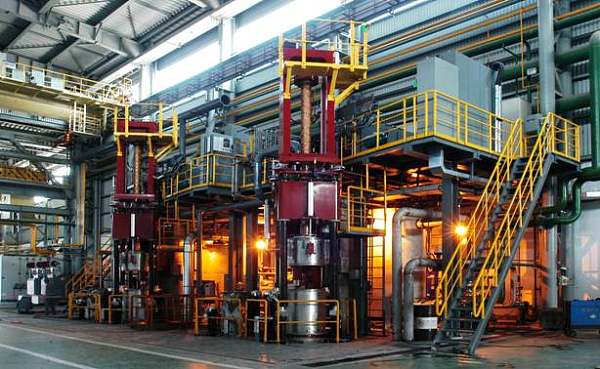
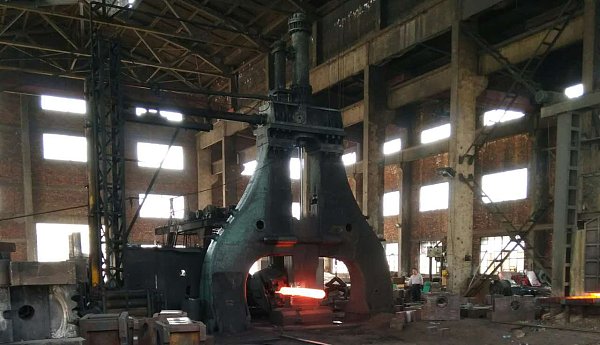
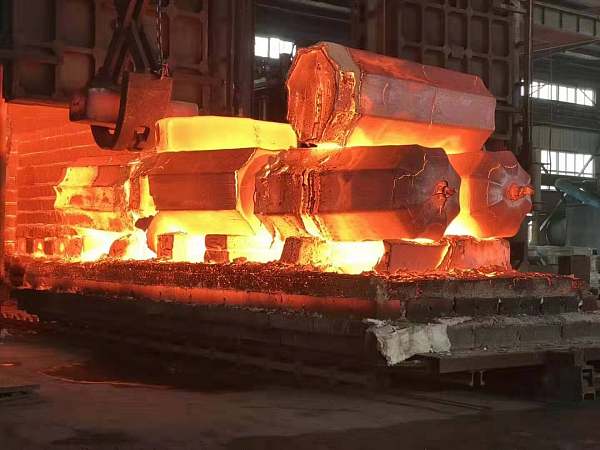
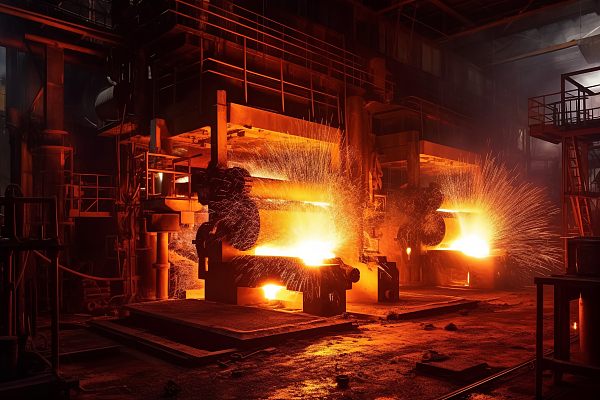
◉ Factory Show
◉ MESSAGE
◉ SIMILAR RECOMMENDED
/ Supermendur /1J22/ Permendur/49КФ/AFK502/Co50V2") Hiperco 50 (1J22)/ Supermendur /1J22/ Permendur/49КФ/AFK502/Co50V2
Hiperco 50 (1J22)/ Supermendur /1J22/ Permendur/49КФ/AFK502/Co50V2/ Supermendur /1J22/ Permendur/49КФ/AFK502/Co50V2-1 Tube Pipe") Hiperco 50 Tube Pipe (1J22)/ Supermendur /1J22/ Permendur/49КФ/AFK502/Co50V2-1 Tube Pipe
Hiperco 50 Tube Pipe (1J22)/ Supermendur /1J22/ Permendur/49КФ/AFK502/Co50V2-1 Tube Pipe/ Supermendur /1J22/ Permendur/49КФ/AFK502/Co50V2-1 Bar Rod") Hiperco 50 Bar Rod (1J22)/ Supermendur /1J22/ Permendur/49КФ/AFK502/Co50V2-1 Bar Rod
Hiperco 50 Bar Rod (1J22)/ Supermendur /1J22/ Permendur/49КФ/AFK502/Co50V2-1 Bar Rod/Russia 50H/1J50 Strip Ring") NiFe Alloy 50 Strip Ring (1J50)/Russia 50H/1J50 Strip Ring
NiFe Alloy 50 Strip Ring (1J50)/Russia 50H/1J50 Strip Ring/Russia 50H/1J50 Tube Pipe") NiFe Alloy 50 Tube Pipe (1J50)/Russia 50H/1J50 Tube Pipe
NiFe Alloy 50 Tube Pipe (1J50)/Russia 50H/1J50 Tube Pipe/Russia 50H/1J50 Bar Rod") NiFe Alloy 50 Bar Rod (1J50)/Russia 50H/1J50 Bar Rod
NiFe Alloy 50 Bar Rod (1J50)/Russia 50H/1J50 Bar Rod/Russia 50H/1J50 Sheet Plate") NiFe Alloy 50 Sheet Plate (1J50)/Russia 50H/1J50 Sheet Plate
NiFe Alloy 50 Sheet Plate (1J50)/Russia 50H/1J50 Sheet Plate Su Permalloy 1J85 /UNS N14080,GB/T 32286.1-2015 Bar Tube Pipe Wire
 Su Permalloy 1J85 Tube Pipe /UNS N14080,GB/T 32286.1-2015 Tube Pipe
 Su Permalloy 1J85 Sheet Pipe /UNS N14080,GB/T 32286.1-2015 Sheet Pipe
 Su Permalloy 1J85 Bar Rod /UNS N14080 GB/T 32286.1-2015 Bar Rod
 Wire Strip /UNS N14080,GB/T 32286.1-2015 Wire Strip") Permalloy Alloy 80(1J79) Wire Strip /UNS N14080,GB/T 32286.1-2015 Wire Strip
Permalloy Alloy 80(1J79) Wire Strip /UNS N14080,GB/T 32286.1-2015 Wire Strip Tube Pipe /UNS N14080,GB/T 32286.1-2015 Tube Pipe") Permalloy Alloy 80(1J79) Tube Pipe /UNS N14080,GB/T 32286.1-2015 Tube Pipe
Permalloy Alloy 80(1J79) Tube Pipe /UNS N14080,GB/T 32286.1-2015 Tube Pipe Sheet Plate /UNS N14080,GB/T 32286.1-2015 Sheet Plate") Permalloy Alloy 80(1J79) Sheet Plate /UNS N14080,GB/T 32286.1-2015 Sheet Plate
Permalloy Alloy 80(1J79) Sheet Plate /UNS N14080,GB/T 32286.1-2015 Sheet Plate Bar Rod /UNS N14080,GB/T 32286.1-2015 Bar Rod") Permalloy Alloy 80(1J79) Bar Rod /UNS N14080,GB/T 32286.1-2015 Bar Rod
Permalloy Alloy 80(1J79) Bar Rod /UNS N14080,GB/T 32286.1-2015 Bar Rod 4J42 Ring Strip UNS K94100 /W. Nr.1.3917 ASTM F30 precision iron-nickel alloy Ring Strip
 4J42 Tube Pipe UNS K94100 /W. Nr.1.3917 ASTM F30 precision iron-nickel alloy Tube Pipe
 4J42 Bar Rod UNS K94100 /W. Nr.1.3917 ASTM F30 precision iron-nickel alloy Bar Rod
 4J42 UNS K94100 /W. Nr.1.3917 ASTM F30 precision iron-nickel alloy
 Super Invar 32-5/4J32/K93500/Super Invar Tube Bar Rod Sheet
 Super Invar 32-5 Sheet Plate 4J32/K93500/Super Invar Sheet Plate
Thank you very much for writing to us. Please leave your message and contact information, we will reply to you within 24 hours.