
MESSAGE
If you have any questions, please contact us and we will contact you as soon as possible.
‹
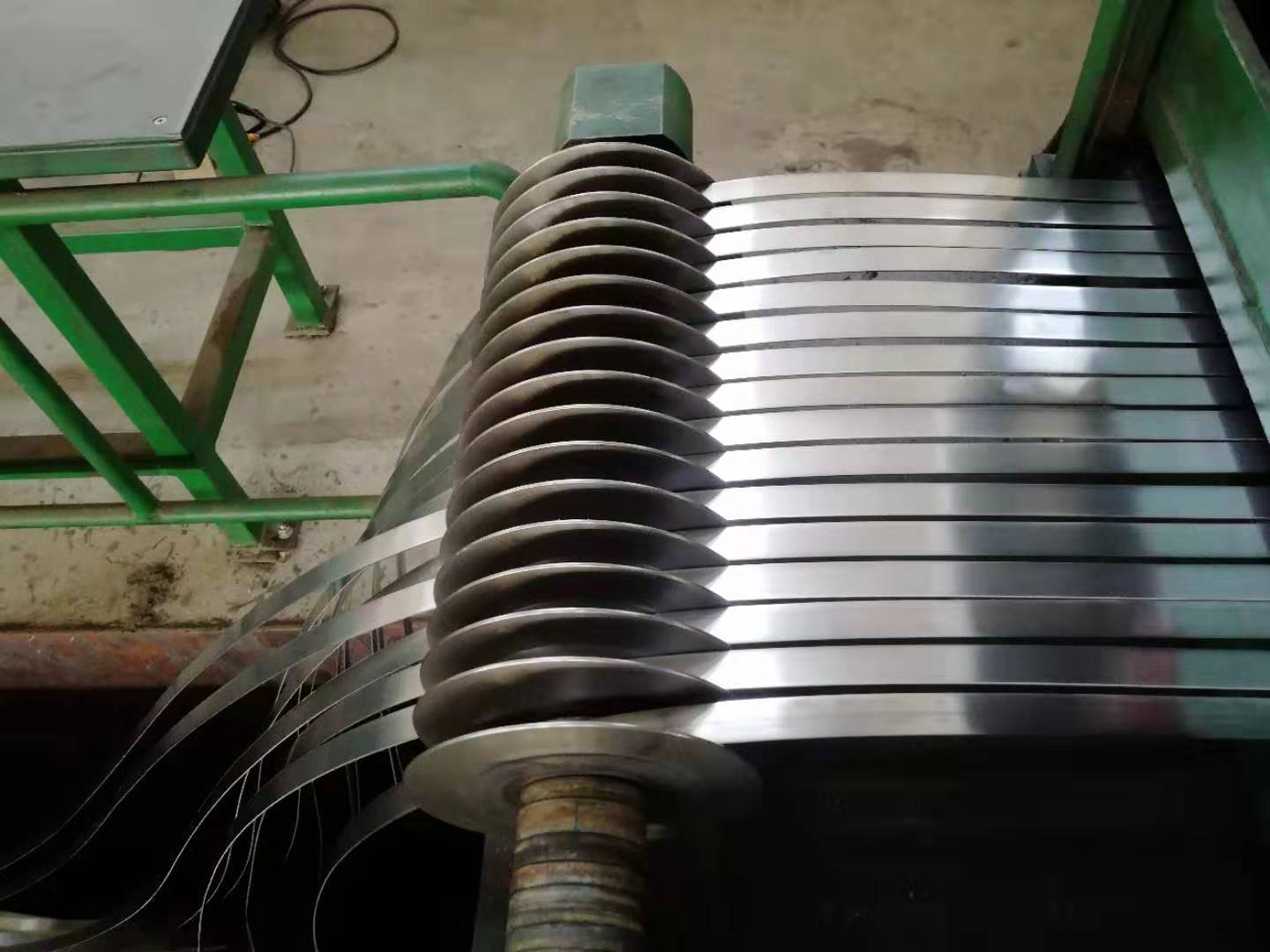
›
‹
›
◉ PRODUCT SPECIFICATION
Monel Alloy K‑500 (UNS N05500) builds on Monel 400 by including approximately 2.3–3.15% aluminum and 0.35–0.85% titanium. This addition, along with age-hardening treatment, results in a precipitation of Ni₃(Ti, Al) phases, delivering notably higher strength while retaining corrosion resistance.
Specifications & Parameters
? Critical Notes & Variability Factors
Mechanical Property Ranges:
Strength/ductility vary significantly with product form (bar, sheet, wire) and heat treatment (annealed vs. aged). Aerospace grades (e.g., AMS 4676) require higher minimum strengths.
Cold working further increases strength but reduces elongation.
Corrosion Limitations:
Avoid strong oxidizers (e.g., nitric acid) and stagnant seawater (risk of pitting).
Susceptible to stress corrosion cracking in hot HF vapor under high stress.
Thermal Stability:
Prolonged exposure above 550°C (1022°F) may cause embrittlement; limit to 480°C (900°F) for critical applications.
Nuclear/Aerospace Compliance:
Special grades (e.g., ASTM B164 for nuclear) enforce stricter controls on Al/Ti ratios and impurities.
? Summary: Monel® K-500 combines the corrosion resistance of Monel® 400 with doubled tensile strength via γ' precipitation hardening. Its niche dominance in marine, oil/gas, and aerospace stems from unparalleled HF/seawater resistance, non-magnetic behavior, and reliability up to 650°C. For project-specific validation, consult ASTM/AMS standards directly.
global price comparison
? Key Insights
China offers the most competitive K‑500 pricing globally, especially for wire and coil.
Europe/UK prices hover between $30–$37/kg depending on form.
USA distributor quotes for bar/rod are broad, ranging $20–50/kg.
India pricing is higher—₹1,600–4,500/kg ($24–$60/kg)—depending on form and certification.
? Note: Prices can vary depending on MOQ, certification, surface finish, and currency fluctuations.
Why MWalloys Chooses K‑500
Strength & Hardness: Offers higher tensile strength vs Monel 400 (e.g., ~1,100 MPa aged).
Exceptional Corrosion Resistance: Maintains Monel 400’s resistance even in sour-gas and seawater, though aged K‑500 may be more prone to SCC in some niches.
Cryo Temperature Performance: Excellent toughness without brittle transition down to –210 °C.
Manufacturing & Forming
Alloy K‑500 can be hot- or cold-worked. Typical age-hardening: solution annealing (~980–1,050 °C), quenching, followed by aging (~480–540 °C). Proper heat-treating avoids TiC formation and optimizes mechanical properties.
Comparison with Monel 400 & Other Alloys
Welding Best Practices
Use compatible Ni-Cu filler, preheat as needed, stress-relieve, then age-harden post-weld to recover full strength.
FAQS
1. Why choose Monel K‑500 over Monel 400?
Despite having corrosion resistance similar to Monel 400, Monel K‑500 incorporates aluminum and titanium, which enable precipitation hardening—significantly boosting strength and hardness to 1,100 MPa in aged conditions. It remains tough even at cryogenic (–210 °C) or elevated temperatures.
2. How well does K‑500 resist corrosion – especially in sour or marine conditions?
K‑500 maintains similarly low corrosion rates as Monel 400 in both high-velocity seawater and hydrogen sulfide environments. However, aged K‑500 shows a slightly higher tendency for stress-corrosion cracking, so its use requires proper material processing.
3. What’s the recommended heat cycle for welding to regain full strength?
To prevent post-weld strain-age cracking, K‑500 should be welded in the solution-annealed condition, followed by a stress relief, and then re-aged (e.g., 900–1,000 °F) to restore mechanical properties via gamma prime precipitates.
4. Which welding processes and fillers are ideal for K‑500?
The best approach is gas-tungsten arc welding (GTAW/TIG) with ERNiCu‑7 (Monel 60); you can also use covered electrodes like AWS ENiCrMo‑3 for SMAW. Ensure weld edges are oxide-free, inter-pass temperature stays below 120 °C, and post-weld brushing occurs before aging.
5. How does K‑500 perform at low temperatures and under fatigue?
K‑500 remains highly ductile even down to –423 °F, without a ductile-to-brittle transition. It also retains excellent fatigue strength—aging and cold working boost fatigue resistance by over 30%—making it ideal for springs, shafts, and cyclic loads.
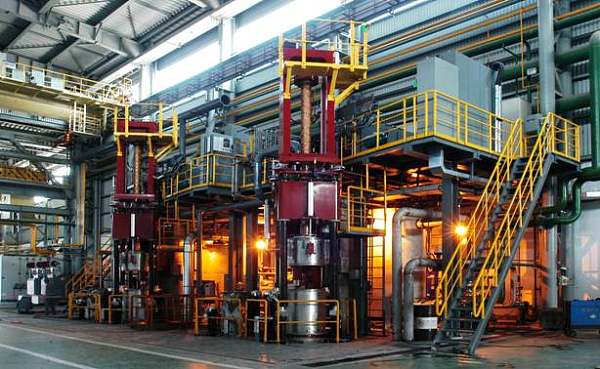
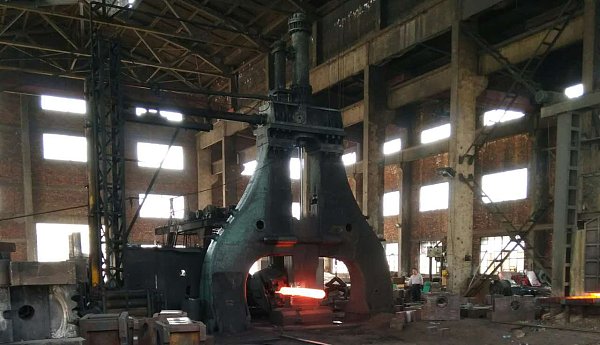
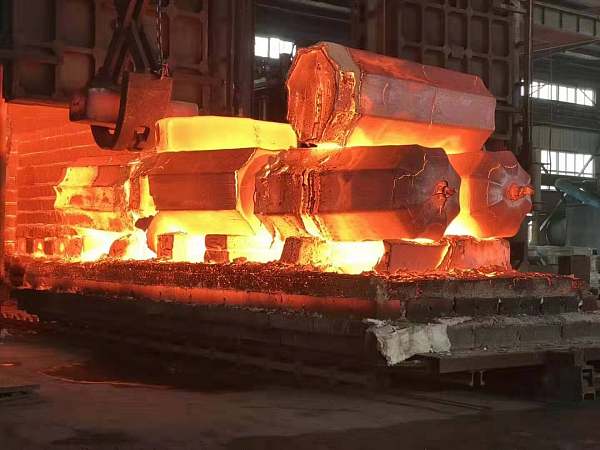
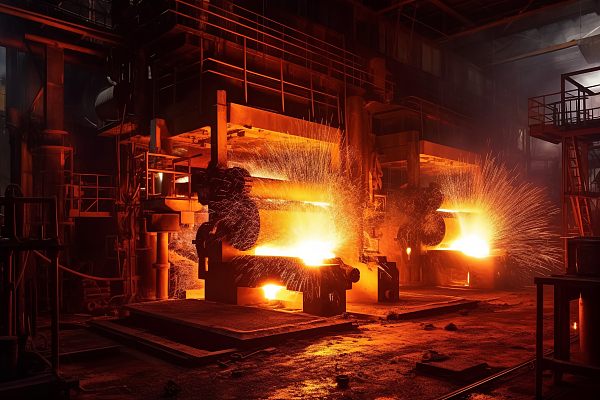
◉ Factory Show
◉ MESSAGE
◉ SIMILAR RECOMMENDED
/ Supermendur /1J22/ Permendur/49КФ/AFK502/Co50V2") Hiperco 50 (1J22)/ Supermendur /1J22/ Permendur/49КФ/AFK502/Co50V2
Hiperco 50 (1J22)/ Supermendur /1J22/ Permendur/49КФ/AFK502/Co50V2/ Supermendur /1J22/ Permendur/49КФ/AFK502/Co50V2-1 Tube Pipe") Hiperco 50 Tube Pipe (1J22)/ Supermendur /1J22/ Permendur/49КФ/AFK502/Co50V2-1 Tube Pipe
Hiperco 50 Tube Pipe (1J22)/ Supermendur /1J22/ Permendur/49КФ/AFK502/Co50V2-1 Tube Pipe/ Supermendur /1J22/ Permendur/49КФ/AFK502/Co50V2-1 Bar Rod") Hiperco 50 Bar Rod (1J22)/ Supermendur /1J22/ Permendur/49КФ/AFK502/Co50V2-1 Bar Rod
Hiperco 50 Bar Rod (1J22)/ Supermendur /1J22/ Permendur/49КФ/AFK502/Co50V2-1 Bar Rod/Russia 50H/1J50 Strip Ring") NiFe Alloy 50 Strip Ring (1J50)/Russia 50H/1J50 Strip Ring
NiFe Alloy 50 Strip Ring (1J50)/Russia 50H/1J50 Strip Ring/Russia 50H/1J50 Tube Pipe") NiFe Alloy 50 Tube Pipe (1J50)/Russia 50H/1J50 Tube Pipe
NiFe Alloy 50 Tube Pipe (1J50)/Russia 50H/1J50 Tube Pipe/Russia 50H/1J50 Bar Rod") NiFe Alloy 50 Bar Rod (1J50)/Russia 50H/1J50 Bar Rod
NiFe Alloy 50 Bar Rod (1J50)/Russia 50H/1J50 Bar Rod/Russia 50H/1J50 Sheet Plate") NiFe Alloy 50 Sheet Plate (1J50)/Russia 50H/1J50 Sheet Plate
NiFe Alloy 50 Sheet Plate (1J50)/Russia 50H/1J50 Sheet Plate Su Permalloy 1J85 /UNS N14080,GB/T 32286.1-2015 Bar Tube Pipe Wire
 Su Permalloy 1J85 Tube Pipe /UNS N14080,GB/T 32286.1-2015 Tube Pipe
 Su Permalloy 1J85 Sheet Pipe /UNS N14080,GB/T 32286.1-2015 Sheet Pipe
 Su Permalloy 1J85 Bar Rod /UNS N14080 GB/T 32286.1-2015 Bar Rod
 Wire Strip /UNS N14080,GB/T 32286.1-2015 Wire Strip") Permalloy Alloy 80(1J79) Wire Strip /UNS N14080,GB/T 32286.1-2015 Wire Strip
Permalloy Alloy 80(1J79) Wire Strip /UNS N14080,GB/T 32286.1-2015 Wire Strip Tube Pipe /UNS N14080,GB/T 32286.1-2015 Tube Pipe") Permalloy Alloy 80(1J79) Tube Pipe /UNS N14080,GB/T 32286.1-2015 Tube Pipe
Permalloy Alloy 80(1J79) Tube Pipe /UNS N14080,GB/T 32286.1-2015 Tube Pipe Sheet Plate /UNS N14080,GB/T 32286.1-2015 Sheet Plate") Permalloy Alloy 80(1J79) Sheet Plate /UNS N14080,GB/T 32286.1-2015 Sheet Plate
Permalloy Alloy 80(1J79) Sheet Plate /UNS N14080,GB/T 32286.1-2015 Sheet Plate Bar Rod /UNS N14080,GB/T 32286.1-2015 Bar Rod") Permalloy Alloy 80(1J79) Bar Rod /UNS N14080,GB/T 32286.1-2015 Bar Rod
Permalloy Alloy 80(1J79) Bar Rod /UNS N14080,GB/T 32286.1-2015 Bar Rod 4J42 Ring Strip UNS K94100 /W. Nr.1.3917 ASTM F30 precision iron-nickel alloy Ring Strip
 4J42 Tube Pipe UNS K94100 /W. Nr.1.3917 ASTM F30 precision iron-nickel alloy Tube Pipe
 4J42 Bar Rod UNS K94100 /W. Nr.1.3917 ASTM F30 precision iron-nickel alloy Bar Rod
 4J42 UNS K94100 /W. Nr.1.3917 ASTM F30 precision iron-nickel alloy
 Super Invar 32-5/4J32/K93500/Super Invar Tube Bar Rod Sheet
 Super Invar 32-5 Sheet Plate 4J32/K93500/Super Invar Sheet Plate
Thank you very much for writing to us. Please leave your message and contact information, we will reply to you within 24 hours.