MESSAGE
If you have any questions, please contact us and we will contact you as soon as possible.
‹
›
‹
›
◉ PRODUCT SPECIFICATION
Inconel Alloy 718 (UNS N07718) is a precipitation‑hardening nickel-based alloy with ~50–55% Ni, 17–21% Cr, 4.75–5.5% Nb+Ta, 2.8–3.3% Mo, and trace Ti & Al. These elements form two key strengthening phases, γ′ and γ″, delivering outstanding mechanical performance.
comprehensive specification
Notes on Variability & Testing
Condition Dependency: Mechanical properties (especially strength/ductility) vary with product form (bar, sheet, forging) and heat treatment (annealed vs. aged). Values listed are minimums for annealed material unless specified.
High-Temperature Data: Strength decreases above 650°C; stress rupture values are typical for precipitation-hardened material.
Testing Standards:
Tensile: ASTM E8
Hardness: ASTM E10 (Brinell), E18 (Rockwell)
Creep: ASTM E139
Nuclear/Grade Variants: Tighter compositional controls (e.g., low Co, B) for nuclear applications (ASTM B637 Grade SB-637N).
global price comparison
? Key Observations
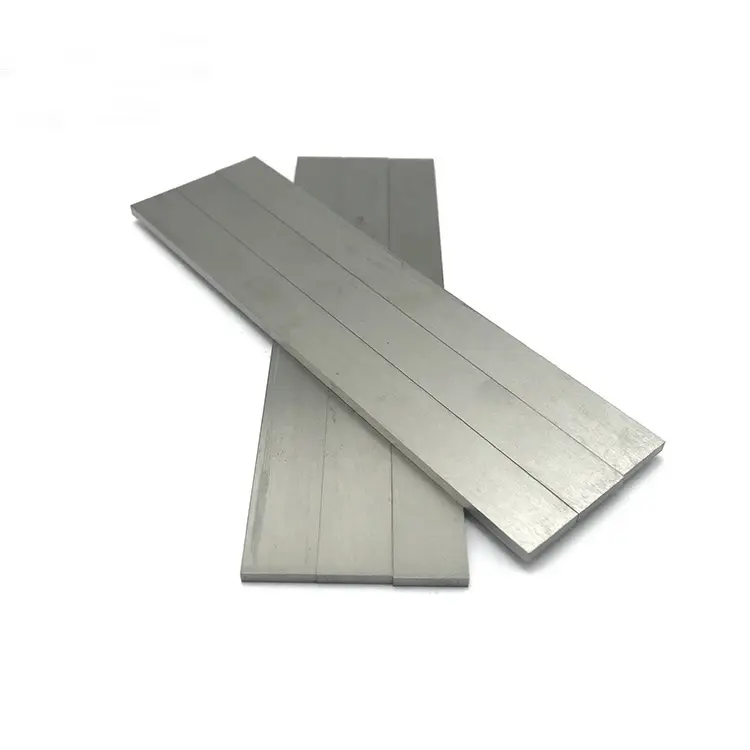
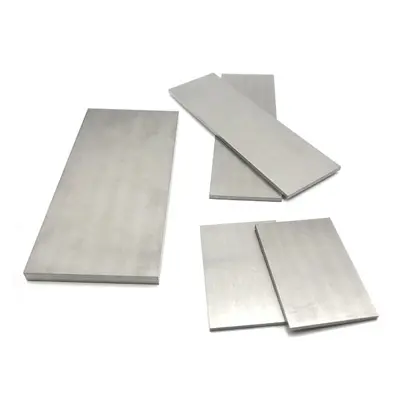
Plate/Sheet prices typically range from $36–40/kg in China, $35.6/kg in India, with lower FOB offers (as low as $10/kg) on small batches from Indian suppliers.
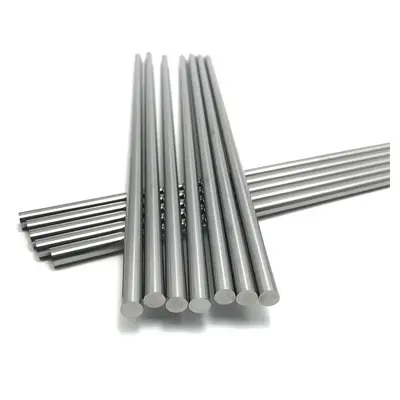
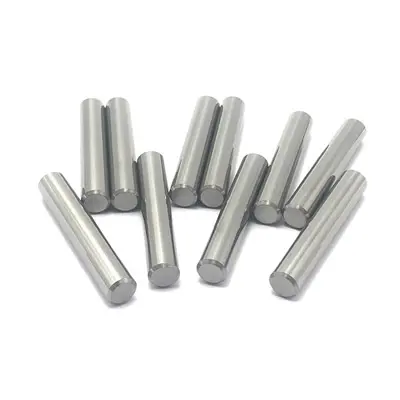
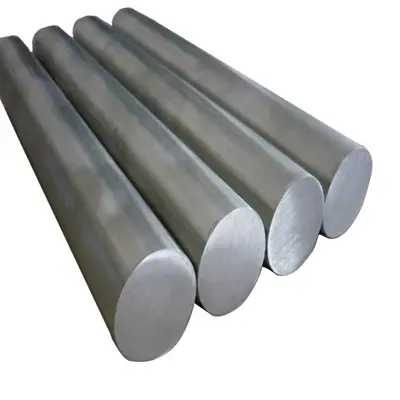
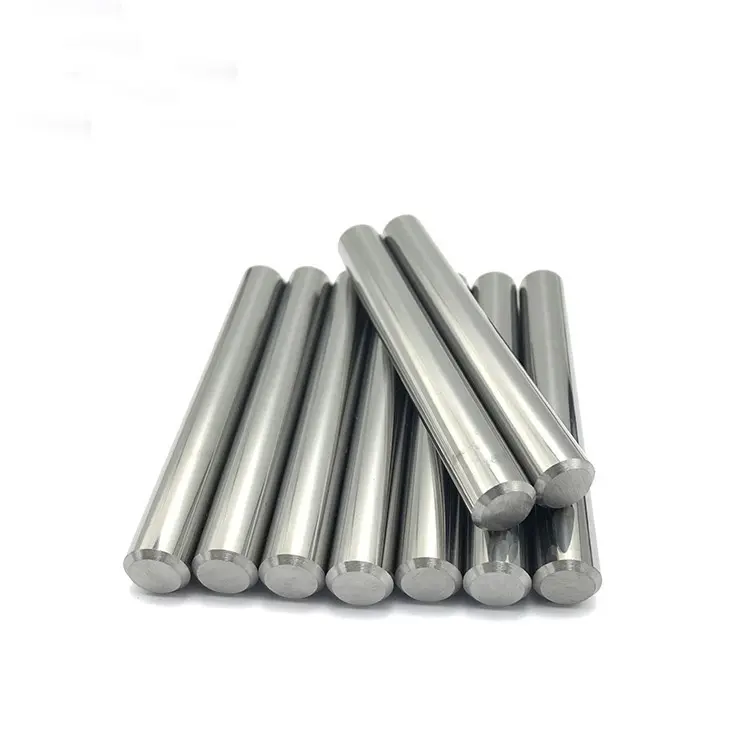
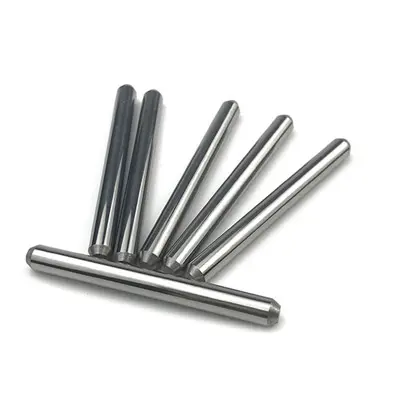
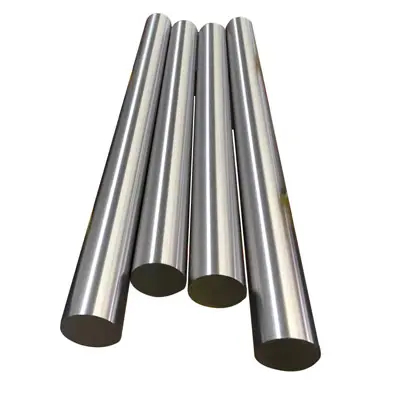
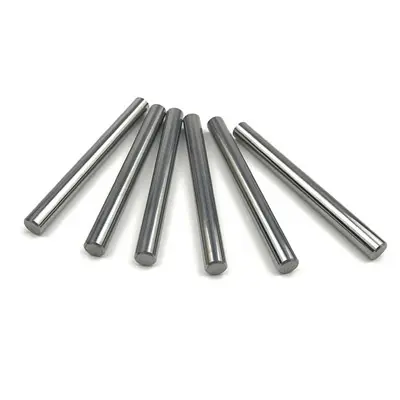
Bar/Rod pricing varies more: $16–35/kg, influenced by order size and finish quality.
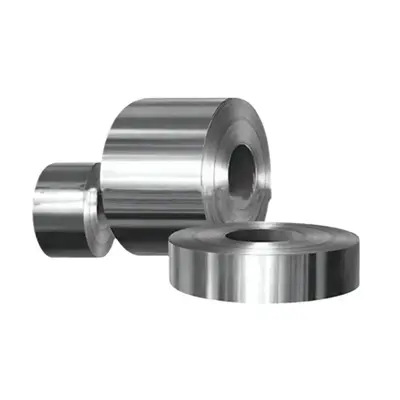
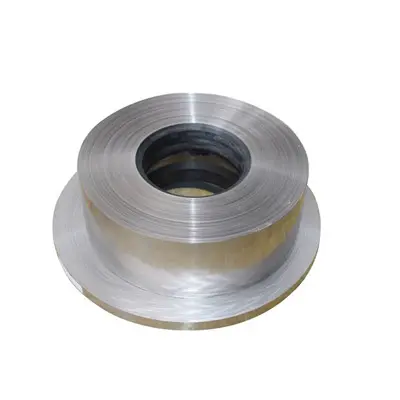
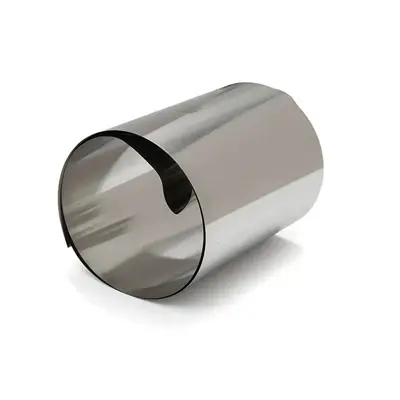
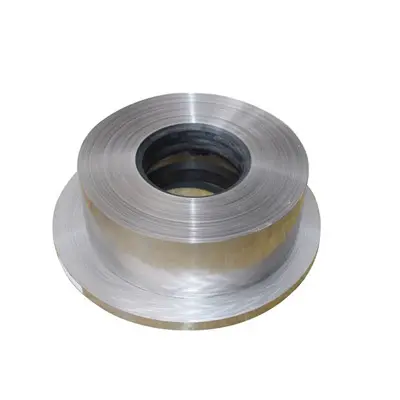
Coil/Strip is priced around $22–28/kg from Chinese suppliers.
Wire shows the widest range: from $11.2/kg (bulk spring wire) up to $45/kg (small-lot welding wire).
Why Choose Alloy 718?
It offers a rare mix of high tensile/creep strength and corrosion resistance. The age-hardening mechanism grants robust mechanical performance, while its weldability and stability across cryogenic to high temperatures make it uniquely versatile.
Manufacturing & Forming Alloy 718
Works well in casting, forging, machining, cold- and hot-forming. Heat treatment involves either:
Solution‑anneal @1,700–1,850 °F, age @1,325 °F for 8 h + 1,150 °F for 10–18 h.
High‑temp variant: 1,900–1,950 °F anneal, age @1,400 °F for 10 h + 1,200 °F for 20 h .
Comparison with Similar Alloys
Welding Practices
Weld using Ni-based filler (e.g., ERNiCr-3). Preheat ~150–200 °C, interpass ≤300 °C, followed by full solution + aging to restore properties. Crack resistance is excellent due to slower precipitation response.
FAQs
1. What heat treatment does Inconel 718 require for optimal strength?
Inconel 718 is strengthened through a two-step aging process following solution annealing. Typically, the alloy is solution-treated between 1,700–1,850 °F, then aged at ~1,325 °F for 8 hours, followed by ~1,150 °F for 10–18 hours. This develops the γ′ and γ″ precipitates that provide high tensile and creep strength up to ~700 °C.
2. Can Alloy 718 be welded without losing mechanical performance?
Yes, it can. Inconel 718 is well-known for its excellent weldability. Gas-tungsten arc welding (GTAW) and gas-metal arc welding (GMAW) with appropriate nickel-based filler metals (e.g., ERNiCr-3) are recommended. A full post-weld age treatment is essential to restore precipitation-hardened properties and minimize microstructural anomalies .
3. What is the maximum service temperature and environmental resistance of Inconel 718?
Inconel 718 maintains both tensile and creep strength up to ~700 °C (1,300 °F) and resists oxidation in even higher temperature zones. It also performs well in corrosive and chloride-laden environments, making it suitable for marine, oil, gas, and steam applications.
4. How does machining or welding affect its fatigue life?
Welded Inconel 718 exhibits reduced fatigue life—up to 30% less in high-cycle fatigue and >50% in low-cycle conditions—compared to parent material. Common microscopic causes include residual stress, Laves-phase segregation, and heat-affected zones. Despite this, properly post-weld heat-treated components maintain adequate lifecycle performance for critical applications.
5. Is Inconel 718 non-magnetic?
Yes. Inconel 718 is non-magnetic in both annealed and precipitation-hardened conditions, which is critical for applications where magnetic neutrality is required, such as in aerospace instrumentation and cryogenic components.
References
◉ Factory Show
◉ MESSAGE
◉ SIMILAR RECOMMENDED
/ Supermendur /1J22/ Permendur/49КФ/AFK502/Co50V2") Hiperco 50 (1J22)/ Supermendur /1J22/ Permendur/49КФ/AFK502/Co50V2
Hiperco 50 (1J22)/ Supermendur /1J22/ Permendur/49КФ/AFK502/Co50V2/ Supermendur /1J22/ Permendur/49КФ/AFK502/Co50V2-1 Tube Pipe") Hiperco 50 Tube Pipe (1J22)/ Supermendur /1J22/ Permendur/49КФ/AFK502/Co50V2-1 Tube Pipe
Hiperco 50 Tube Pipe (1J22)/ Supermendur /1J22/ Permendur/49КФ/AFK502/Co50V2-1 Tube Pipe/ Supermendur /1J22/ Permendur/49КФ/AFK502/Co50V2-1 Bar Rod") Hiperco 50 Bar Rod (1J22)/ Supermendur /1J22/ Permendur/49КФ/AFK502/Co50V2-1 Bar Rod
Hiperco 50 Bar Rod (1J22)/ Supermendur /1J22/ Permendur/49КФ/AFK502/Co50V2-1 Bar Rod/Russia 50H/1J50 Strip Ring") NiFe Alloy 50 Strip Ring (1J50)/Russia 50H/1J50 Strip Ring
NiFe Alloy 50 Strip Ring (1J50)/Russia 50H/1J50 Strip Ring/Russia 50H/1J50 Tube Pipe") NiFe Alloy 50 Tube Pipe (1J50)/Russia 50H/1J50 Tube Pipe
NiFe Alloy 50 Tube Pipe (1J50)/Russia 50H/1J50 Tube Pipe/Russia 50H/1J50 Bar Rod") NiFe Alloy 50 Bar Rod (1J50)/Russia 50H/1J50 Bar Rod
NiFe Alloy 50 Bar Rod (1J50)/Russia 50H/1J50 Bar Rod/Russia 50H/1J50 Sheet Plate") NiFe Alloy 50 Sheet Plate (1J50)/Russia 50H/1J50 Sheet Plate
NiFe Alloy 50 Sheet Plate (1J50)/Russia 50H/1J50 Sheet Plate Su Permalloy 1J85 /UNS N14080,GB/T 32286.1-2015 Bar Tube Pipe Wire
 Su Permalloy 1J85 Tube Pipe /UNS N14080,GB/T 32286.1-2015 Tube Pipe
 Su Permalloy 1J85 Sheet Pipe /UNS N14080,GB/T 32286.1-2015 Sheet Pipe
 Su Permalloy 1J85 Bar Rod /UNS N14080 GB/T 32286.1-2015 Bar Rod
 Wire Strip /UNS N14080,GB/T 32286.1-2015 Wire Strip") Permalloy Alloy 80(1J79) Wire Strip /UNS N14080,GB/T 32286.1-2015 Wire Strip
Permalloy Alloy 80(1J79) Wire Strip /UNS N14080,GB/T 32286.1-2015 Wire Strip Tube Pipe /UNS N14080,GB/T 32286.1-2015 Tube Pipe") Permalloy Alloy 80(1J79) Tube Pipe /UNS N14080,GB/T 32286.1-2015 Tube Pipe
Permalloy Alloy 80(1J79) Tube Pipe /UNS N14080,GB/T 32286.1-2015 Tube Pipe Sheet Plate /UNS N14080,GB/T 32286.1-2015 Sheet Plate") Permalloy Alloy 80(1J79) Sheet Plate /UNS N14080,GB/T 32286.1-2015 Sheet Plate
Permalloy Alloy 80(1J79) Sheet Plate /UNS N14080,GB/T 32286.1-2015 Sheet Plate Bar Rod /UNS N14080,GB/T 32286.1-2015 Bar Rod") Permalloy Alloy 80(1J79) Bar Rod /UNS N14080,GB/T 32286.1-2015 Bar Rod
Permalloy Alloy 80(1J79) Bar Rod /UNS N14080,GB/T 32286.1-2015 Bar Rod 4J42 Ring Strip UNS K94100 /W. Nr.1.3917 ASTM F30 precision iron-nickel alloy Ring Strip
 4J42 Tube Pipe UNS K94100 /W. Nr.1.3917 ASTM F30 precision iron-nickel alloy Tube Pipe
 4J42 Bar Rod UNS K94100 /W. Nr.1.3917 ASTM F30 precision iron-nickel alloy Bar Rod
 4J42 UNS K94100 /W. Nr.1.3917 ASTM F30 precision iron-nickel alloy
 Super Invar 32-5/4J32/K93500/Super Invar Tube Bar Rod Sheet
 Super Invar 32-5 Sheet Plate 4J32/K93500/Super Invar Sheet Plate
Thank you very much for writing to us. Please leave your message and contact information, we will reply to you within 24 hours.