MESSAGE
If you have any questions, please contact us and we will contact you as soon as possible.
‹
›
‹
›
◉ PRODUCT SPECIFICATION
Incoloy Alloy 825 represents one of the most versatile and reliable nickel-iron-chromium superalloys available in today's demanding industrial landscape. This austenitic alloy delivers exceptional resistance to both oxidizing and reducing environments, making it the preferred choice for chemical processing, oil and gas operations, and marine applications where conventional stainless steels fall short.
What is Incoloy 825 Material?
Incoloy 825 is a nickel-iron-chromium austenitic alloy specifically engineered to withstand harsh corrosive environments. We classify this material as a superalloy due to its superior mechanical properties and outstanding corrosion resistance across a wide temperature range.
The alloy was developed to address the limitations of standard austenitic stainless steels in aggressive chemical environments. Its unique composition provides excellent resistance to stress corrosion cracking, pitting, and crevice corrosion in chloride-containing solutions.
The material maintains its structural integrity at temperatures up to 1000°F (538°C) while exhibiting remarkable stability in both acidic and alkaline conditions. This combination of properties makes Incoloy 825 invaluable for applications requiring long-term reliability under severe operating conditions.
What is the Chemical Composition of Incoloy Alloy 825
The precise chemical composition of Incoloy 825 determines its exceptional performance characteristics:
This carefully balanced composition ensures optimal performance across various corrosive media while maintaining excellent fabricability and weldability.
What are the Mechanical Properties of Incoloy Alloy 825
The mechanical properties of Incoloy 825 demonstrate its superior strength and ductility:
These properties remain stable across a wide temperature range, ensuring consistent performance in varying operational conditions.
What are the Specifications of Incoloy Alloy 825
Incoloy 825 conforms to multiple international standards and specifications:
These specifications ensure quality control and material traceability across global manufacturing standards.
What Does Incoloy 825 Stand For?
The designation "Incoloy 825" follows the Incoloy family naming convention. "Incoloy" represents the trademarked name for Special Metals Corporation's nickel-iron-chromium alloys, while "825" indicates the specific alloy composition within this family.
The number sequence distinguishes this particular alloy from other Incoloy grades such as 800, 800H, 800HT, and 801. Each number represents a unique chemical composition optimized for specific applications and operating conditions.
We recognize Incoloy 825 as part of the broader superalloy family, which includes both nickel-based and iron-nickel-based alloys designed for high-temperature and corrosive service applications.
What is the Incoloy Alloy 825 Equivalent Materials
Several international equivalent grades offer similar properties to Incoloy 825:
These equivalents may have slight compositional variations but maintain comparable corrosion resistance and mechanical properties.
What is the Difference Between Incoloy 825 and 316L
The comparison between Incoloy 825 and 316L stainless steel reveals significant performance differences:
Incoloy 825 provides superior performance in chloride environments and higher temperature applications, justifying its premium cost for critical applications.
Applications of Incoloy 825
Incoloy 825 finds extensive use across multiple industries due to its exceptional corrosion resistance:
Chemical Processing Industry: We see widespread adoption in sulfuric acid processing equipment, phosphoric acid production systems, and organic acid handling components. The alloy's resistance to both oxidizing and reducing acids makes it ideal for complex chemical environments.
Oil and Gas Sector: Downhole tubing, wellhead components, and subsea equipment benefit from Incoloy 825's resistance to hydrogen sulfide and chloride environments. The material performs reliably in sour gas applications and seawater injection systems.
Marine Applications: Seawater piping systems, heat exchangers, and offshore platform components utilize this alloy's superior resistance to seawater corrosion and marine atmospheric conditions.
Power Generation: Steam generator tubing, heat recovery systems, and flue gas desulfurization equipment rely on Incoloy 825's high-temperature stability and corrosion resistance.
Pollution Control: Scrubber systems, stack liners, and emission control equipment benefit from the alloy's resistance to acidic condensates and high-temperature oxidation.
What is the Incoloy 825 Classification
The classification system for Incoloy 825 encompasses multiple categories:
This comprehensive classification helps engineers select appropriate materials for specific applications.
Incoloy Alloy Grades
Key Abbreviations:
PREN: Pitting Resistance Equivalent Number (PREN = %Cr + 3.3×%Mo + 16×%N).
SCC: Stress-Corrosion Cracking.
UNS: Unified Numbering System.
Notes:
Temperature Limits: Most grades retain strength up to 550–1100°C (e.g., 800HT: 815°C).
Fabrication: Weldable via TIG/GTAW; age-hardenable grades (e.g., 925) require post-weld heat treatment.
Standards: ASTM B409 (plate), B423 (tube), B424 (bar), ASME SB-409 (pressure vessels).
Can Incoloy 825 be welded?
Incoloy 825 exhibits excellent weldability using conventional welding processes. The alloy requires no preheating and maintains its corrosion resistance in the heat-affected zone.
Recommended Welding Procedures:
- Gas Tungsten Arc Welding (GTAW/TIG)
- Gas Metal Arc Welding (GMAW/MIG)
- Shielded Metal Arc Welding (SMAW)
- Submerged Arc Welding (SAW)
Filler Metal Selection: We recommend ERNiCrMo-3 (AWS A5.14) or equivalent filler metals for optimal weld metal properties. The filler composition should match the base metal to maintain corrosion resistance.
Post-Weld Treatment: Solution annealing at 1850-1950°F (1010-1066°C) followed by rapid cooling optimizes corrosion resistance and mechanical properties.
Is Incoloy 800 better than 825?
The performance comparison between Incoloy 800 and 825 reveals their distinct applications:
Incoloy 800 excels in high-temperature oxidizing environments up to 2100°F (1149°C), making it suitable for furnace components and heat treatment fixtures. However, its corrosion resistance in aqueous environments remains limited.
Incoloy 825 sacrifices some high-temperature capability for superior corrosion resistance in aggressive chemical environments. The copper addition significantly enhances performance in reducing acids and chloride solutions.
For chemical processing applications, Incoloy 825 proves superior. For high-temperature structural applications, Incoloy 800 series alloys offer better performance.
Global Market Pricing 2025
Current global pricing for Incoloy 825 reflects market dynamics and raw material costs:
Pricing varies based on product form, quantity, specifications, and delivery terms. Long-term contracts typically secure better pricing stability.
Advantages of Incoloy 825
The unique advantages of Incoloy 825 include:
Superior Corrosion Resistance: Outstanding performance in both oxidizing and reducing environments surpasses conventional stainless steels.
Temperature Stability: Maintains structural integrity and corrosion resistance up to 1000°F (538°C).
Excellent Fabricability: Standard metalworking practices apply without special precautions.
Weldability: No preheating required, maintains properties in heat-affected zones.
Stress Corrosion Cracking Resistance: Exceptional performance in chloride environments.
Long Service Life: Reduced maintenance and replacement costs offset initial material premium.
Versatility: Single alloy solution for multiple corrosive environments.
Manufacturing Process
The manufacturing process for Incoloy 825 involves sophisticated metallurgical techniques:
Raw Material Preparation: High-purity raw materials undergo careful selection and preparation to achieve precise composition control.
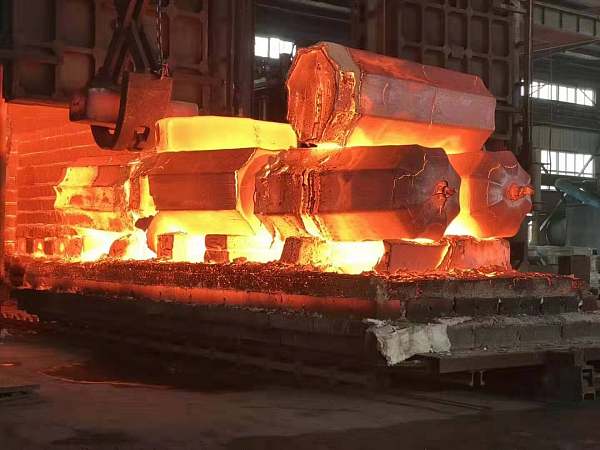
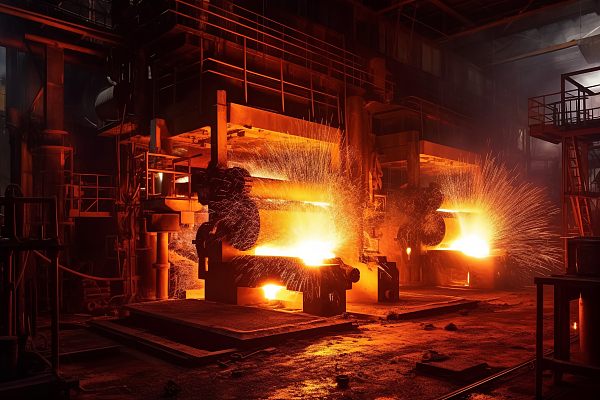
Melting Process: Vacuum induction melting (VIM) followed by vacuum arc remelting (VAR) or electroslag remelting (ESR) ensures homogeneous composition and eliminates impurities.
Hot Working: Initial breakdown by forging or rolling at temperatures between 2000-2100°F (1093-1149°C) develops proper grain structure.
Cold Working: Controlled cold reduction improves mechanical properties and dimensional accuracy.
Solution Annealing: Heat treatment at 1850-1950°F (1010-1066°C) followed by rapid cooling optimizes microstructure and properties.
Final Processing: Machining, surface finishing, and quality control testing ensure conformance to specifications.
Quality Assurance: Comprehensive testing including chemical analysis, mechanical testing, and corrosion testing validates material properties.
UAE Procurement Case Study
A major petrochemical complex in Abu Dhabi required corrosion-resistant piping for their new sulfuric acid alkylation unit. The facility processes 50,000 barrels per day and requires exceptional reliability due to safety and environmental considerations.
Project Requirements:
- 2,500 meters of seamless pipe in various diameters
- Operating temperature: 180°C (356°F)
- Sulfuric acid concentration: 98%
- 25-year design life
- NACE MR0175 compliance required
Material Selection Process: Initial specifications called for 316L stainless steel, but corrosion modeling indicated inadequate performance. We recommended Incoloy 825 based on laboratory testing in simulated service conditions.
Procurement Details: Total material cost: $2.8 million USD Delivery schedule: 16 weeks Quality requirements: 100% ultrasonic testing, PMI verification Installation completion: Q2 2024
Performance Results: After 18 months of operation, inspection revealed no significant corrosion, validating the material selection. The client estimates $5 million savings over the plant lifetime compared to alternative materials requiring frequent replacement.
Frequently Asked Questions
1. What is the maximum operating temperature for Incoloy 825?
Incoloy 825 can operate continuously at temperatures up to 1000°F (538°C) while maintaining its corrosion resistance properties. For intermittent service, the alloy can withstand temperatures up to 1100°F (593°C). Above these temperatures, we recommend considering higher-temperature alloys like Incoloy 800H or Inconel 625.
2. Can Incoloy 825 be used in seawater applications?
Yes, Incoloy 825 exhibits excellent resistance to seawater corrosion, including pitting and crevice corrosion. The copper content provides additional protection against microbiologically influenced corrosion (MIC). The alloy performs well in both natural seawater and treated seawater systems.
3. What is the typical lead time for Incoloy 825 products?
Standard products like plates, sheets, and bars typically require 8-12 weeks delivery. Custom forgings and specialized forms may require 12-16 weeks. During periods of high demand or supply chain disruptions, lead times may extend. We recommend early planning and forecasting for critical applications.
4. How does Incoloy 825 perform in hydrogen service?
Incoloy 825 demonstrates good resistance to hydrogen embrittlement and performs well in hydrogen-containing environments up to moderate pressures and temperatures. For high-pressure hydrogen service, additional evaluation may be required based on specific operating conditions. The alloy meets requirements for many hydrogen processing applications.
5. What post-weld heat treatment is required for Incoloy 825?
For maximum corrosion resistance, we recommend solution annealing at 1850-1950°F (1010-1066°C) followed by rapid cooling. However, many applications can use Incoloy 825 in the as-welded condition without significant performance degradation. The decision depends on service severity and design requirements.
Authoritative References
- ASTM B425 - Standard Specification for Ni-Fe-Cr-Mo-Cu Alloy Rod and Bar
- ASME SB-163 - Specification for Seamless Nickel and Nickel Alloy Condenser and Heat-Exchanger Tubes
- NACE MR0175/ISO 15156 - Petroleum and Natural Gas Industries Materials for Use in H2S-Containing Environments
- Wikipedia - Superalloy Classification and Properties
- Special Metals Corporation - Incoloy Alloy 825 Technical Bulletin
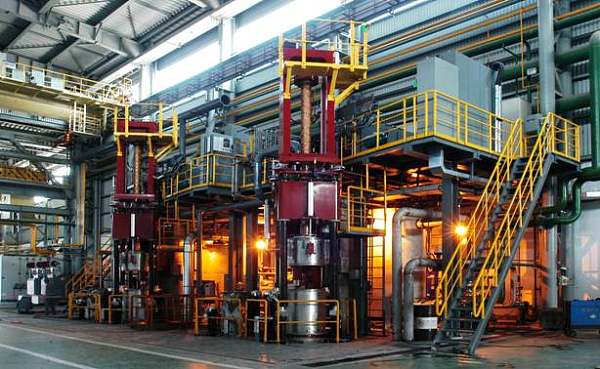
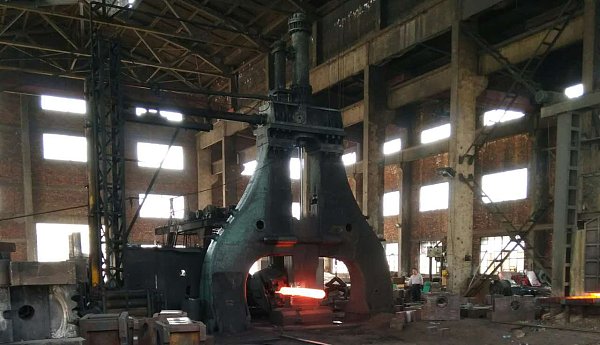
◉ Factory Show
◉ MESSAGE
◉ SIMILAR RECOMMENDED
/ Supermendur /1J22/ Permendur/49КФ/AFK502/Co50V2") Hiperco 50 (1J22)/ Supermendur /1J22/ Permendur/49КФ/AFK502/Co50V2
Hiperco 50 (1J22)/ Supermendur /1J22/ Permendur/49КФ/AFK502/Co50V2/ Supermendur /1J22/ Permendur/49КФ/AFK502/Co50V2-1 Tube Pipe") Hiperco 50 Tube Pipe (1J22)/ Supermendur /1J22/ Permendur/49КФ/AFK502/Co50V2-1 Tube Pipe
Hiperco 50 Tube Pipe (1J22)/ Supermendur /1J22/ Permendur/49КФ/AFK502/Co50V2-1 Tube Pipe/ Supermendur /1J22/ Permendur/49КФ/AFK502/Co50V2-1 Bar Rod") Hiperco 50 Bar Rod (1J22)/ Supermendur /1J22/ Permendur/49КФ/AFK502/Co50V2-1 Bar Rod
Hiperco 50 Bar Rod (1J22)/ Supermendur /1J22/ Permendur/49КФ/AFK502/Co50V2-1 Bar Rod/Russia 50H/1J50 Strip Ring") NiFe Alloy 50 Strip Ring (1J50)/Russia 50H/1J50 Strip Ring
NiFe Alloy 50 Strip Ring (1J50)/Russia 50H/1J50 Strip Ring/Russia 50H/1J50 Tube Pipe") NiFe Alloy 50 Tube Pipe (1J50)/Russia 50H/1J50 Tube Pipe
NiFe Alloy 50 Tube Pipe (1J50)/Russia 50H/1J50 Tube Pipe/Russia 50H/1J50 Bar Rod") NiFe Alloy 50 Bar Rod (1J50)/Russia 50H/1J50 Bar Rod
NiFe Alloy 50 Bar Rod (1J50)/Russia 50H/1J50 Bar Rod/Russia 50H/1J50 Sheet Plate") NiFe Alloy 50 Sheet Plate (1J50)/Russia 50H/1J50 Sheet Plate
NiFe Alloy 50 Sheet Plate (1J50)/Russia 50H/1J50 Sheet Plate Su Permalloy 1J85 /UNS N14080,GB/T 32286.1-2015 Bar Tube Pipe Wire
 Su Permalloy 1J85 Tube Pipe /UNS N14080,GB/T 32286.1-2015 Tube Pipe
 Su Permalloy 1J85 Sheet Pipe /UNS N14080,GB/T 32286.1-2015 Sheet Pipe
 Su Permalloy 1J85 Bar Rod /UNS N14080 GB/T 32286.1-2015 Bar Rod
 Wire Strip /UNS N14080,GB/T 32286.1-2015 Wire Strip") Permalloy Alloy 80(1J79) Wire Strip /UNS N14080,GB/T 32286.1-2015 Wire Strip
Permalloy Alloy 80(1J79) Wire Strip /UNS N14080,GB/T 32286.1-2015 Wire Strip Tube Pipe /UNS N14080,GB/T 32286.1-2015 Tube Pipe") Permalloy Alloy 80(1J79) Tube Pipe /UNS N14080,GB/T 32286.1-2015 Tube Pipe
Permalloy Alloy 80(1J79) Tube Pipe /UNS N14080,GB/T 32286.1-2015 Tube Pipe Sheet Plate /UNS N14080,GB/T 32286.1-2015 Sheet Plate") Permalloy Alloy 80(1J79) Sheet Plate /UNS N14080,GB/T 32286.1-2015 Sheet Plate
Permalloy Alloy 80(1J79) Sheet Plate /UNS N14080,GB/T 32286.1-2015 Sheet Plate Bar Rod /UNS N14080,GB/T 32286.1-2015 Bar Rod") Permalloy Alloy 80(1J79) Bar Rod /UNS N14080,GB/T 32286.1-2015 Bar Rod
Permalloy Alloy 80(1J79) Bar Rod /UNS N14080,GB/T 32286.1-2015 Bar Rod 4J42 Ring Strip UNS K94100 /W. Nr.1.3917 ASTM F30 precision iron-nickel alloy Ring Strip
 4J42 Tube Pipe UNS K94100 /W. Nr.1.3917 ASTM F30 precision iron-nickel alloy Tube Pipe
 4J42 Bar Rod UNS K94100 /W. Nr.1.3917 ASTM F30 precision iron-nickel alloy Bar Rod
 4J42 UNS K94100 /W. Nr.1.3917 ASTM F30 precision iron-nickel alloy
 Super Invar 32-5/4J32/K93500/Super Invar Tube Bar Rod Sheet
 Super Invar 32-5 Sheet Plate 4J32/K93500/Super Invar Sheet Plate
Thank you very much for writing to us. Please leave your message and contact information, we will reply to you within 24 hours.