MESSAGE
If you have any questions, please contact us and we will contact you as soon as possible.
‹
›
‹
›
◉ PRODUCT SPECIFICATION
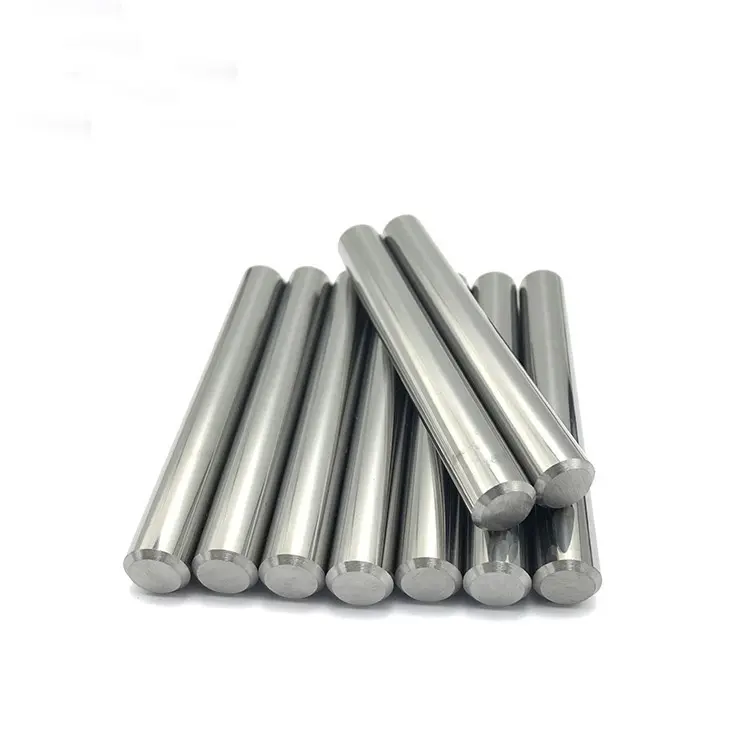
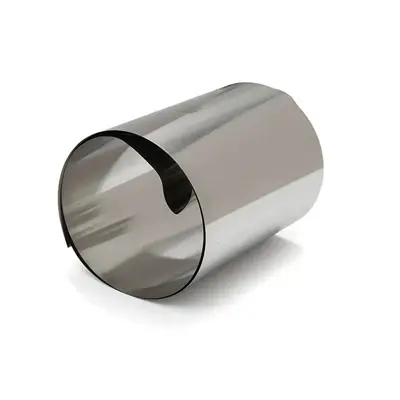
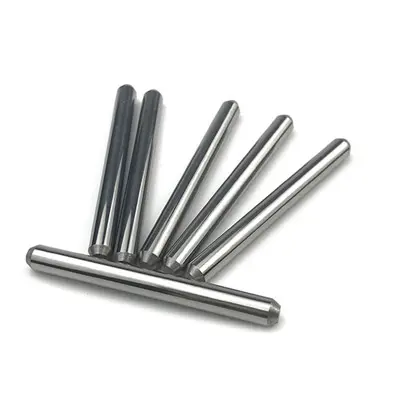
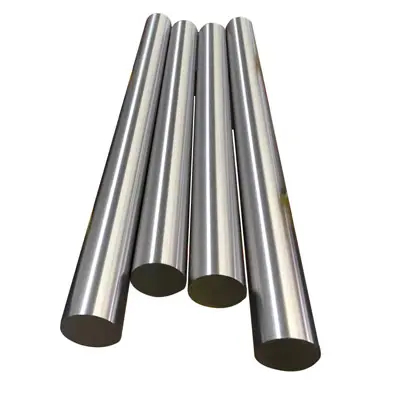
Incoloy Alloy 800H represents a breakthrough in high-temperature materials engineering, delivering exceptional performance in extreme thermal environments where conventional alloys fail. This austenitic iron-nickel-chromium superalloy has become the material of choice for critical applications in petrochemical processing, nuclear power generation, and heat treatment systems worldwide.
What is Incoloy Alloy 800H?
Incoloy Alloy 800H is a high-temperature nickel-iron-chromium alloy engineered for excellent strength and oxidation resistance in the 700–900 °C (1,300–1,650 °F) range. Compared to standard Alloy 800, 800H has a controlled higher carbon content (0.06–0.10 wt %) to promote carbide precipitation and improve creep resistance at elevated temperatures. It is widely used for furnace components, heat exchangers, petrochemical processing, and other applications requiring long-term strength at high temperatures.
What is the Chemical Composition of Incoloy Alloy 800H?
The precise chemical composition of Incoloy 800H determines its exceptional high-temperature performance characteristics. Each element contributes specific properties that enhance the alloy's overall capabilities.
The controlled carbon content between 0.05-0.10% represents a critical specification that distinguishes 800H from its lower-carbon counterpart, Incoloy 800. This carbon range promotes carbide precipitation, which significantly enhances creep rupture strength at elevated temperatures.
What are the Mechanical Properties of Incoloy Alloy 800H?
The mechanical properties of Incoloy 800H demonstrate its superiority in high-temperature applications. These characteristics make it suitable for demanding industrial environments.
These mechanical properties remain stable across extended temperature ranges, providing engineers with reliable design parameters for critical applications. The creep rupture strength particularly stands out, offering long-term structural integrity that exceeds many competitive alloys.
What is the Specification of Incoloy Alloy 800H?
International specifications govern the production and application of Incoloy 800H, ensuring consistent quality and performance across global markets.
These specifications ensure that Incoloy 800H meets stringent quality requirements for various industrial applications. Compliance with multiple international standards facilitates global procurement and installation in diverse regulatory environments.
What does Incoloy Alloy 800H Stand For?
The designation "Incoloy Alloy 800H" carries specific metallurgical significance that reflects its engineered properties and intended applications.
"Incoloy" represents the trademarked family of iron-nickel-chromium alloys developed for high-temperature service. The "800" series indicates the approximate nickel content percentage and distinguishes this alloy from other Incoloy variants.
The "H" suffix specifically denotes "High Carbon" content, differentiating it from standard Incoloy 800. This higher carbon specification (0.05-0.10% versus 0.05% maximum in standard 800) provides enhanced creep rupture strength through controlled carbide precipitation.
We recognize this designation system helps engineers and procurement specialists identify the precise material characteristics required for their specific applications. The standardized nomenclature facilitates communication across international markets and technical disciplines.
What is the Equivalent of Incoloy Alloy 800H?
Several international equivalent designations correspond to Incoloy 800H, though subtle compositional differences may exist between standards.
The primary equivalents include DIN 1.4958 (German standard), EN X8NiCrAlTi32-21 (European designation), and JIS NCF 800H (Japanese specification). These materials share similar base compositions but may vary in trace element limits or heat treatment requirements.
UNS N08810 serves as the unified numbering system designation, providing consistent identification across North American standards. This designation ensures procurement accuracy when sourcing from multiple suppliers or regions.
When specifying equivalent materials, we recommend verifying exact compositional requirements and mechanical properties, as minor variations between standards can affect performance in critical applications.
What is the Difference Between Incoloy Alloy 800H, 800 and 825?
Understanding the distinctions between these Incoloy variants helps engineers select appropriate materials for specific applications.
Incoloy 800H provides superior high-temperature strength compared to standard 800, while Incoloy 825 offers enhanced corrosion resistance through copper and molybdenum additions. The choice between these alloys depends on specific service conditions and performance requirements.
What is Incoloy Alloy 800H Used For?
Incoloy 800H finds extensive application across industries requiring exceptional high-temperature performance and thermal stability.
Power generation facilities utilize this alloy for superheater and reheater tubes, steam generator components, and nuclear reactor internals. The material's resistance to steam oxidation and thermal cycling makes it ideal for these demanding applications.
Petrochemical processing plants employ Incoloy 800H in reformer tubes, cracking furnace components, and catalyst support structures. Its resistance to carburization and thermal shock ensures reliable operation in hydrocarbon processing environments.
Heat treatment equipment manufacturers specify this alloy for furnace components, radiant tubes, and thermal processing fixtures. The material maintains dimensional stability and mechanical properties throughout repeated heating and cooling cycles.
Chemical processing applications include reactor vessels, heat exchangers, and piping systems handling corrosive media at elevated temperatures. The alloy's combination of thermal and chemical resistance provides long-term reliability in aggressive service conditions.
What is the Classification of Incoloy Alloy 800H?
Technical classification systems categorize Incoloy 800H according to its metallurgical structure and application characteristics.
This classification framework helps engineers understand the material's fundamental characteristics and select appropriate processing techniques. The austenitic structure provides excellent formability and weldability compared to ferritic alternatives.
What is Incoloy Alloy Grade?
The Incoloy alloy grade system encompasses multiple variants designed for specific temperature and corrosion requirements.
Incoloy 800H represents a premium grade within the 800 series, optimized for sustained high-temperature service through controlled carbon content and grain size. This grade offers superior creep rupture strength compared to standard variants.
Other Incoloy grades include 825 (enhanced corrosion resistance), 901 (high strength), and 925 (age-hardenable). Each grade addresses specific application requirements through tailored chemical compositions and heat treatments.
The grade designation system allows engineers to specify precise material characteristics for critical applications. Understanding grade differences ensures optimal material selection and performance in service.
Incoloy Alloy 800H Global Market Prices 2025
Current market pricing for Incoloy 800H reflects raw material costs, manufacturing complexity, and regional demand patterns.
These prices fluctuate based on nickel commodity pricing, which represents approximately 60% of raw material costs. Global supply chain dynamics and energy costs also influence regional pricing variations.
Long-term contracts typically offer 5-10% discounts from spot pricing, providing cost stability for major projects. We recommend monitoring nickel futures markets when planning significant material purchases.
Advantages of Incoloy Alloy 800H
Incoloy 800H delivers multiple performance advantages that justify its premium positioning in high-temperature applications.
Superior creep rupture strength enables extended service life at elevated temperatures, reducing maintenance costs and downtime. The controlled carbon content promotes beneficial carbide precipitation that strengthens grain boundaries.
Excellent oxidation resistance maintains surface integrity in high-temperature oxidizing environments, preventing scaling and dimensional changes. This characteristic extends equipment life and maintains heat transfer efficiency.
Outstanding thermal stability minimizes dimensional changes during temperature cycling, reducing thermal stress and preventing component failure. The low coefficient of thermal expansion matches many ceramic refractories.
Good fabrication characteristics allow conventional welding, forming, and machining operations without special procedures. This workability reduces installation costs and enables complex component geometries.
Proven service history in critical applications provides confidence for new installations. Decades of successful operation demonstrate long-term reliability and performance consistency.
Manufacturing Process of Incoloy 800H
The manufacturing process for Incoloy 800H requires precise control of composition, thermal processing, and quality verification to achieve specified properties.
Primary melting occurs in electric arc furnaces using carefully selected raw materials to achieve target chemistry. Vacuum induction melting or electroslag remelting may be employed for critical applications requiring ultra-low inclusion content.
Hot working operations include forging, rolling, or extrusion at temperatures between 2000-2150°F (1093-1177°C). These processes develop the desired microstructure and eliminate casting defects while maintaining optimal grain size.
Solution heat treatment at 2100°F (1149°C) followed by rapid cooling dissolves carbides and produces a uniform austenitic structure. This thermal processing step is critical for achieving specified mechanical properties.
Cold working operations such as drawing, forming, or machining can be performed using conventional equipment with appropriate tooling. Work hardening rates require periodic annealing for extensive deformation.
Quality control testing includes chemical analysis, mechanical property verification, and microstructural examination. Non-destructive testing ensures freedom from internal defects that could compromise service performance.
United States Procurement Case Study
A major U.S. petrochemical facility recently completed a comprehensive furnace upgrade project utilizing Incoloy 800H for critical high-temperature components.
The project involved replacing 2,400 feet of reformer tubes in three hydrogen production units. Operating conditions included temperatures up to 1750°F (954°C) and pressures reaching 450 psi in hydrogen-rich atmospheres.
Material procurement required 85 tons of Incoloy 800H seamless tubing meeting ASTM B407 specifications. Delivery schedules coordinated with planned maintenance shutdowns to minimize production disruption.
Installation challenges included field welding of dissimilar metals and thermal expansion accommodation. Pre-qualified welding procedures and experienced craftsmen ensured joint integrity and code compliance.
Performance results after eighteen months of operation show excellent dimensional stability and no evidence of carburization or thermal degradation. The successful implementation validates Incoloy 800H selection for this demanding application and provides confidence for future similar projects.
Frequently Asked Questions
Q: Can Incoloy 800H be welded to carbon steel?
A: Yes, but requires careful procedure qualification and appropriate filler metals. We recommend using Inconel 182 or similar high-nickel filler metals with proper joint design to accommodate differential thermal expansion. Pre-heating and post-weld heat treatment may be necessary depending on section thickness and service conditions.
Q: What is the maximum operating temperature for Incoloy 800H?
A: Incoloy 800H can operate continuously at temperatures up to 1800°F (982°C) while maintaining structural integrity. Short-term exposure to higher temperatures is possible, but extended service above this limit may cause excessive oxidation and strength degradation.
Q: How does Incoloy 800H compare to stainless steel 316 for high-temperature applications?
A: Incoloy 800H significantly outperforms 316 stainless steel at elevated temperatures. While 316SS typically limits to 1500°F (816°C), Incoloy 800H maintains strength and oxidation resistance at temperatures exceeding 1700°F (927°C). The higher nickel content provides superior thermal stability.
Q: Is special handling required during machining Incoloy 800H?
A: Standard machining practices apply with some considerations. Use sharp tools, maintain positive cutting action, and employ adequate cooling to prevent work hardening. Avoid interrupted cuts and maintain consistent feed rates. Carbide or high-speed steel tooling performs well with proper cutting parameters.
Q: What causes price fluctuations in Incoloy 800H?
A: Primary cost drivers include nickel commodity pricing (representing 60% of raw material costs), energy costs for high-temperature processing, and supply-demand dynamics in end-use markets. Global economic conditions and trade policies also influence pricing trends.
References
- ASTM International - ASTM B407 Standard Specification for Nickel-Iron-Chromium Alloy Seamless Pipe and Tube
- American Society of Mechanical Engineers - ASME SB-407 Specification
- National Institute of Standards and Technology - Materials Measurement Science Division
- International Organization for Standardization - Technical Committee ISO/TC 17 Steel
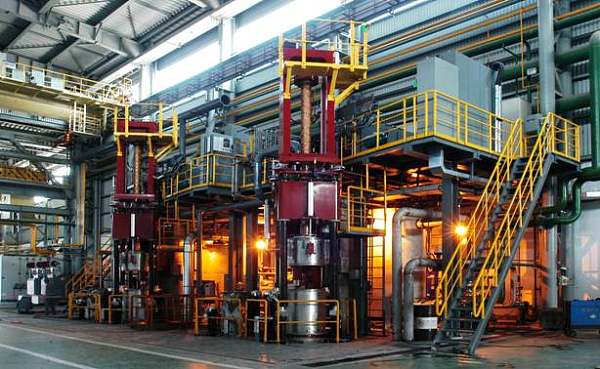
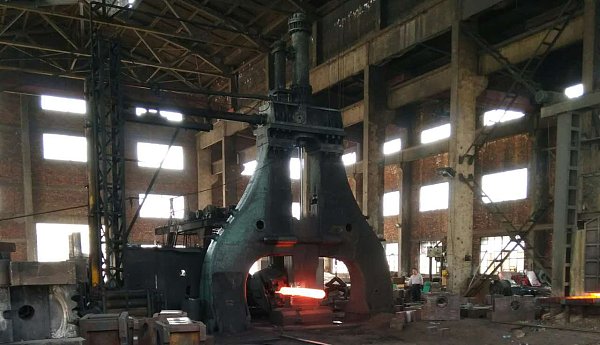
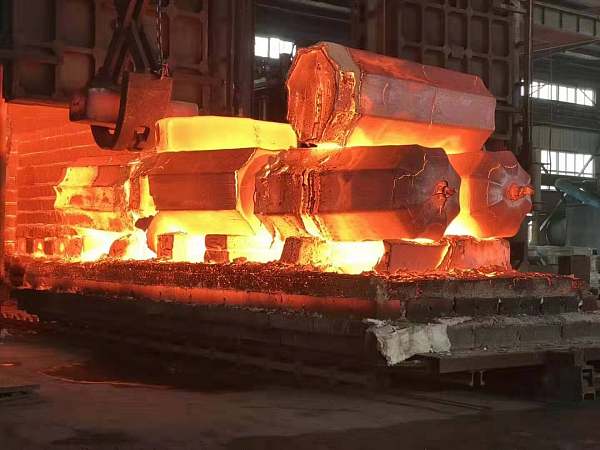
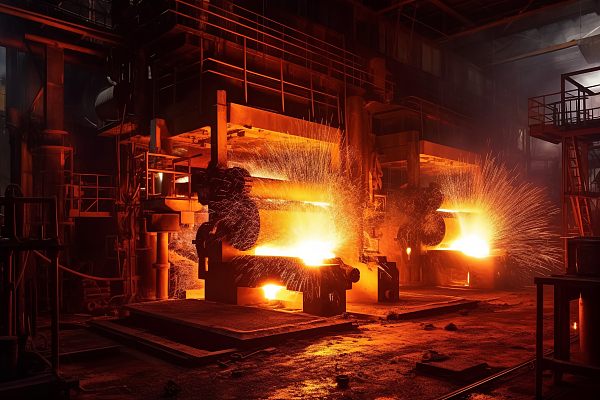
◉ Factory Show
◉ MESSAGE
◉ SIMILAR RECOMMENDED
/ Supermendur /1J22/ Permendur/49КФ/AFK502/Co50V2") Hiperco 50 (1J22)/ Supermendur /1J22/ Permendur/49КФ/AFK502/Co50V2
Hiperco 50 (1J22)/ Supermendur /1J22/ Permendur/49КФ/AFK502/Co50V2/ Supermendur /1J22/ Permendur/49КФ/AFK502/Co50V2-1 Tube Pipe") Hiperco 50 Tube Pipe (1J22)/ Supermendur /1J22/ Permendur/49КФ/AFK502/Co50V2-1 Tube Pipe
Hiperco 50 Tube Pipe (1J22)/ Supermendur /1J22/ Permendur/49КФ/AFK502/Co50V2-1 Tube Pipe/ Supermendur /1J22/ Permendur/49КФ/AFK502/Co50V2-1 Bar Rod") Hiperco 50 Bar Rod (1J22)/ Supermendur /1J22/ Permendur/49КФ/AFK502/Co50V2-1 Bar Rod
Hiperco 50 Bar Rod (1J22)/ Supermendur /1J22/ Permendur/49КФ/AFK502/Co50V2-1 Bar Rod/Russia 50H/1J50 Strip Ring") NiFe Alloy 50 Strip Ring (1J50)/Russia 50H/1J50 Strip Ring
NiFe Alloy 50 Strip Ring (1J50)/Russia 50H/1J50 Strip Ring/Russia 50H/1J50 Tube Pipe") NiFe Alloy 50 Tube Pipe (1J50)/Russia 50H/1J50 Tube Pipe
NiFe Alloy 50 Tube Pipe (1J50)/Russia 50H/1J50 Tube Pipe/Russia 50H/1J50 Bar Rod") NiFe Alloy 50 Bar Rod (1J50)/Russia 50H/1J50 Bar Rod
NiFe Alloy 50 Bar Rod (1J50)/Russia 50H/1J50 Bar Rod/Russia 50H/1J50 Sheet Plate") NiFe Alloy 50 Sheet Plate (1J50)/Russia 50H/1J50 Sheet Plate
NiFe Alloy 50 Sheet Plate (1J50)/Russia 50H/1J50 Sheet Plate Su Permalloy 1J85 /UNS N14080,GB/T 32286.1-2015 Bar Tube Pipe Wire
 Su Permalloy 1J85 Tube Pipe /UNS N14080,GB/T 32286.1-2015 Tube Pipe
 Su Permalloy 1J85 Sheet Pipe /UNS N14080,GB/T 32286.1-2015 Sheet Pipe
 Su Permalloy 1J85 Bar Rod /UNS N14080 GB/T 32286.1-2015 Bar Rod
 Wire Strip /UNS N14080,GB/T 32286.1-2015 Wire Strip") Permalloy Alloy 80(1J79) Wire Strip /UNS N14080,GB/T 32286.1-2015 Wire Strip
Permalloy Alloy 80(1J79) Wire Strip /UNS N14080,GB/T 32286.1-2015 Wire Strip Tube Pipe /UNS N14080,GB/T 32286.1-2015 Tube Pipe") Permalloy Alloy 80(1J79) Tube Pipe /UNS N14080,GB/T 32286.1-2015 Tube Pipe
Permalloy Alloy 80(1J79) Tube Pipe /UNS N14080,GB/T 32286.1-2015 Tube Pipe Sheet Plate /UNS N14080,GB/T 32286.1-2015 Sheet Plate") Permalloy Alloy 80(1J79) Sheet Plate /UNS N14080,GB/T 32286.1-2015 Sheet Plate
Permalloy Alloy 80(1J79) Sheet Plate /UNS N14080,GB/T 32286.1-2015 Sheet Plate Bar Rod /UNS N14080,GB/T 32286.1-2015 Bar Rod") Permalloy Alloy 80(1J79) Bar Rod /UNS N14080,GB/T 32286.1-2015 Bar Rod
Permalloy Alloy 80(1J79) Bar Rod /UNS N14080,GB/T 32286.1-2015 Bar Rod 4J42 Ring Strip UNS K94100 /W. Nr.1.3917 ASTM F30 precision iron-nickel alloy Ring Strip
 4J42 Tube Pipe UNS K94100 /W. Nr.1.3917 ASTM F30 precision iron-nickel alloy Tube Pipe
 4J42 Bar Rod UNS K94100 /W. Nr.1.3917 ASTM F30 precision iron-nickel alloy Bar Rod
 4J42 UNS K94100 /W. Nr.1.3917 ASTM F30 precision iron-nickel alloy
 Super Invar 32-5/4J32/K93500/Super Invar Tube Bar Rod Sheet
 Super Invar 32-5 Sheet Plate 4J32/K93500/Super Invar Sheet Plate
Thank you very much for writing to us. Please leave your message and contact information, we will reply to you within 24 hours.